Success Stories
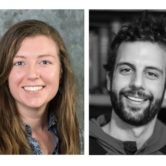
ALASKA: Two NSF EPSCoR researchers receive Track-4 Awards
Alaska NSF EPSCoR and University of Alaska-Fairbanks researchers Phylicia Cicilio and Ben Gaglioti were recently awarded NSF EPSCoR Track-4 awards. Cicilio was awarded $176,688 for her project; Gaglioti was award $112,967 for his project.

VERMONT: Researcher Awarded Lifetime Achievement Award by American Association of Geographers
Vermont EPSCoR Basin Resilience to Extreme Events (BREE) researcher and Vermont State Climatologist Lesley-Ann Dupigny-Giroux, PhD will be honored with a lifetime achievement award at the Annual Meeting of the American Association of Geographers (AAG) in February 2022.
The award comes after a unanimous decision by the AAG's Climate Specialty Group, which chose to honor Dr. Dupigny-Giroux for her many achievements in climate science. This body of work includes 25 years as Vermont's State Climatologist and over 40 peer-reviewed publications in the fields that include climate variability and change, severe weather hazards, drought, and remote sensing.

SOUTH CAROLINA: COBRE researchers receive $3.18M NIH grant
SC Translational Research Improving Musculoskeletal Health (SC TRIMH, COBRE located at Clemson University) Director Dr. Hai Yao and his collaborator at NIH Dr. Janice Lee, received an NIH U-01 $3.18M three-year grant for their project entitled, “ATTRACT: Assessment of Temporomandibular Joint Morphology, Mechanics, and Mechano-biology in Class II and III Target and Surgical Phenotypes.”
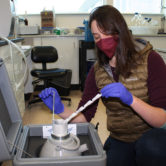
ALASKA: UAF part of $7M NSF EPSCoR Track-2 Award
Alaska can’t offer much in the way of sagebrush or pygmy rabbits. What it does have is burgeoning capacity to study microbes, which is why a consortium of Western EPSCoR states is partnering with the University of Alaska-Fairbanks on a study of how the gut bacteria of desert animals enable them to digest toxic plants. Mario Muscarella, an Assistant Professor of Microbiology at UAF is the newest partner in “Genomics Underlying Toxin Tolerance (GUTT),” an NSF EPSCoR Track-2 project with the goal of better understanding the relationship between toxic plants and herbivores. Campuses in Idaho, Nevada and Wyoming have been collaborating on the $7M project.
The sprawling GUTT project tackles plant-animal interactions from a number of different angles – an approach the research team calls “culture-omics” — and now involves researchers from six different campuses. Muscarella said he got involved in the project last year when project lead Jennifer Forbey of Boise State approached him about injecting his own techniques, which entail culturing gut microbes and studying them through the lenses of physiology and genomics.

NASA’s EPSCoR Funds Model Spacesuits for the Future
Ever since he was a young boy, watching the televised lunar landings from his hometown of Cañuelas, Argentina, Pablo de León knew he wanted to contribute to human space exploration. Now, as chair of the Department of Space Studies at the University of North Dakota (UND), he’s doing just that, designing and developing 3D-printed spacesuit models that may support future exploration of Mars. The research is made possible through EPSCoR, a part of NASA’s Office of STEM Engagement and based at the agency’s Kennedy Space Center in Florida.
De León moved to the United States more than 30 years ago to fulfill his dream of contributing to human spaceflight and, for the past 17 years, he has been a professor at UND, conducting critical research in the area of planetary spacesuits. Most recently, he received a $750,000 grant – spread across three years – from NASA’s EPSCoR to develop a 3D-printed spacesuit model and identify key technologies that may reduce the logistical supply chain needed from Earth when astronauts begin venturing to the Moon and Mars.
“To me, as a researcher, EPSCoR has been incredibly useful because we’re able to open new lines of research because we otherwise wouldn’t have funding to start development,” de León said. “There are new things that can potentially be game changers for the future of human spaceflight and, really, the only way for us external researchers to be able to do this research is through the NASA EPSCoR program.”
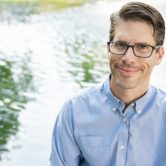
NEW MEXICO: UNM-led Project Receives $15M from NSF EPSCoR
Researchers at The University of New Mexico are leading a $15M, five-year project funded by NSF EPSCoR that will engage communities in the American Intermountain West to collaboratively address the impacts of climate change, including drought, wildfires and community well-being. The project is being led by Mark Stone, professor in the Department of Civil, Construction and Environmental Engineering at UNM.
The Transformation Network is a multi-disciplinary research effort based at UNM that represents diverse communities, sectors, disciplines and backgrounds that is aimed at improving regional sustainability.
The Network is composed of UNM and seven other universities: Colorado State University, the University of Arizona, Northern Arizona University, Washington State University, Utah State University, New Mexico Tech and New Mexico State University. The Network has also partnered with over 50 organizations across the American Intermountain West to elevate the Network’s capacity.
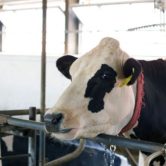
NEW HAMPSHIRE: UNH Scientists Share $13M in Grants to Study Benefits of Feeding Dairy Cows Seaweeds
Most people are unlikely to associate seaweed with dairy production. But University of New Hampshire scientists will be working to change that, sharing two USDA NIFA grants totaling nearly $13M to investigate supplementation of dairy cow diets with seaweed to reduce greenhouse gas emissions and improve milk quality and animal health.
Dairy farmers continue facing finance uncertainties and are increasingly looked to for helping contribute toward the goal of agricultural production being a mitigator of climate change. The agricultural industry is responsible for 10 percent of the planet’s greenhouse gas emissions, according to the EPA. Livestock, especially ruminants such as cattle, represent more than a quarter of the emissions of methane, which is produced as part of the normal digestive processes. Scientific innovation in feed management could help reduce these environmental effects in a cost-effective manner.
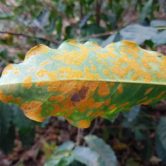
HAWAI‘I: Consortium receives $6M USDA NIFA Specialty Crop Research Initiative grant
A four-year $6M USDA NIFA Specialty Crop Research Initiative grant has been issued to support research into addressing the coffee leaf rust (CLR) disease that is threatening coffee farmers in Hawaii and Puerto Rico. This grant will support a consortium led by the Synergistic Hawaii Agriculture Council.The impact of this research, however, is expected to extend beyond US farmers to help the global coffee community combat CLR.

SOUTH CAROLINA: UofSC Big Data Health Science Center wins $1.75M NIH award to launch big data fellowship program
The NIH National Institute of Allergy and Infectious Diseases has awarded $1.75M to the University of South Carolina Big Data Health Science Center to train junior faculty to conduct infectious disease research using vast amounts of data. Through the Big Data Health Science Fellow program, the Center will provide training, mentorship and 25% salary support to five, one-year cohorts of early-career researchers from across the university.
“The Big Data Health Science Center’s R25 training grant is in accordance with the University of South Carolina’s ongoing transformative focus to have a meaningful and long-lasting impact on our state and our nation,” says Stephen Cutler, UofSC’s Interim Executive Vice President and Provost. “The diverse faculty of this program represent five UofSC schools and colleges who are engaged in cutting-edge data-driven healthcare research and discovery to improve population health.”
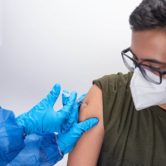
RHODE ISLAND: Researchers, local partners receive $1.4M NIH funding to reduce disparities in COVID-19 vaccination, testing
With support from a new NIH $1.4M Rapid Acceleration of Diagnostics for Underserved Populations (RADx-UP) initiative grant, Brown University researchers and local community organizations are working to address barriers to COVID-19 testing and vaccination among the Latinx population as well as high-risk children in Rhode Island. Underserved communities, including Hispanic and Latinx populations, tend to have lower rates of vaccinations even in a state like Rhode Island, which has higher-than-average vaccination rates.
The project is designed to address disparities in access to health care in the U.S. brought to the forefront by the COVID-19 pandemic, the researchers noted. Underserved communities, including Hispanic and Latinx populations, tend to have lower rates of vaccinations even in a state like Rhode Island, which has higher-than-average vaccination rates.