Success Stories
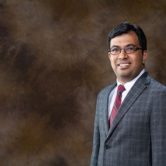
ARKANSAS: DOD Awards U of A Researcher $297,831 to Study Effects of Toxic Pollutants on Airway Pathology
The Department of Defense awarded $297,831 to Kartik Balachandran, associate professor of biomedical engineering at the U of A, to study the effects of particulate matter pollution on the nasal airway and lung interface.
Balachandran will create the first in vitro benchtop system to incorporate both the upper and lower respiratory systems into a single model.
Over the two-year term of the grant, Balachandran will create and validate a novel airway-lung-on-a-chip, or AirLOC, system engineered from human cells. This will incorporate a multilayered, cell culture platform that mimics both normal and asthmatic nasal and lung epithelia – the tissue that covers all organs and body surfaces.
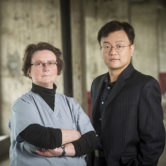
ALABAMA: Heart disease: $2.6M NIH grant to UAB will fund study of safer, more durable stents
The NIH has awarded $2.6M to two University of Alabama at Birmingham researchers who co-founded the spinoff Endomimetics to design a better stent.
Ho-Wook Jun, PhD, is principal investigator in the grant, and Brigitta Brott, MD, is the co-investigator. They are co-founders of Endomimetics and have worked together for a decade to develop their bionanomatrix material for coating stents to improve heart disease treatment. Their material has other potential applications in patients with brain aneurysms, kidney dialysis patients and patients with percutaneous osteointegrated prostheses.
Ho-Wook Jun and Brigitta Brott are using techniques licensed by Endomimetics to develop a new stent coating material that may also help patients with brain aneurysms, kidney failure needing kidney dialysis and percutaneous osteointegrated prostheses, in addition to heart disease.
VERMONT: EPSCoR support leads to $25M grant
The University of Vermont – in collaboration with 28 universities and institutions – is poised to advance its status as a prominent institution in hydrological research.
This new initiative was made possible through the tireless efforts of Sen. Patrick Leahy, D-Vt., with transformative support of up to $25 million over the next five years from the federal government. It establishes the Cooperative Institute for Research to Operations in Hydrology (CIROH), a national consortium of science and services to provide actionable water resources intelligence to improve a national water model and flood forecasting.
“UVM’s work with CIROH builds on a research foundation laid down by more than a decade of NSF EPSCOR support and many other projects brought to Vermont by Sen. Leahy,” said UVM VPR Kirk Dombrowski. “UVM’s involvement in CIROH will solidify our standing as a leading research university and promote exceptional research growth in environment and sustainability in the coming years.”
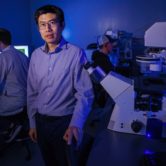
NEBRASKA: NSF CAREER award helps EPSCoR researcher advance work on cell-cell junctions and their link to human health
A $540,000 NSF Faculty Early Career Development Program (CAREER) grant allows Ruiguo Yang, a former Nebraska EPSCoR FIRST Award recipient and University of Nebraska-Lincoln assistant professor of mechanical and materials engineering, to examine how cell-cell junctions — the protein structures that enable cells to attach to neighboring cells — respond to the wide range of strains they're subjected to every day, such as cardiac pulses, stretching of the skin and peristalsis in the gut.
MAINE: Two Universities part of $6M DOE EPSCoR Biotechnology Research Project
The University of Maine and University of of New England will be included in a program to advance research in quality control of biomanufacturing and biotechnology.
The universities will be supported by the Department of Energy’s EPSCoR as part of the project.

DELAWARE: Delaware INBRE researcher earns $1.1M NSF CAREER Award to develop next-gen gene editing tools
Hidden in the soil of backyards around the world, yet-to-be-discovered enzymes could be holding the key to improved gene therapies that could cure the most debilitating diseases plaguing modern society.
Thanks to the University of Delaware College of Engineering’s Kevin Solomon, it may be an undergraduate student who discovers the enzyme (or enzymes) that changes the world. But their search is just one part of a broad effort to pursue a new avenue for improving modern-day biomolecular engineering tools.
Solomon, a synthetic biology expert and assistant professor in UD’s Department of Chemical and Biomolecular Engineering, was recently awarded about $1.1 million in funding for this work from the National Science Foundation’s Faculty Early Career Development (CAREER) program, one of the most prestigious awards a junior faculty member can receive.
Solomon is one of Delaware INBRE's new Pilot Project Investigators.
ALASKA: Gene Found, by $1.15M NSF CAREER-funded Researcher, Linked to Hearing in Humans Also Linked to Touch in Sea Anemones
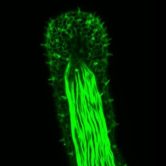
An international team of investigators, including several researchers in biological sciences from the University of Arkansas, have published a paper that reports the discovery of a developmental gene linked to touch in the tentacles of sea anemones as well as hearing in humans. The gene, called pou-iv (pronounced “pow four”), is important for the development of auditory cells in the human inner ear.
The U of A researchers are affiliated with Nagayasu Nakanishi, a recent recipient of a $1.15M NSF CAREER award for his work on the evolution of the nervous system. He is the corresponding author on the study.
NEBRASKA: Nebraska part of $6M multi-state ag effort to unwrap bioplastic benefits
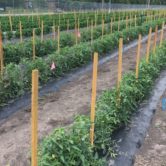
University of Nebraska-Lincoln researchers are part of a new $6M NSF EPSCoR Track-2 grant to develop bioplastics for use in agriculture over the next four years.
The project includes a consortium of 15 researchers from the University of Nebraska-Lincoln, Kansas State University and the South Dakota School of Mines and Technology. The researchers asked each other what they could do that was truly novel. Their answer was “Bioplastics with Regenerative Agricultural Properties,” or BioWRAP. The project aims to reduce the use of plastics, herbicides, fertilizers and associated environmental impacts in agricultural production by creating an all-in-one bioplastic system that can better manage weeds, add nutrients to soils, improve soil and plant health, and save water.
The project is funded through NSF’s Established Program to Stimulate Competitive Research Research Infrastructure Improvement Program Track 2. Successful projects involve a consortium of three or more EPSCoR jurisdictions (states) and may receive up to $1.5 million per year for up to four years.
SOUTH CAROLINA: Clemson researchers developing heat-tolerant soybeans
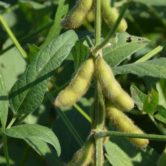
Soybean is one of the top cash crops grown in South Carolina, but high temperatures during the growing season limit yields and cut into profits.
Two Clemson University researchers believe a better understanding of traits associated with heat tolerance in soybean can help in developing heat-tolerant varieties that can lead to more sustainable crop production. They have received a $649,895 grant from the USDA NIFA to study soybean’s efficiency for heat tolerance. This grant continues research in which the researchers are examining traits that lead to heat tolerance in soybean.
The project aims to generate information on lipid metabolic changes, physiological mechanisms and their genetic controls that confer heat tolerance in soybean. During the project researchers will evaluate contemporary high-value soybean varieties with high seed oleic acid content and drought tolerance. The data generated will provide producers with information on the heat tolerance of these varieties.
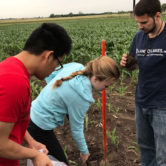
NEBRASKA: $742,000 USDA NIFA Grant will fund “Crop-to-Food Innovation” undergrad training program
A University of Nebraska-Lincoln research team has been awarded a $742,000 USDA NIFA grant to establish the Research and Extension Experiences for Undergrads program.
The five-year “Crop-to-Food Innovation” program will give students 10-week summer research experiences and scientific communication and leadership training. The project will create opportunities for students to work with scientists who develop new crop traits and apply innovative bioprocessing and formulation technologies to evaluate and develop new food and feed applications.