Success Stories
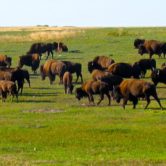
IDAHO: EPSCoR faculty member receives ~$400K ecological restoration grant
New Idaho EPSCoR faculty member, Dr. Matt Williamson, received a $399,820 NSF grant focusing on ecological restoration. Williamson, new GEM3 hire at Boise State, is part of a team that will examine Indigenous-Led Ecological Restoration in partnership with Tribes of the Blackfoot Confederacy. This research examines how Indigenous groups navigate institutional and environmental legacies to restore ecologically and culturally significant species. The project investigates the complex relationship between biological conservation and Indigenous Peoples that can lead to innovative conservation efforts that support Indigenous ecological and cultural goals.
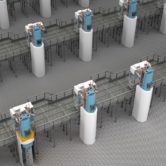
IDAHO: U of I Awarded $18.9M For Deep Soil Research Facility
A facility designed to study soil at depths greater than anywhere else in the world will be built by University of Idaho researchers with support from an $18.9M NSF grant.
The Deep Soil Ecotron will enable scientists to conduct experiments on columns of soil up to three meters deep (about 10 feet). Currently, to study soils, scientists often dig pits, which destroys the soil systems as they are uncovered. Also, most research involves just the top 30 centimeters (roughly one foot) of soil. There is a lot to be learned by going deeper, said Michael Strickland, the project’s lead principal investigator.
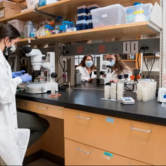
DELAWARE: INBRE Early Career Grant – NIH award supports biologist’s research into formation of sperm, egg cells
Aimee Jaramillo-Lambert, assistant professor of biological sciences at the University of Delaware, has been awarded a $2M, five-year research grant from NIH NIGMS. The funding comes from the Maximizing Investigators’ Research Award (MIRA) program, which specifically supports early-career research. Her research investigates exactly how each sperm and egg cell gets the correct number of chromosomes in meiosis and the role played by certain enzymes and proteins in the process. She also studies the shape of the chromosomes, especially in sperm cells, which determines some processes as well.

ARKANSAS: Experts gain funding for imaging alternative used to help assess breast cancer surgery outcomes
There’s a new imaging technique that can help clinicians better assess breast cancer, and researchers recently received a grant to help further enhance its capabilities. Terahertz imaging utilizes electromagnetic radiation technology to produce highly detailed images of biological tissue. In many cases, it outperforms X-ray and CT at showing if surgeons removed all cancerous breast tissue during lumpectomy.
Magda El-Shenawee, PhD, an electrical engineering professor at the University of ARKANSAS, recently won a $424,000 NIH grant from the NIH to assess and enhance this technique.
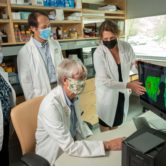
ARKANSAS: UAMS Researchers Advance Blood Clot Understanding, Get $2.5M to Continue Studies
A $2.5M NIH grant will help University of ARKANSAS for Medical Sciences (UAMS) researchers continue studying blood clots after the team made a breakthrough discovery. The team, led by UAMS physiology and cell biology professor Dr. Brian Storrie, discovered that blood clots in puncture wounds form structures similar to skyscrapers. The finding upends the long-held belief that cells fill a puncture wound layer by layer to stop bleeding, known as the core and shell model. Storrie's team includes researchers from the University of KENTUCKY and the National Institute of Biomedical Imaging and Bioengineering.

SOUTH CAROLINA: COBRE receives NIGMS $248K Administrative Supplement
An NIGMS Administrative Supplement for Major Equipment of $248K was awarded to SC TRIMH, COBRE located at Clemson University, for the acquisition of a 3D bioprinter to be used in the Advanced Fabrication and Testing (AFT) Research Core. This grant to Dr. Hai Xiao, Clemson S.L. Bell Distinguished Professor of Electrical and Computer Engineering and AFT Core Director and Dr. Hai Yao, SC TRIMH COBRE Director and Clemson Ernest R. Norville Endowed Chair and Professor of Bioengineering, will enhance the research resources capacity to support the projects conducted in the program and network.
SOUTH CAROLINA: COBRE receives NIGMS $794K supplement
South Carolina Translational Research Improving Musculoskeletal Health (SC TRIMH), COBRE located at Clemson University, received a $749,000 supplement from NIH NIGMS to study “SARS-CoV2 sequencing surveillance for Upstate South Carolina.” This project is led by Dr. Delphine Dean, Clemson Ron and Jane Lindsay Family Innovation Professor of Bioengineering, and Dr. Hai Yao, SC TRIMH Director and Clemson Ernest R. Norville Endowed Chair and Professor of Bioengineering.
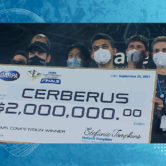
NEVADA: UNR team wins $2M in DARPA international robotics challenge
The University of Nevada, Reno's Team CERBERUS topped a stellar field of eight international robotics teams to win the DARPA Subterranean Challenge and $2 million in prize money.
The competition spanned three years and several locations with four competitions that tested the engineers’ abilities to develop a system of walking and flying robots equipped with multi-modal perception systems, navigation and mapping autonomy, and self-organized networked communications that enable robust and reliable navigation, exploration, mapping, and object search in complex, sensing-degraded, stringent, dynamic and rough underground settings.
IDAHO: Quantum DNA research receives $5M grant from the Department of Energy
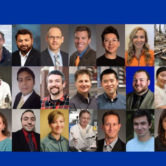
Boise State’s Quantum DNA (qDNA) Research Group received a Phase II renewal grant of $5M from DOE EPSCoR as part of a broader announcement of funded energy-related research projects.
Composed of five research teams that span multiple departments and colleges at Boise State, and involving almost 30 faculty, professional staff and students, the qDNA Research Group is pioneering the use of deoxyribonucleic acid (DNA) as a programmable, self-assembling architecture that organizes light-absorbing dye molecules to achieve quantum entanglement.
Quantum entanglement occurs when the excited state of one molecule in the aggregate cannot be described independent of the excited state of another, and is due to a collective interaction between the molecules.
LOUISIANA: Researchers awarded $1.5M NASA EPSCoR grant
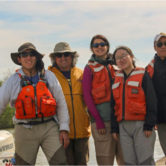
Rivers and deltas can release significant amounts of carbon dioxide into the atmosphere, which contributes to global warming. But until recently, climate modelers have had limited information on this process. A team of LSU scientists, in collaboration with Southern University, have accepted the challenge of analyzing this complex carbon export in the largest delta in the United States – the Mississippi River Delta.
To explore how carbon is exported from delta-dominated systems to the coastal ocean, LSU and Southern in partnership with the Louisiana Space Grant Consortium were awarded a $1.5M NASA EPSCoR grant and the Louisiana Board of Regents.
The LSU team is led by Associate Professor Zuo “George” Xue and comprises three additional faculty members from the College of the Coast & Environment: Professor Eurico D’Sa, Associate Professor Kanchan Maiti, and Associate Professor Victor Rivera-Monroy, along with several graduate students. They are tracking the carbon as it moves through the Mississippi River Delta and the Gulf of Mexico coast to see how it affects coastal water quality. In conjunction, the Southern University team — led by Zhu Hua Ning, a professor of forest ecophysiology and tree anatomy — is studying the terrestrial carbon export.