Success Stories

ARKANSAS: USDA Awards $300,000 Research Grant
University of Arkansas professor Karthik Nayani was awarded a nearly $300,000 grant by the USDA to create a method for detecting heat stress in poultry using an approach that could be applied to other animals raised for meat. Nayani's research will create detailed images of the animals' red blood cells, which can then be analyzed with neural networks to find molecular details associated with heat stress.

ALABAMA: Here's a deeper dive into UAB's second-highest funded research project
One of the University of Alabama at Birmingham's top-funded research projects involves building a diverse health database of over a million people through the All of Us program.
All of Us is a research program run by the National Institutes of Health, and UAB is part of the Southern All of Us Network. The program is funded by UAB's second largest active grant at $12 million per year for five years. It also received a one-time grant of $7 million to develop a retention program.
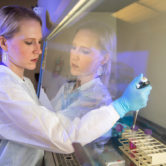
ALABAMA: Univ of S AL faculty member receives $2.59M grant to study infection dynamics of an emerging tick-borne virus
Tick-borne infections can lead to serious illnesses – and even death – in people and pets. To create effective treatments for these diseases, scientists first must figure out the basic infection biology of the ticks they study. Meghan Hermance, an assistant professor at the University of South Alabama, recently received a $2.59 million five-year NIH grant to study the infection dynamics of a tick-borne bunyavirus called severe fever with thrombocytopenia syndrome virus or SFTSV.

ARKANSAS: NIH, Google, University of Arkansas to Collaborate on Biomedical Research Cloud-Based Module Development
University of Arkansas researchers will team up with Google software engineers and NIGMS in an effort to create learning modules on artificial intelligence and machine learning applications in biomedical research.
The university secured a $140,135 grant to help address the computational requirements of AI-focused studies with the use of cloud computing technology.
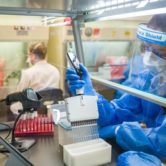
NEW HAMPSHIRE: Sequencing Variants – With NIH grant, UNH will help understand COVID-19 variants
Two COBRES from New Hampshire, Center of Integrated Biomedical and Bioengineering Research (University of New Hampshire) and Center for Quantitative Biology (Dartmouth), have received a second year of funding from NIGMS to coordinate SARS-CoV-2 genomic surveillance in New Hampshire and Vermont, including wastewater surveillance.

ARKANSAS: Translational Research Center at Arkansas Children’s Research Institute Receives $11.5M from NIGMS to use “Big Data” to Discover New Therapies
NIH has awarded $11.5M in Phase II funding to the Arkansas Children’s Research Institute based on the successes of the COBRE Center for Translational Pediatric Research, established five years ago. The center applies a cutting-edge systems biology approach to understand how diseases like cancer form in children’s developing bodies.
Under the leadership of Alan Tackett, associate director for basic research at ACRI and director of the CTPR, the center is at the forefront of this type of research.

ALABAMA: UAB researcher receive $3.7M grant to assess a “genome-first” approach to improving cardiometabolic health through heart hormones
Researchers from the University of Alabama at Birmingham Division of Cardiovascular Disease have been awarded a $3.7M grant from the NIH National Heart Lung and Blood Institute to study how genetically determined differences in natriuretic peptide levels (heart hormones) regulate the handling of glucose metabolism and use of energy while resting and while exercising.
The grant is being used to fund a first-of-its-kind clinical trial that will recruit healthy individuals through a “genome-first” approach and perform deep metabolic phenotyping to understand the underlying mechanisms responsible for the regulation of the body’s metabolism through NPs.
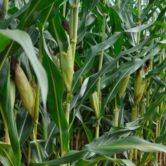
SOUTH CAROLINA: $648,898 USDA NIFA study finds native grasses may hold key to growing crops in drier climates
Clemson University scientists have received $649,898 from the USDA NIFA to study how microorganisms from ruderal grasses – native plants regarded as weeds – can help corn thrive in dry soil, a protective measure against the increase in droughts brought by climate change.
Drought can cause issues for grain crops and three Clemson University scientists are working to get to the root of the problem.
The scientists believe crops have a lesson or two to learn from their weedy relatives when it comes to growing in drier soils. The trick is to harbor beneficial microorganisms on and around the roots to enhance the ability of plants to withstand harsher environments.

NEBRASKA: $3M NSF funded project aims to smooth STEM students’ path from 2-year to 4-year institutions
The University of Nebraska–Lincoln is leading a 22-institution research collaboration aimed at smoothing this transition by building strong partnerships between two- and four-year colleges. With a five-year, $3 million grant from the National Science Foundation, the team will conduct research aimed at filling a critical gap in the national understanding of what it takes to help transfer students succeed. Nebraska, whose share of the award is nearly $1.5 million, will headquarter the new research hub.
It is one of the first four research hubs funded through a new NSF program that builds on the agency’s long-standing Scholarships in STEM program, or S-STEM, which funds scholarships and institutional support systems for low-income STEM students. Through the research hubs, NSF aims to identify what’s working — and what’s not — at S-STEM sites using mixed-methods research. Each hub has a different focus, with the overall goal of pinpointing the conditions that facilitate success for the STEM students.
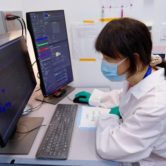
KENTUCKY: University of Kentucky Receives Renewed $11.4M COBRE Grant to Further Cancer Research
The University of Kentucky’s Center for Cancer and Metabolism (CCM) will continue its critical mission to research the metabolism of cancer with a renewed Centers of Biomedical Research Excellence (COBRE) grant award from the National Institutes of General Medical Sciences, part of the National Institutes of Health. The prestigious grant — totaling $11.4 million — will continue to fund UK’s CCM over the next five years.