Success Stories
ALABAMA: Three Alabama universities receive $1.9M NSF grant to research multilayer plastics
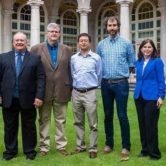
Alabama-based Auburn University, Tuskegee University and Southern Union State Community College have received an NSF $1.9M grant to find new ways to recycle multilayer plastics. The grant funds a project called “Supercritical Extraction for the Elimination of End-of-Life Plastics,” and will begin Jan 1, 2022.
The group of eight researchers will study the properties of supercritical carbon dioxide mixtures to enable the separation of the materials used in typical multilayer food packaging. If successful, the team will then apply the new method to preexisting recycling streams and study its economic and social impacts.
VERMONT: UVM, UMaine, VTC Win $4 Million NSF Grant to Create Next Gen Sensor Networks for Infrastructure Monitoring
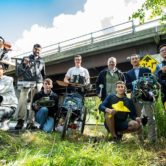
Researchers at the University of VERMONT, the University of MAINE and VERMONT Technical College have received a $4M grant from NSF to develop and test new technologies that could make monitoring the safety and performance of infrastructure less expensive, more accurate and more widespread, resulting in more dependable, durable structures in the future.
The project also addresses human infrastructure through engaging a group of faculty, grad students and undergrad at the three schools to create a trained workforce that could design and manufacture the new technologies the research project will develop and make use of. K-12 students will also participate.

SOUTH CAROLINA: COBRE researcher receives $1.67M NIGMS grant to update CDC vaccination recommendations
Dr. Xia Jing, Assistant Professor in Public Health at Clemson University and SC TRIMH COBRE faculty, received a five-year, $1.67M NIH NIGMS grant to improve process to update Centers for Disease Control and Prevention (CDC) vaccination recommendations in clinics’ computer systems, enhance patient care.
The project’s goal is to make it easier for health care providers in small primary care settings to update their clinical decision support rules from the CDC independently. These clinical decision support rules for immunizations can help physicians provide the recommended immunizations for patients more consistently.
RHODE ISLAND: The Miriam Hospital receives NIGMS $11.1M grant to research stress, trauma, and resilience
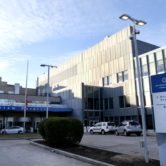
The Miriam Hospital has received an $11.1M NIGMS grant to establish a Center of Biomedical Research Excellence (COBRE) in Rhode Island devoted to a growing field of inquiry – how stress and trauma early in life can have lasting impacts on our health and wellness.
The grant will fund the creation of the STAR COBRE, which will be based out of the Center for Behavioral and Preventive Medicine at The Miriam Hospital. STAR stands for Stress, Trauma, and Resilience.
The center will build research capacity at The Miriam while also establishing partnerships with collaborators at Lifespan, the Warren Alpert Medical School of Brown University, and Care New England, specifically its psychiatric facility, Butler Hospital. Study topics will include the effects that child neglect, sexual abuse, and food insecurity have on mental and physical well-being.
NEW HAMPSHIRE: UNH Scientists Receive $1M to Support Critical Soil Sustainability Research
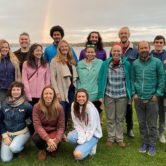
University of New Hampshire scientists have received three grants totaling $1M that will support research addressing urgent questions in soil sustainability and, ultimately, resilient food production in New Hampshire and beyond. The projects range from using state-of-the-art instrumentation to determine components that help build soil organic matter, to increasing soil microbes' ability to increase the efficiency of nitrogen fertilizer, to understanding how plants extracts beneficial nutrients from soil organic matter. Funding sources include USDA and NSF.
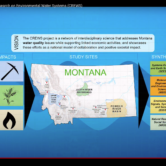
MONTANA: New EPSCoR overview video
A new video from Gravity Media Pro highlights the research and impact of Consortium for Research on Environmental Water Systems (CREWS) project, five-year, $20M NSF EPSCoR RII Track-1. Hear directly from project researchers and students and learn more about the project.
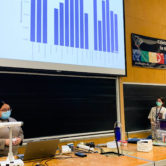
MAINE: Barracuda continues the recent tradition of Maine EPSCoR grants partnering with Upward Bound
Biodiversity and Rural Response to Climate Change Using Data Analysis (Barracuda) – made possible through an NSF four-year, $4M (RII Track-2 FEC) grant – has partnered with the Upward Bound program at the University of Maine.
Upward Bound, a US Department of Education grant, creates opportunities for high school students from lower income and first-generation college-going backgrounds to gain academic skills as well as soft skills needed to prepare and be successful in college. Barracuda’s workforce development component focuses on the development of an interdisciplinary data science curriculum to build data skills in various areas such as ecology, specifically looking at high school students as they enter an undergrad program.
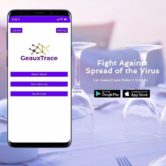
LOUISIANA: Could this app track COVID while keeping your information private? LSU researchers say so.
Louisiana State University researchers have created a cellphone app to track the coronavirus and alert people who might have been exposed to COVID. The GeauxTrace app uses the signal strength from Bluetooth software, which is common on most cellphones, computers and other devices, to assess the distance between cellphones. Users who were in the vicinity of someone who recently tested positive for COVID are informed of the possible exposure.
Lu Peng, an LSU electrical and computer science professor, began developing the app in January with a group of undergraduate and graduate students. It's part of an $888,642 grant from the NIH.

LOUISIANA: LSU, Delaware to Develop Chemical Manufacturing Processes Using CO2 Feedstocks and Renewable Energy
Each day, many of the products we use, whether we know it or not, are produced from natural gas or crude oil using carbon- and energy-intensive processes. But what if we could make those same products using CO2, thereby drastically reducing or even eliminating our carbon footprint?
That is the ultimate goal of a project being conducted by researchers from LOUISIANA State University and the University of DELAWARE, thanks to a four-year, $4M grant from NSF EPSCoR.
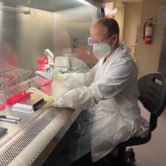
KANSAS: With new $11.35M NIH COBRE award, KU Center continues fight against infectious diseases
NIH has renewed its support of the Chemical Biology of Infectious Disease Center (CBID) at the University of Kansas with a five-year, $11.35M NIGMS COBRE Phase II grant. “This Phase II award is to strengthen and expand the KU scientific community that focuses on better understanding and treatment strategies for infectious diseases with integrated chemical processes,” said P. Scott Hefty, professor of molecular biosciences, COBRE PI. “The CBID Center is intended to bridge infectious disease and medicinal chemistry expertise to better address the public health challenges.”