Success Stories
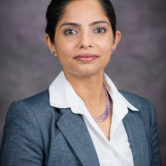
KANSAS: Researcher awarded $750K USDA grant to develop irrigation strategies in eastern Great Plains
Vaishali Sharda, assistant professor of biological and agricultural engineering at Kansas State University, has received a USDA grant to develop water and nutrient management strategies to aid in managing climate risks and preserving resources in the eastern Kansas River Basin.
Sharda is the K-State lead for the four-year, $750,000 project, “Irrigation at the new 100th Meridian: Adaptation to manage climate risks and preserve water resources in the Eastern Kansas River Basin."
The project aims to help the region adapt to current and future changes in climate as the 100th meridian, which separates the arid western United States from the humid eastern half of the country, shifts eastward. The hydroclimatic conditions characterizing the 100th meridian are expected to continue to migrate eastward throughout the 21st century.
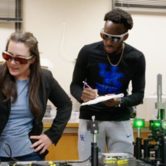
KENTUCKY: $600K NSF-funded engineering research to combat medical device infections
Martha Grady’s, an associate professor in the Department of Mechanical and Aerospace Engineering at the University of Kentucky, most recent project, “Mechanical Mechanisms of Biofilm Survival on Implant Surfaces,” Grady is the recipient of NSF’s prestigious Faculty Early Career Development (CAREER) Award. The program will provide Grady with $600,000 over five years to conduct research surrounding biofilm formation on medical device surfaces.
Grady is hoping to learn more about how these biofilms form on surfaces to help create strategies to decrease antibiotic resistance and combat medical device infections.
SOUTH DAKOTA: USD Receives Nearly $1M in NSF Funding for Grounding Science Project
The University of South Dakota (USD) recently received $999,976 in funding from the NSF for the project titled Grounding Science Education in Indigenous Knowledges, Food Systems, and Sustainability (Grounding Science). Through Grounding Science, the university seeks to formalize more paths for students from tribal colleges to continue their education at USD, currently the only school in the region to offer sustainability degrees at the undergraduate, master’s and doctoral levels.

SOUTH CAROLINA: Clemson receives part of $15.8M in awards from NIIMBL
Clemson University is one of a team of institutions who have received one of 14 new projects in technology and workforce development awarded by the National Institute for Innovation in Manufacturing Biopharmaceuticals (NIIMBL). NIIMBL awarded a total of approximately $15.8 million in planned project activities through the Institute’s Project Call 5.2 that will help to address key opportunities for innovation in the biopharmaceutical industry.
NIIMBL is a public-private partnership whose mission is to accelerate biopharmaceutical innovation, support the development of standards that enable more efficient and rapid manufacturing capabilities, and educate and train a world-leading biopharmaceutical manufacturing workforce, fundamentally advancing US competitiveness in this industry. NIIMBL is part of Manufacturing USA®, a diverse network of federally-sponsored manufacturing innovation institutes, and is funded through a cooperative agreement with the National Institute of Standards and Technology (NIST) in the US Department of Commerce with significant additional support from its members.
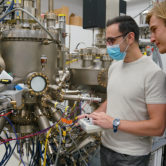
NEW MEXICO: UNM Receives part of $4M NSF Award to Further Quantum Science and Engineering Research
NSF has awarded researchers at the University of New Mexico and the University of Delaware an EPSCoR Track 2 grant for $4 million to advance quantum photonic technology research and to establish a quantum science and engineering graduate program at UNM.
The award, Laying the Foundation for Scalable Quantum Photonic Technologies is led by principal investigator Ganesh Balakrishnan, director of NM EPSCoR and professor of electrical and computer engineering at UNM, in collaboration with UNM investigators Tara Drake, assistant professor of physics and astronomy, Terefe Habteyes, associate professor of chemistry and chemical biology, and Marek Osinski, distinguished professor of electrical and computer engineering, alongside faculty at UD. The research will be based in the Center for High Technology Materials (CHTM) at UNM.
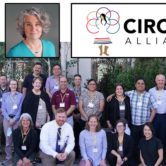
NEW MEXICO: EPSCoR and UNM collaborating on a $10M NSF Award to Advance Native American STEM Education
NSF has awarded researchers at the University of New Mexico, New Mexico NM EPSCoR, and partner institutions from five states in the western half of the US (Idaho, Montana, North Dakota, South Dakota, and Wyoming) $10 million to address the under-representation of American Indian and Alaska Native (AI/AN) students in the STEM disciplines and workforce.
The Cultivating Indigenous Research Communities for Leadership in Education (CIRCLES) Alliance ultimately aims to inform educational institutions and the NSF in AI/AN cultural understanding and humility while shifting approaches towards AI/AN education.
KENTUCKY: Bellarmine receives 5-year $1.45M NSF grant to prepare STEM teachers
Bellarmine University has received a five-year $1.45 million grant from NSF’s Robert Noyce program to “recruit and prepare highly qualified science and mathematics teachers” for Kentucky middle and high schools, according to a news release from the school.
The grant aims to help alleviate a teacher shortage in STEM subjects — science, technology, engineering and math. It will support at least 25 students in Bellarmine’s Annsley Frazier Thornton School of Education who intend to teach physics, chemistry, biology and math. Noyce Knight Scholars may be undergraduate and or graduate students.
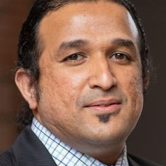
KENTUCKY: Researcher Receives $600,000 DEPSCOR Award to Model Hypersonic Environments
Savio Poovathingal, University of Kentucky, received a three-year $600,000 award from the Department of Defense Established Program to Stimulate Competitive Research (DEPSCoR) for his project titled, “Fragmentation and melting of ice particles subjected to hypersonic aerothermodynamic environments.” Poovathingal’s team is working to create predictive modeling about how ice particles respond when a hypersonic vehicle passes through them.
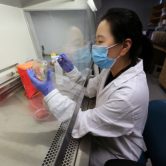
ARKANSAS: UAMS researchers begin $1M 3-year study to detect drug-resistant bacteria on raw veggies
University of Arkansas researchers are studying whether raw vegetables contain antibiotic-resistant bacteria with the help of a $1 million grant from the USDA. Regulatory authorities inspect for antibiotic-resistant bacteria in animals killed for meat and dairy but not in vegetables, which are often eaten uncooked.
While food safety regulations require inspectors to monitor antibiotic-resistant bacteria in retail meat and food production animals, there is no such mandated oversight for vegetables. The lack of oversight could potentially lead to people eating produce laced with dangerous germs. Considering vegetables are often eaten raw, there is a chance that drug-resistant bacteria on the produce could cause hard-to-treat infections in consumers.
LOUISIANA: Tulane awarded $3.5 million to study how killer immune cells prevent birth defects
Microbiologist and immunologist Amitinder Kaur of the Tulane National Primate Research Center was awarded a $3.5 million grant to study how specialized immune cells could be used to block a common virus that, in some cases, causes developmental disabilities when transmitted during pregnancy. The grant, awarded by Eunice Kennedy Shriver National Institute of Child Health and Human Development, will examine whether cells that naturally kill cytomegalovirus can be introduced in pregnancy to prevent transmission of CMV, which usually has no effect on children but in rare cases can cause cerebral palsy, microcephaly and other conditions.