Success Stories

OKLAHOMA: Raman Singh named new OK NSF EPSCoR Director
Oklahoma EPSCoR has named Dr. Raman P. Singh as director of the program beginning Oct 1, 2021. Singh replaces Dr. Jerry Malayer, who had served as director since 2010. Malayer recently retired.
Singh serves as the associate dean for engineering at Oklahoma State University-Tulsa and as a faculty member in the School of Materials Science and Engineering and the School of Mechanical and Aerospace Engineering in the College of Engineering, Architecture and Technology at OSU. He also serves as the director of the Helmerich Advanced Technology Research Center on the OSU-Tulsa campus and is appointed as the Helmerich Family Endowed Chair Professor of Engineering.
NEBRASKA: Researchers receive $1.125M NASA EPSCoR grant
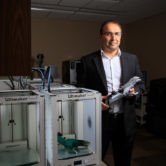
Thanks to a new $1.125M NASA EPSCoR grant, researchers from University of Nebraska-Omaha will soon aid in the development and testing of antimicrobial and recyclable materials for in-space manufacturing.
Through this grant funding, two new antimicrobial materials will be developed by Copper3D, then manufactured and tested for safety on Earth in a replica of the International Space Station's (ISS) Additive Manufacturing Facility. Once the safety of the material has been validated, the team will prepare the launch, operation, and return-to-Earth activities.
LOUISIANA: INBRE researcher receives $348,650 NIH grant
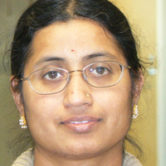
LBRIN (Louisiana INBRE) funded researcher, Dr. Jayalakshmi Sridhar from Xavier University, received a $348,650 grant from the NIH for her project entitled, “Development of Therapeutics Targeting Tauopathy for Alzheimer's Disease.”
KENTUCKY: Center project receives $1.3M in DOE funding
The University of Kentucky Center for Applied Energy Research (CAER) received $1.3M from the DOE’s National Energy Technology Lab to develop technology that will capture carbon dioxide directly from the atmosphere. This direct air capture project will leverage technology and innovation previously developed at UK by CAER’s Power Generation Research Group. CAER will be developing an intensified, cost-effective and scalable process using aqueous potassium hydroxide as capture solvent for direct air capture.
DELAWARE: DSU joins $2.47M grant research consortium with two other HBCUs
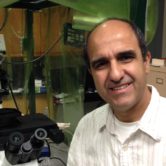
DE-INBRE Site PI at Delaware State University, Dr. Hacene Boukari, is the co-investigator on a $2.47M grant from the National Nuclear Security Administration (NNSA). The Consortium for Laser-based Analysis of Nuclear and Environmental Materials (LANEM) brings together researchers and students from Del State, Alabama State University and Florida A&M University. In addition, two national labs – the Pacific Northwest National Lab in Richland, WA, and the Y-12 National Security Complex in Oak Ridge, TN – are also a part of the consortium.
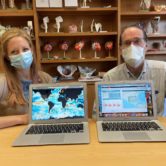
ARKANSAS: Three UAMS Researchers Receive DART Seed Grants for Data Science Projects
Three researchers at the University of Arkansas for Medical Sciences recently received seed grants from Arkansas EPSCoR. Drs. Kevin Phelan and Tiffany Huitt received a two-year $97,608 grant for their project, “Piloting Big Data Science in Arkansas Middle Schools.”
Dr. Sean Young received $55,696 for his project, “Geospatial Data Science in Public Health: Inter-institutional educational collaboration to enhance data science curriculum in Arkansas.”
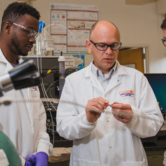
SOUTH CAROLINA: NIH awards TriAltus Bioscience $256,000 NIH grant
TriAltus Bioscience has been awarded an NIH $256,576 Phase I Small Business Technology Transfer (STTR) grant for its project called “Universal affinity membrane chromatography for rapid, one-step purification of proteins" that aims to make use of TriAltus’ patented protein purification technology.
The highly competitive STTR program funds joint research proposals from small businesses that partner with universities and nonprofits. TriAltus will work in tandem with Dr. Scott M. Husson of Clemson University, who will serve as principal investigator on the project, as well as Dr. Dmitry Vassylyev, TriAltus’ co-founder and professor of biochemistry and molecular biology at UAB. Husson has been a past recipient of an SC EPSCoR Phase-0 award.
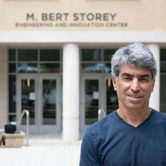
SOUTH CAROLINA: Researcher receives $1.5M NIH grant to use smartwatch tracking technology to ensure accurate medicine-taking process
SC INBRE Bioinformatics Core Director Dr. Homay Valafar is researching and developing methods of extracting and interpreting data from sensors which can be incorporated into smartwatches to monitor and identify medication adherence remotely and unobtrusively. “NIH recently solicited participation of researchers to collect data in areas where they believe further studies are needed. One area is what we are doing now: human activity recognition by collecting data that can simply and unobtrusively monitor people's activities,” said Valafar whose research is supported by a $1.5M grant from the NIH.
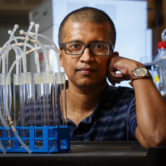
NEBRASKA: Husker scientist receives $1.8M from NIH/HHS to study cellular metabolism’s role in fight against diseases
Cellular metabolism is emerging as a critical factor in controlling the immune system’s response to pathogens that cause human disease, as well as the activity of cancerous cells. Rajib Saha, assistant professor of chemical and biomolecular engineering at University of Nebraska–Lincoln, is studying how those relationships evolve, with an eye toward development of therapeutics or drugs that could give the immune system an edge over these sometimes deadly enemies. He has received a five-year, $1.8M NIH/DDS Maximizing Investigators Research Award (MIRA) to support his research.
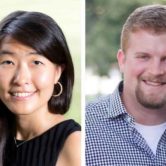
ARKANSAS: Agriculture Faculty Net $500K Grant for Study of Impacts of Perennial Forage Systems
Two Arkansas researchers will be gauging consumer sentiment as well as evaluating any health and economic benefits of meat products from livestock raised on perennial forage systems.
The $10M grant from the USDA NIFA (EPSCoR), will focus on studying and promoting perennial forage systems. The grant is part of USDA's efforts to increase US farm production by 50% while reducing the environmental footprint for production by 40% by 2050. Arkansas was awarded just over $500,000 of the grant for its work.