ALASKA: UAF part of $7M NSF EPSCoR Track-2 Award
Alaska can’t offer much in the way of sagebrush or pygmy rabbits. What it does have is burgeoning capacity to study microbes, which is why a consortium of Western EPSCoR states is partnering with the University of Alaska-Fairbanks on a study of how the gut bacteria of desert animals enable them to digest toxic plants. Mario Muscarella, an Assistant Professor of Microbiology at UAF is the newest partner in “Genomics Underlying Toxin Tolerance (GUTT),” an NSF EPSCoR Track-2 project with the goal of better understanding the relationship between toxic plants and herbivores. Campuses in Idaho, Nevada and Wyoming have been collaborating on the $7M project.
The sprawling GUTT project tackles plant-animal interactions from a number of different angles – an approach the research team calls “culture-omics” — and now involves researchers from six different campuses. Muscarella said he got involved in the project last year when project lead Jennifer Forbey of Boise State approached him about injecting his own techniques, which entail culturing gut microbes and studying them through the lenses of physiology and genomics.
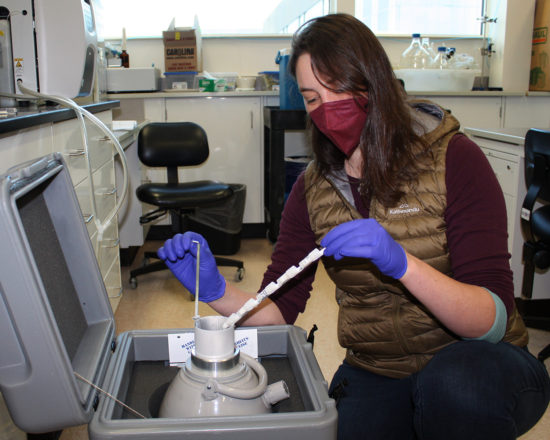
“Mario’s coming in with a lot of skillsets for culturing that we wouldn’t necessarily have at Boise State,” said Stephanie Galla, a postdoctoral researcher at Boise State University working on the effort. Galla visited Muscarella’s lab in late January along with Boise State grad student Jessica Bernardin. “There are a lot of tools here where you’re able to culture and measure the physiology — not just understand the genetics, but what the microbes are actually doing.” She also noted another allure of UAF is its infrastructure for culturing and preserving specimens, including both excellent lab facilities and expansive liquid nitrogen tanks at the UA Museum of the North.