NASA’s EPSCoR Funds Model Spacesuits for the Future
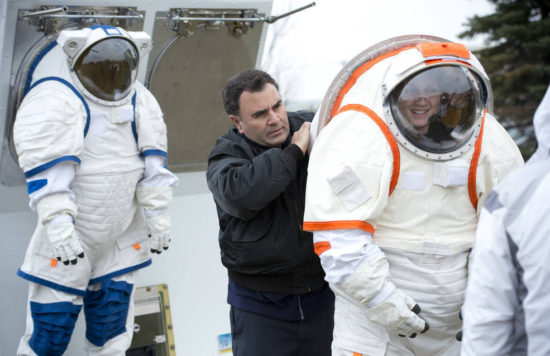
Ever since he was a young boy, watching the televised lunar landings from his hometown of Cañuelas, Argentina, Pablo de León knew he wanted to contribute to human space exploration. Now, as chair of the Department of Space Studies at the University of North Dakota (UND), he’s doing just that, designing and developing 3D-printed spacesuit models that may support future exploration of Mars. The research is made possible through EPSCoR, a part of NASA’s Office of STEM Engagement and based at the agency’s Kennedy Space Center in Florida.
De León moved to the United States more than 30 years ago to fulfill his dream of contributing to human spaceflight and, for the past 17 years, he has been a professor at UND, conducting critical research in the area of planetary spacesuits. Most recently, he received a $750,000 grant – spread across three years – from NASA’s EPSCoR to develop a 3D-printed spacesuit model and identify key technologies that may reduce the logistical supply chain needed from Earth when astronauts begin venturing to the Moon and Mars.
“To me, as a researcher, EPSCoR has been incredibly useful because we’re able to open new lines of research because we otherwise wouldn’t have funding to start development,” de León said. “There are new things that can potentially be game changers for the future of human spaceflight and, really, the only way for us external researchers to be able to do this research is through the NASA EPSCoR program.”