Research Highlights
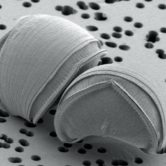
HAWAI'I: Scientists discover new and unusual species of diatoms in waters off Hawaii
Scientists have discovered two new and unusual species of diatoms in the waters off Hawaii, they report in Nature Communications. The NSF-funded researchers at the University of Hawai'i at Mānoa, University of California Santa Cruz, and California State University San Marcos found that the organisms fix nitrogen, a critical process that supports productivity in the nutrient-poor open ocean they inhabit.
The new diatom species are smaller and belong to a different lineage with an elongated, or "pennate" shape with bilateral symmetry. Their symbionts are also smaller and unicellular, and they do not glow under fluorescent light because they do not contain chlorophyll, making them nearly invisible inside the diatom.
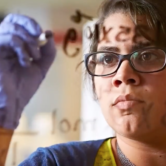
DELAWARE: INBRE researcher featured in video
ChristianaCare Gene Editing Institute, a member of the Delaware INBRE network, recently produced a video following DE INBRE researcher Dr. Natalia Rivera-Torres on her journey from being a student and mentee at the Institute to becoming a Principal Investigator.
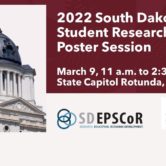
SOUTH DAKOTA: State Capitol Will Host Student Researchers March 9
South Dakota colleges and universities will send 11 outstanding undergraduate student researchers to the State Capitol next week to share their research work with lawmakers and the public. The 2022 Student Research Poster Session, co-sponsored by SD EPSCoR, is open to the public.
These 11 student researchers represent students statewide who conduct research in a variety of disciplines. Now in its 25th year, the event showcases research and creative activities of undergraduate students, as well as highlights successful faculty research and commercialization efforts. The session is organized by the South Dakota Board of Regents and SD EPSCoR (South Dakota’s Established Program to Stimulate Competitive Research).

NEBRASKA: NE EPSCoR engineer on International Research Team Published in Feb 23 issue of Nature
Nebraska EPSCoR engineer Mathias Schubert added his leading expertise in ellipsometry – measuring the change in polarization as light reflects or transmits from a material structure – to an international team including scientists from Germany’s Max Planck Society, for research that appears in the highly-regarded journal, Nature.
“Hyperbolic shear polaritons in low-symmetry crystals” was published in the February 23, 2022 edition of the publication. The article’s authors believe their “results will motivate new directions for polariton physics in low-symmetry materials, which include geological minerals, many common oxides, and organic crystals, greatly expanding the material base and extending design opportunities for compact photonic devices.”

VERMONT: New climate change study on greenhouse gas emissions
Vermont EPSCoR Scientist Brian Beckage is part of a team that published a study in the journal Nature suggesting that “the world has moved decisively away from a no-policy, business-as-usual” pathway on greenhouse gas emissions. The team concludes, the planet is likely heading toward temperatures by the end of this century that are substantially lower than the 3.9˚C (about 7˚F) of warming predicted in the absence of climate policy.
Human-caused climate change is just that: human-caused. However, most models of climate change treat the behavior of people — our choices, policies, and perceptions — as a fixed starting point. They develop a range of possible scenarios and policy pathways — and then use those as predetermined and static patterns to run models of the physical system.
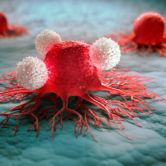
SOUTH CAROLINA: New method of targeting mutant RAS provides hope for cancer patients
Medical University of South Carolina (MUSC) Hollings Cancer Center researcher John O’Bryan and colleagues have demonstrated a new therapeutic way to block a protein that is frequently mutated in cancers. These proof-of-principle findings were published in Cell Reports. This work, which involves inhibiting the oncogenic protein RAS using small molecules, lays a strong foundation for the development of clinical anti-cancer therapies and provides a framework for other groups to target RAS in more effective ways. “The RAS protein, which was considered undruggable, is in fact able to be targeted by drugs,” said O’Bryan.
The researchers are very hopeful that this discovery can be used more comprehensively in the future. While cancers do adapt and mutate to become resistant to therapeutics, new drugs based on this concept might serve as additional tools in the arsenal to treat cancer.
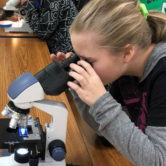
NORTH DAKOTA: NSF EPSCoR State Office-sponsored STEMzone with North Dakota’s Gateway to Science
EPSCoR partner North Dakota’s Gateway to Science continues to deliver hands-on STEM programming throughout North Dakota. Gateway to Science on the Go was recently in Jamestown with its STEMzone program at Lincoln Elementary School.
STEMzone is a carnival-style event with STEM stations that allow students to engage in hands-on learning experiences in STEM. The STEMzone in Jamestown included stations where students could work on circuits, do brain teasers, look at objects through microscopes, build structures, create and test air-powered vehicles, and more.
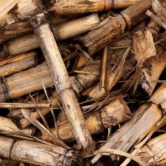
LOUISIANA: LSU chemists unlock the key to improving biofuel and biomaterial production
As the world searches for and demands more sustainable sources of energy and materials, plant biomass may provide the solution by serving as a renewable resource for biomaterials and biofuel production. However, until now, the complex physical and chemical interactions in plant biomass has been a challenge in post-harvest processing.
In a new study published today in Nature Communications, LSU Department of Chemistry Associate Professor Tuo Wang and his research team reveal how carbohydrates interact with lignin to form plant biomass. This new information can help advance the development of better technology to use biomass for energy and materials.
The Wang research team examined the nanoscale assembly of lignocellulosic components in multiple plant species, including grasses and hardwood and softwood species. The grasses contain many food crops, such as maize, and are the primary feedstock for biofuel production in the U.S.. Woody plants, often used for building construction materials, have become promising candidates for the next generation of biofuel to reduce the dependence on food crops.
Portions of this work was sponsored by grants from the DOE and NSF.
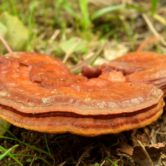
LOUISIANA: LSU chemist and collaborator discover a natural-based therapy to treat an aggressive form of breast cancer
A Louisiana State University chemist and her research team have discovered a promising new treatment for triple-negative breast cancer, or TNBC, an aggressive form of breast cancer with limited treatment options. Compared to other types of breast cancer, TNBC has a shorter overall survival rate, and is more common in women of color and women under the age of 40.
A portion of this research was funded by the NIH INBRE program.
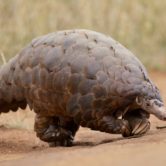
ARKANSAS: NSF Researcher and Team Discover Fossil of New Species of Pangolin in Europe
Pangolins are unique, scaled mammals found across Asia and in parts of Africa. Claire Terhune, University of Arkansas, and a team of researchers funded by NSF are using pangolin fossils to better understand the evolution and biogeography of ancient pangolins during the Pleistocene.
This work was published in the Journal of Vertebrate Paleontology. Terhune’s collaborators were Sabrina Curran at Ohio University, Timothy Gaudin the University of Tennessee at Chattanooga and Alexandru Petculescu at Emil Racoviţă Institute of Speleology in Bucharest.