Research Highlights
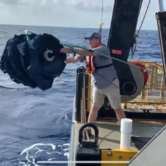
DELAWARE: EPSCoR/INBRE cross collaboration on marine viruses and microbes
In an attempt to study microbes in their natural environment, co-chief scientists Drs. Eric Wommack and Shawn Polson led other members of the Viral Ecology and Informatics Lab (VEIL) in an NSF EPSCoR-funded mission on the R/V Hugh R. Sharp, University of Delaware’s 146-foot ocean-going research vessel. They spent eight days at sea to conduct what is known as a Lagrangian Experiment, monitoring a single water mass over time.
The members of the VEIL involved in the experiment included Wommack; Polson; Barbra Ferrell, VEIL lab coordinator; Rachel Keown, doctoral student in biological sciences; Amanda Zahorik, doctoral student in biological sciences; and Amelia Harrison, VEIL technician and master’s degree graduate in marine biosciences. In addition, they were joined by Bruce Kingham, director of the UD Sequencing and Genotyping Center.
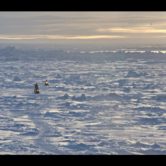
ALASKA: Scientists aim to improve sea ice predictions' accuracy, access
Alaska NSF EPSCoR Boreal Fires co-lead Uma Bhatt is also project lead for the Sea Ice Prediction Network. SIPN formed shortly after the then-record Arctic sea ice minimum of 2007. Bhatt said the SIPN team hopes to work with the Alaska maritime industry, especially the Bering Sea snow crab fishermen, to make ice forecasts even more accurate and useful to those who work in or live next to the world’s polar waters and to scientists studying sea ice decline and the Arctic climate.

VERMONT: New Insights on how Different Extreme Events Interact with Each Other Effects Cyanobacteria Blooms in Vermont’s Missisquoi Bay
In the heat of summer, signs go up at beaches and access points around Lake Champlain, warning of the presence of cyanobacteria and its potential dangers to people and pets. Scientists and lake experts have predicted that climate change will spur the formation of blue-green algae blooms, which harm water quality and recreational use of the lake by residents and tourists.
Now, a new study led by a team of researchers based at the University of Vermont has applied a unique modeling method to more precisely assess the influences of temperature and precipitation – and the relationship between them – on cyanobacteria growth. They focused on Missisquoi Bay, a shallow swath of northeastern Lake Champlain where cyanobacteria is prevalent.
The study was published in the journal Science of the Total Environment by a multidisciplinary team working with the Vermont Established Program to Stimulate Competitive Research, or VT EPSCoR, funded by the National Science Foundation.
The researchers found that major storms, such as Nor’easters and hurricanes, followed by prolonged periods of heat – even a year or more after those storms – created the ripest atmosphere for the blue-green algae, which is not actually algae but bacteria.
NEBRASKA: EPSCoR researcher published in Applications in Plant Sciences
Nebraska EPSCoR-funded researcher Dr. Gregory J. Pec, an early career faculty member at University of Nebraska at Kearney, co-authored, “Choices on sampling, sequencing, and analyzing DNA influence the estimation of community composition of plant fungal symbionts,” in Applications in Plant Sciences.
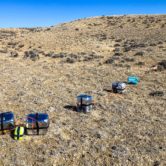
WYOMING: Space Grant high school students outreach project
Wyoming Space Grant was able to launch a balloon launch at Shoshoni High School with Arduino payloads. After bursting at a relatively low 82,000 feet, the payload returned to Earth and landed on BLM near Arminto. They were able to collect a nearly full dataset of ozone and UV measurements in the stratosphere.
This flight was part of the LIFT Project, the space grant’s undergrad outreach program that focuses on high-altitude ballooning.
SOUTH DAKOTA: NIH study suggests people with rare diseases face significantly higher health care costs
A new, retrospective study of medical and insurance records indicates health care costs for people with a rare disease have been underestimated and are three to five times greater than the costs for people without a rare disease. The study, led by the NIH’s National Center for Advancing Translational Sciences (NCATS), provides new evidence of the potential impact of rare diseases on public health, suggesting that nationwide medical costs for individuals with rare diseases are on par with those for cancer and heart failure.
The pilot study included Sanford Health, Sioux Falls, South Dakota. The study’s results were published Oct 21 in the Orphanet Journal of Rare Diseases.
NORTH DAKOTA: NASA ND Space Grant astronomers reach for the hot Jupiter exoplanets
Discovered in 2015, KELT-10 is a little younger, slightly hotter and 40 percent brighter than our sun. But KELT-10b, the only planet orbiting the star, is a gas giant like Jupiter that orbits its star ten times closer than Mercury’s path around the sun. A year lasts merely four days on KELT-10b.
At UND’s Department of Space Studies, observations of this “Hot Jupiter” planet are being used to better understand the formation and characteristics of exoplanets – planets and planetary systems beyond our own.
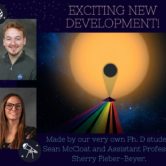
NASA ND Space Grant’s Sean McCloat, PhD student, and Dr. Sherry Fieber-Beyer, Assistant Professor, have made an amazing development using transit spectroscopy – how we tell what other objects in the universe are composed of, using light.
NEBRASKA: EPSCoR researcher joins NSF I-Corps program
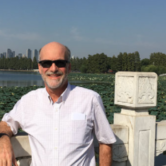
Nebraska EPSCoR researcher Dr. Daniel Schachtman is one of the faculty leads for one of the three campus teams who joined the Nebraska 2021 NSF I-Corps program, NUtech Ventures: Nebraska Introduction to Customer Discovery.
“The support and network I’ve gained has really blown me away. We have a pretty clear plan for the next steps to start this business.” Daniel Schachtman, who participated in NUtech’s spring 2021 entrepreneurship program.
MISSISSIPPI: MSU researchers’ rapid COVID-19 antibody test recognized with TechConnect Innovation Award
A Mississippi State University research team’s patent-pending method for rapidly detecting COVID-19 neutralizing antibodies is being recognized this week at a leading global technology conference.
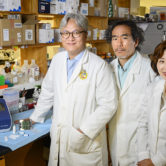
A team of researchers led by Keun Seok Seo, associate professor in the College of Veterinary Medicine’s Department of Comparative Biomedical Sciences, was recognized with an Innovation Award at the TechConnect World Innovation Conference and Expo in Washington, DC. The group developed a novel method to rapidly test for COVID-19 neutralizing antibodies, providing an affordable and fast method for testing that differentiates between neutralizing and non-neutralizing antibodies.
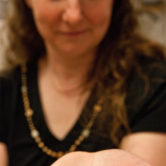
MAINE: INBRE Biology Students + Crickets + High Performance Computers = Scientific Breakthrough
Bowdoin College professor Hadley Horch, PhD, has collaborated with the Maine INBRE Bioinformatics Core to advance her research and provide cutting-edge student training opportunities in computational biology.
Horch, her neurobiology students, and core bioinformaticians, with the support of Bowdoin’s high-performance computer cluster, took on the project of creating the largest existing transcriptome of the field cricket, an animal that has the remarkable ability to neurologically compensate for the loss of a sensory organ.