Research Highlights
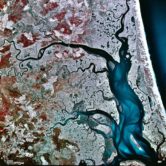
NEW HAMPSHIRE: New research clarifies the capacity of rivers to filter pollutants
Like a human body's circulatory system that moves blood and carries nutrients, Earth’s river networks are similar conduits.
One of a river's important functions is removing pollution that ends up in its waters – from roads, lawns, septic systems, sewage treatment plants and other sources – before those waters reach sensitive downstream ecosystems like estuaries and oceans.
New NSF-funded research by New Hampshire investigators published in Nature Communications finds that watershed size plays a major role in a river network's ability to do that work. The findings further the understanding of which estuaries and coastal areas will be impacted by human development in their watersheds.
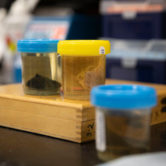
KENTUCKY: Damaged Lungs Breathe Life into UK COVID Research
A small black lump, about an inch or so in width, rests on the bottom of a sealed plastic container. It doesn’t look like much – in fact, it doesn’t look like anything. But this little black lump has untold potential, full of secrets for the researchers at Kentucky Research Alliance for Lung Disease (K-RALD) to discover about the pandemic that has ravaged the world for more than two years. Researchers at K-RALD are involved in a number of clinical trials, consortiums and networks dedicated to improving the outcomes of patients with lung disease. They are looking for markers, trying new medications and developing new methods for identifying how diseases affect lung tissue on the molecular level. Their work is published and shared around the world, becoming part of a global collaboration dedicated to curing lung disease and improving not just a patient’s outcome, but their quality of life.
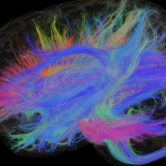
DELAWARE: INBRE and COBRE researchers published in Journal of Neuroscience
Delaware INBRE-funded researcher Christine Charvet, COBRE Delaware Center for Neuroscience Research-funded researcher Brian Edlow and team were recently published in the Journal of Neuroscience. “We integrated gene expression with diffusion MR imaging to study the evolution of human brain pathways,” said Charvet of their paper, “Tracing modification to cortical circuits in human and non-human primates from high resolution tractography, transcription, and temporal dimensions.”
ALASKA: EPSCoR researchers featured on ABC TV show
Alaska EPSCoR Fire and Ice researchers Eran Hood and Jason Fellman recently appeared on Jeff Corwin's "Wildlife Nation" show on ABC. It is not available online — be sure to catch it on TV.
Join host Jeff Corwin on an adventure into the wilds of Alaska to understand the great environmental challenge of our time: climate change. First, Jeff explores the beautiful Mendenhall Glacier. Jeff rappels down into the glacier’s cracks and crevasses - and flies a drone high above the glacier’s edge — to discover how warming temperatures will forever change this ancient and massive block of ice. Later, Jeff investigates the impact of melting glacier ice on one of Alaska's most vital species: salmon. Jeff works alongside dedicated conservationists along the beautiful Montana River to collect tiny baby salmon and carefully study them. This research will help Alaska’s Department of Fish and Wildlife better manage salmon populations and give biologists a window into how climate change will affect the entire ecosystem.
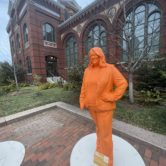
SOUTH DAKOTA: Female researcher chosen for national exhibit
SD EPSCoR REACH Committee member Dr. Ashley Podhrasky, Dakota State University VP for Research and Economic Development, was honored to be one of the 120 statues of women displayed outside of the Smithsonian Museum in a project entitled, “#IfThenSheCan – The Exhibit.” Podhrasky was recognized for her innovative work in STEM.
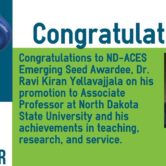
NORTH DAKOTA: EPSCoR researcher promoted
North Dakota EPSCoR congratulates New Discoveries in the Advanced Interface of Computation, Engineering, and Science (ND-ACES) Emerging Seed Awardee, Dr. Ravi Kiran Yellavajjala on his recent promotion to Associate Professor at ND State University and his achievements in teaching, research and service.
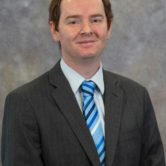
NEW MEXICO: NMSU professor tackling capacity issues of communication infrastructure and need for engineers
David Mitchell is tackling two of society’s biggest problems with one ambitious project. The New Mexico State University assistant professor is researching technological methods to increase the world’s rapidly increasing need for expanded communications capacity. At the same time, he hopes to inspire the next generation of students to pursue STEM fields and address the world’s emerging technological needs.
Mitchell, assistant professor in the Klipsch School of Electrical and Computer Engineering, recently received the NSF Faculty Early Career Development award. The CAREER award is one of the most prestigious NSF awards and aims to support early-career faculty who have the potential to serve as academic role models in teaching and research.
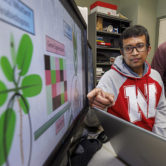
NEBRASKA: Researchers study corn root growth under nitrogen-poor conditions
University of Nebraska-Lincoln researchers are studying how corn roots adapt to insufficient nitrogen, with an eye toward making genetic tweaks that might increase, or at least maintain, plant growth and yields without excessive application of fertilizer.
The growth and development of corn largely depends on its nutrient uptake through the roots, so studying their growth, response and associated metabolic reprogramming to stress conditions is becoming an important research focus, said Rajib Saha.
The research is funded by a NSF CAREER grant; an NSF Established Program to Stimulate Competitive Research grant that supports the Nebraska EPSCoR Center for Root and Rhizobiome Innovation, awarded to Saha; and the Center for Bioenergy Innovation, a DOE Research Center supported by the Office of Biological and Environmental Research in the DOE Office of Science in which one of the collaborators, Penn State’s Costas Maranas, is involved.
NEBRASKA: EPSCoR researchers published in Plant Methods
University of Nebraska-Lincoln researchers Mars Lopez-Guerrero, Peng Wang, Felicia Phares, Daniel Schachtman, Sophie Alvarez and Karin van Dijk were recently published in Plant Methods, “A glass bead semi-hydroponic system for intact maize root exudate analysis and phenotyping.”
This work was supported by a grant from the National Science Foundation EPSCOR to fund The Center for Root and Rhizobiome Innovation (Award OIA-1557417, Nebraska EPSCoR RII Track-1: Center for Root and Rhizobiome Innovation).
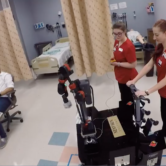
KENTUCKY: Robotic nurse assistant to help with routine tasks
With support from the National Science Foundation, roboticist Dan Popa and a team of engineers and nurses at the University of Louisville are developing a new generation of assistive robots designed to help nurses care for patients in a hospital. Adaptive Robotic Nurse Assistants are being designed to help with routine tasks for patients, such as delivering items, taking them for walks, and alerting nurses to emergencies.