VERMONT: New climate change study on greenhouse gas emissions
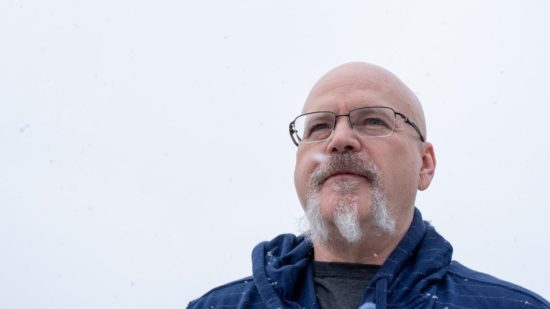
Vermont EPSCoR Scientist Brian Beckage is part of a team that published a study in the journal Nature suggesting that “the world has moved decisively away from a no-policy, business-as-usual” pathway on greenhouse gas emissions. The team concludes, the planet is likely heading toward temperatures by the end of this century that are substantially lower than the 3.9˚C (about 7˚F) of warming predicted in the absence of climate policy.
Human-caused climate change is just that: human-caused. However, most models of climate change treat the behavior of people — our choices, policies, and perceptions — as a fixed starting point. They develop a range of possible scenarios and policy pathways — and then use those as predetermined and static patterns to run models of the physical system.
“In most models, there’s no feedback between the social and physical systems,” says UVM scientist Brian Beckage, a co-author on the new study. “But we know that people respond, and we change our behavior in response to, for example, how climate is changing, what our social networks are doing, and the cost of alternative energy.”
The study — supported by the National Socio-Environmental Synthesis Center and the National Science Foundation — indicates that public perceptions of climate change, the future cost and effectiveness of climate mitigation and technologies, and how political institutions respond to public pressure are all important determinants of the degree to which the climate will change over the 21st century.