News & Updates
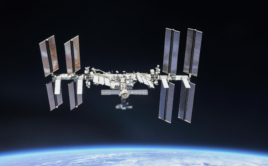
NASA Selects 5 Proposals to Provide New Insights from Openly Available Data in the Physical Sciences Informatics System
NASA’s Physical Sciences Research Program has selected five ground-based proposals in response to the Physical Sciences Informatics System call for proposals. This program element is part of Science Mission Directorate (SMD) Research Opportunities in Space and Earth Sciences - 2021 (ROSES-2021) solicitation. One of the projects represents the EPSCoR jurisdictions:

Biden’s new biomedical innovation agency gets its first director
President Joe Biden has chosen Renee Wegrzyn, a 45-year-old applied biologist with a background in industry and government, to head his new agency for biomedical innovation, the Advanced Research Projects Agency for Health (ARPA-H).
Biden Signs Order to Boost Biomanufacturing, Compete with China
President Joe Biden signed an executive order laying out a strategy to bolster domestic biomanufacturing and reduce reliance on China for new medicines, chemicals and other products.
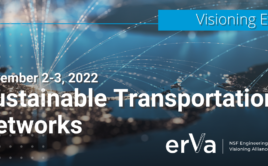
ERVA seeks to identify event co-hosts
Selected organizations will work with ERVA staff and volunteers to create and execute visioning events that convene top researchers from various sectors and other interested parties. During these invitation-only sessions, an interdisciplinary group of experts from the public and private sectors will identify bold and transformative new engineering research directions with the goal of catalyzing the engineering community's pursuit of innovative, high-impact research that benefits society.
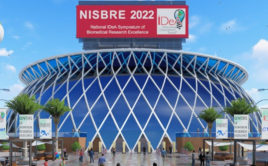
8th Biennial National IDeA Symposium of Biomedical Research Excellence (NISBRE), Dec 12-14, virtual
The 8th Biennial National IDeA Symposium of Biomedical Research Excellence (NISBRE) will be held virtually Dec 12-14, while the 2024 and 2026 NISBRE will be held in Washington, DC.
NSF, DOD partner to advance 5G technologies and communications for US military, government and critical infrastructure operators
NSF is accelerating 5G solutions to assist the US government and critical infrastructure operators to communicate securely anywhere and anytime.
ERVA seeks nominations for visioning event participants
NSF-funded Engineering Research Visioning Alliance (ERVA) seeks your assistance in identifying participants for their visioning event, Sustainable Transportation Networks, Nov 2-3.
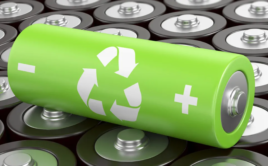
DOE Seeks Public Input on New Programs to Strengthen Domestic Battery Recycling, Create a More Sustainable Battery Supply Chain
The Biden-Harris Administration, through the DOE, has issued a Request for Information (RFI) to help guide the implementation of $335 million in investments from President Biden’s Bipartisan Infrastructure Law for lithium-ion battery recycling programs. Batteries are critical to powering clean energy technologies — from providing energy storage for the electric grid to zero-emissions transportation options, such as electric trucks, buses, or personal vehicles. Expanding options for domestic production of zero-emissions transportation will allow more Americans to benefit from clean transportation, while adding jobs to the clean energy workforce and supporting President Biden’s decarbonization goals. Responses to the RFI are due Oct 14, by 5 pm ET.
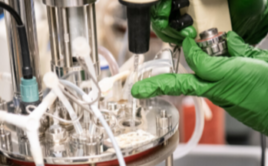
DOE Announces $29.5M for Improved Bioenergy Resource Recovery and Conversion Systems
The DOE has awarded $29.5 million to 15 projects to improve the current science and infrastructure for utilizing waste streams, often disproportionately located in underserved communities, and support the development of improved organisms and inorganic catalysts for the production of valuable biofuels and bioproducts that can benefit the local energy economy. This effort will advance the Biden Administration’s goals to deliver an equitable, clean energy future, and put the US on a path to achieve net-zero emissions, economy-wide, by no later than 2050.
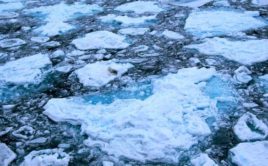
NSF funds new projects to study local and global impacts of a rapidly changing Arctic
NSF has awarded a new round of grants under the Navigating the New Arctic (NNA) program. The awards support research projects to study the Arctic's changing natural, built and social environments. Through NNA, researchers in science, engineering and education disciplines are working together to address some of the most pressing challenges on the planet. Research grants are focused on actionable results; incubator grants will allow teams to carry out projects of a larger scope in the future.