News Archives: April, 2023
NSF DMR-NIH NIBIB Collaboration: Exploring Fundamental Drivers of Next Gen Biomaterials for Biomedical Research
The NSF’s Directorate for Mathematical and Physical Sciences (MPS) wishes to announce to the community a new collaboration with the NIH National Institute of Biomedical Imaging and Bioengineering (NIBIB). This collaboration is based on a recent Memorandum of Understanding between the Directorate of Engineering (ENG), MPS, and NIBIB to encourage and foster scientific exchanges in areas of mutual interest. Specifically, a Dear Colleague Letter invites requests to fund workshops addressing the science drivers of active matter biomaterials with the potential to advance our understanding of abiotic-biotic interfaces and be developed into next generation biomedical technologies. The Division of Materials research (DMR) within MPS and NIBIB collaboration is specifically interested in laying the scientific groundwork necessary for competitive proposals for the exploration of new biomedically-relevant active materials and the drivers needed to be medically applicable as these new materials transition from discovery to development.
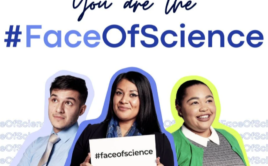
Join the #FaceOfScience social media campaign on April 26
What do you love about being a scientist?
Join Enhance Science and NIH Diversity Program Consortium for the third annual #FaceOfScience social media campaign celebrating inclusive excellence in science!
NSF: Spring 2023 NSF Virtual Grants Conference
Just like the in-person grants conferences, the NSF Virtual Grants Conference is a must, especially for new faculty, researchers and administrators.

NSF partnering with Brazilian counterpart agency to increase research collaboration
NSF and the São Paulo Research Foundation, or FAPESP, signed an memorandum of understanding to encourage and support interaction in areas of mutual interest and facilitate collaboration between US and Brazilian researchers
NIH Institutional Excellence in DEIA in Biomedical and Behavioral Research Prize Competition
NIBIB announces the launch of the NIH Institutional Excellence in Diversity, Equity, Inclusion, and Accessibility (DEIA) in Biomedical and Behavioral Research Prize Competition, administered by the Chief Officer for Scientific Workforce Diversity and cosponsored by UNITE and 24 institutes and centers across the NIH.
NSF’s Innovative Technology Experiences for Students and Teachers (ITEST) Program
NSF’s Innovative Technology Experiences for Students and Teachers (ITEST) Program supports applied research and development focused on increasing preK-12 students’ interest in careers in information and communication technology and STEM through innovative technology-based learning experiences. As the resource center for the NSF ITEST Program, STELAR is charged with supporting prospective PIs in developing competitive proposals. In doing so, we encourage EPSCoR communities to take advantage of the technical assistance and support aimed at proposal development offered by STELAR. The ITEST solicitation due date is Aug 11.

DOE Intends to Fund Offshore Wind Centers of Excellence
The DOE’s Wind Energy Technologies Office plans to release a funding opportunity that will create one or more university-led Centers of Excellence to increase offshore wind expertise at US universities; develop partnerships to address key offshore wind development challenges; and educate the next generation of offshore wind experts in the US.

NSF: Planning Grants for Historically Black College and University Excellence in Research (HBCU-EiR) Program
HBCU-EiR planning grants support initial conceptualization, planning, and collaboration activities that aim to formulate solid plans for a future submission to the HBCU-EiR program. These planning grants are intended to provide eligible investigators with the time and resources needed to generate an HBCU-EiR proposal focusing on research that is well-aligned with an existing funding program within NSF’s directorates.
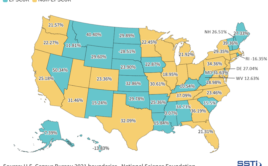
Useful Stats: 10-year analysis of NSF EPSCoR state HERD, FY 2012-2021
The objective of the Established Program to Stimulate Competitive Research (EPSCoR) is to help states receiving the least amount of federal research and development (R&D) funds within their postsecondary institutions improve their competitiveness for federal grants and awards. A measure of EPSCoR's effectiveness, then, is whether or not the state's academic research enterprise is capturing a larger share of federal R&D expenditures. This article utilizes data from the Higher Education Research and Development (HERD) survey, analyzing both total and federal HERD dollars, finding that: 1) EPSCoR states are not receiving proportionately more federal HERD dollars and 2) EPSCoR states are more likely to have lower or negative growth in HERD expenditures than non-EPSCoR states.
ERVA Report: Engineering R&D Solutions for Unhackable Infrastructure
Critical infrastructure systems must protect human safety and well-being and adapt to unexpected changes. These systems must actively resist adversaries (both known and unknown) and demonstrate resilience in the face of systemic risks. As cyber-physical systems advance, sophisticated tools are needed. Insightful blog about autonomous security by David Ott, VMware, co-lead for the ERVA’s event “Unhackable Infrastructure Visioning.”