News & Updates

NSF announces new awards to understand coastal systems and tackle coastal hazards
US coastlines are heavily populated areas with critical public resources, such as housing, transportation infrastructure, freshwater supplies, and electricity generation and distribution facilities. These coastlines are also increasingly vulnerable to extreme weather events, sea-level rise, coastal flooding, algal blooms and tectonic hazards.

New NSF awards seek to broaden participation in biology through research experiences for recent college graduates
To reduce the barriers to entry into careers in the biological sciences and produce a more diverse workforce, NSF has made 12 new awards totaling more than $35 million through its Research and Mentoring for Postbaccalaureates in the Biological Sciences program, known as RaMP. The awards will support the creation of networks providing research experiences and mentoring to recent college graduates who have had few or no research and related training opportunities during college.
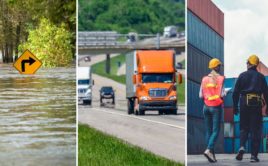
Flood mitigation, rural transportation, supply chains: NSF awards 9 new people-focused research grants
Flood mitigation measures, rural transportation systems and pharmaceutical supply chains are among the subjects being examined by nine new research projects receiving backing from the NSF. NSF is investing more than $8 million in the projects through its Strengthening American Infrastructure program. The program supports research that utilizes advances in behavioral and social science to improve the value and usefulness of infrastructure in people’s lives, from US roads and highways to state and local power grids.
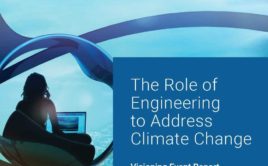
ERVA Report: The Role of Engineering to Address Climate Change
The Engineering Research Visioning Alliance (ERVA), launched by NSF in April 2021, provides the engineering research community with a process for identifying bold and societally impactful engineering research directions that will place the United States in a leading position to realize a better future for all. For its inaugural visioning event, ERVA convened more than 100 experts from academia, industry, and government to identify priorities for engineering research that address one of the world’s most vexing challenges: climate change.
Newly Released: Two New Reports about NSF Released
US Government Accountability Office (GAO)’s report examines (1) the effects of the NSF EPSCoR program on jurisdictions’ competitiveness in obtaining NSF and other federal research funding, (2) jurisdiction officials’ perspectives on the program’s effects, and (3) NSF’s efforts to assess the effects of the program and identify opportunities for improvement. GAO is making one recommendation that NSF enhance its annual reporting to Congress on the EPSCoR. More

Infusing human behavior into epidemiological models is focus of new NSF-supported research projects
The NSF is investing more than $7.5 million in new research focused on empowering more reliable prediction of the spread of infectious diseases, the effects of mitigation measures and other critical aspects of national health crises. The funding will support eight interdisciplinary research projects aimed at incorporating the complexities of human behavior into epidemiological models.
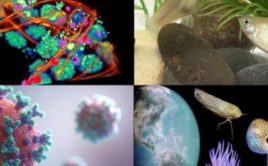
Integrative biological science and training are the focus of four new NSF institutes
From understanding the multifaceted transmission of disease to deciphering how living organisms adapt to harsh conditions, answering big questions in biology requires interdisciplinary research and scientists engaging and partnering with those from other fields of study.

Interaction between humans and the environment is focus of 15 new NSF-funded projects
From Southwestern deserts to tropical mangrove reefs, everywhere humans live or go we impact the environment, and the environment impacts us. Fifteen new projects totaling more than $21.6 million funded by the NSF will explore these complex interactions in ecosystems around the globe, examine how they affect a variety of species from humans to bees to trees, and develop tools and models that can be used to predict future impacts to vital resources.
Each award supports research in a specific socio-environmental system, across multiple systems, or the creation of networks of scientists to share data and advance socio-environmental research.
Projects awarded to NSF EPSCoR jurisdictions include:
ERVA seeks researchers for leadership roles
The Engineering Research Visioning Alliance (ERVA) is led by Principal Investigator Dorota Grejner-Brzezinska and a co-PI team representing academia and industry. ERVA seeks a visionary and well-respected researcher to serve in a leadership role by joining the current principal investigators in advancing the initiative’s mission. They request your assistance in identifying suitable candidates. Some specifics from the solicitation:
ERVA Leadership Convening Meeting
The EPSCoR/IDeA Foundation, a Core Partner of the Engineering Research Visioning Alliance (ERVA), hosted the ERVA Leadership Convening Meeting, July 12-July 13, in Washington, DC. Representatives from the ERVA Standing Council, Advisory Board, Working Groups, visioning Thematic Task Forces and Affiliate Partners attended the meeting. EIF Executive Director, Jessica Molesworth, who co-Chairs the ERVA Government Engagement Working Group, helped organize an informational briefing on the Hill on July 13. The briefing focused on the ERVA report executive summary, “The Role of Engineering in Addressing Climate Change.” Dorota Grejner-Brezinska, The Ohio State University, Amy Heintz, Batelle; and Stacy Hutchinson, Kansas State University, presented identified priorities for engineering research to make an impact.