News & Updates
NSF launches NSF Days Series
NSF launched the NSF Days series on Nov 21, at Mississippi State University. NSF Director Sethuraman Panchanathan joined US Sen. Roger Wicker and MSU President Mark E. Keenum to kick off the event and highlight the day’s agenda.

2023 EPSCoR/IDeA Coalition and EPSCoR/IDeA Foundation Annual Meeting
The 2023 Annual Meeting of the EPSCoR/IDeA Coalition and Foundation will be held in person on February 28, 2023.

2024 EPSCoR/IDeA Coalition and EPSCoR/IDeA Foundation Annual Meeting
The 2024 Annual Meeting of the EPSCoR/IDeA Coalition and Foundation will be held in person on February 26, 2024.
New ERVA Report: Leveraging Biology to Power Engineering Impact
Although separate disciplines, the convergence of biology and engineering has enormous potential to solve some of our greatest problems. The full ERVA report provides a unique look at transformational priorities where engineering and biology can have impact while contributing to an inclusive research community. The aim is to inspire researchers and sponsors (public, private, and nonprofit) to support aligned research leading to innovation and pursue these priorities.

DOE Awards: Get Your Motor Running – The Next Generation of Electric Machines
From research to development, six university and company teams are changing the way industry powers its operations by improving electric machines, superconducting wires and other technologies key to American manufacturing. The teams engaged with the DOE’s Next Generation of Electric Machines program in the Advanced Materials and Manufacturing Technologies Office collaborated across research, development, and demonstration.

National Academy of Medicine elects 100 new members
The National Academy of Medicine (NAM) has announced the election of 90 regular members and 10 international members during its annual meeting. Election to the Academy is considered one of the highest honors in the fields of health and medicine and recognizes individuals who have demonstrated outstanding professional achievement and commitment to service.
New members representing the EPSCoR and IDeA jurisdictions include:
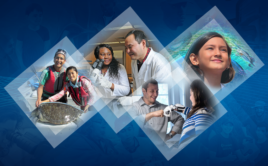
NSF announces name changes to education directorate
NSF has announced changes to the names of the Directorate for Education and Human Resources and the Division of Human Resource Development. To more accurately reflect and communicate the values and totality of the agency’s work with STEM education, including supporting Americans from every background, in each state, who have the potential to participate in STEM, the directorate will now be known as the Directorate for STEM Education, or EDU, and the division will be known as the Division of Equity for Excellence in STEM, or EES. All name changes are effective immediately and do not affect the work done by EDU.

NIH to award over $200 million to support potentially transformative biomedical research projects
The High-Risk, High-Reward Research program, supported by the Common Fund at the NIH has awarded 103 new research grants to support highly innovative scientists who propose visionary and broadly impactful meritorious behavioral and biomedical research projects. The awards total approximately $285 million in support over five years beginning in 2022.