ALASKA: Gene Found, by $1.15M NSF CAREER-funded Researcher, Linked to Hearing in Humans Also Linked to Touch in Sea Anemones
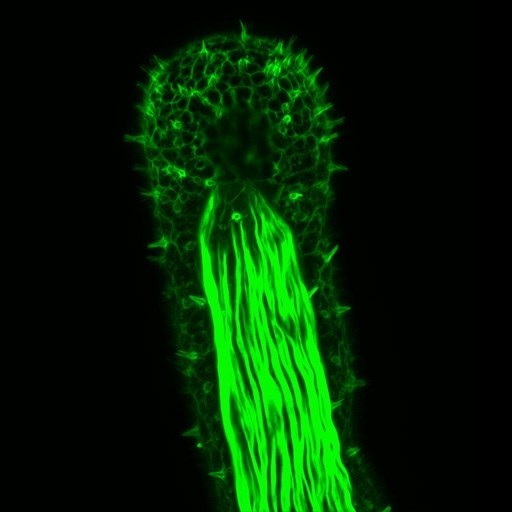
An international team of investigators, including several researchers in biological sciences from the University of Arkansas, have published a paper that reports the discovery of a developmental gene linked to touch in the tentacles of sea anemones as well as hearing in humans. The gene, called pou-iv (pronounced “pow four”), is important for the development of auditory cells in the human inner ear.
The U of A researchers are affiliated with Nagayasu Nakanishi, a recent recipient of a $1.15M NSF CAREER award for his work on the evolution of the nervous system. He is the corresponding author on the study.
“This study is exciting because it not only opened a new field of research into how mechanosensation develops and functions in a sea anemone, which has ample potential for novel and important discoveries (to be reported in the future),” Nakanishi said, “but it also informs us that the building blocks of our sense of hearing have ancient evolutionary roots dating back hundreds of millions of years into the Precambrian.”
The paper, titled “Cnidarian hair cell development illuminates an ancient role for the class IV POU transcription factor in defining mechanoreceptor identity,” was published in eLife. Additional authors included Ethan Ozment, Arianna N. Tamvacakis and Jianhong Zhou from the U of A. Pablo Yamild Rosiles-Loeza, Esteban Elías Escobar-Hernandez and Selene L Fernandez-Valverde from The Center for Research and Advanced Studies of the National Polytechnic Institute in Irapuato, Mexico, served as co-authors.