Success Stories
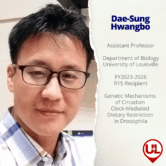
KENTUCKY: INBRE research receives $445,390 NIH R15 grant
Dae-Sung Hwangbo, University of Louisville, has received a new NIH National Institute on Aging $445,390 R15 grant for his research project, “Genetic Mechanisms of Circadian Clock-Mediated Dietary Restriction in Drosophila.”
This grant is a result of Dae-Sung’s KY INBRE Investigator Development Award (2020-2021).
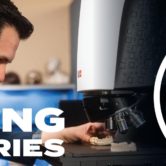
KENTUCKY: UK research made possible by $14M NSF infrastructure grant
Hugo Reyes-Centeno has sunk his teeth into a fascinating, multidisciplinary approach to the study of human evolution at the University of Kentucky. That approach involves (yes) teeth — and crania.
As a biological anthropologist, Reyes-Centeno is probing some of the basic questions about why humans have evolved a myriad of differences over the course of about 1 million years.
Reyes-Centeno is among the UK faculty who will be using instrumentation bought and upgraded with a recent $14 million infrastructure NSF grant for noninvasive research on human artifacts and remains in a blossoming heritage science lab, called EduceLab.
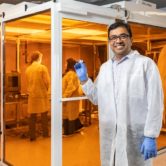
ARKANSAS: Local Startup Nanomatronix Receives $1.1 Million DOD Small Business Award
Nanomatronix, a local startup company that develops nanotechnology, microelectronics and biotechnology to provide solutions for the healthcare, energy and defense industries, has been awarded a $1.1 million Small Business Innovation and Research Phase II Award from the Department of Defense.
Kartik Balachandran, associate professor of biomedical engineering at the University of Arkansas, has been overseeing the research and development of the Advanced Microphysiological Brain Injury Technology (or AMBIT) Platform and has received a sub-award of $550,000.
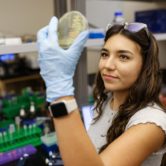
SOUTH CAROLINA: SC INBRE institution to build inclusivity, belonging in STEM fields as part of $8.6M HHMI grant
SC EPSCoR institution, Furman University, is part of a 15-school cohort that has been awarded $8.625 million by the Howard Hughes Medical Institute for the purpose of creating a more inclusive environment for students pursuing STEM fields.
The initiative, HHMI Inclusive Excellence 3 (IE3), challenges US colleges and universities to substantially and sustainably build their capacity for student belonging, especially for those who have been historically excluded from the sciences.
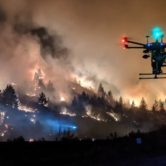
NEBRASKA: These fireball-dropping drones are on the frontlines of wildfire prevention
Drone Amplified, a Nebraska-based startup, is using unmanned aerial technology to improve one of the oldest and most-effective methods of preventing wildfires: prescribed burns. This technique refers to the controlled application of fire by a team of experts to reduce hazardous fuel in areas prone to wildfires. The drones carry so-called “dragon eggs,” or fireballs that ignite when they land on the ground. The company was started by two University of Nebraska-Lincoln engineering professors and was awarded a grant totaling $1 million for R&D from the NSF and Nebraska Department of Economic Development.
ARKANSAS: Rice Blast Research Garners Nearly $1 Million NSF Award
Martin Egan, a plant pathologist and microbiologist at the Arkansas Agricultural Experiment Station, won a $943,941 grant from NSF’s Faculty Early Career Development Program to support research on a pathogenic rice plant fungus. The fungus, Magnaporthe oryzae, which causes rice blast disease and crop failure, has also attacked wheat crops and may be growing resistant to fungicides.
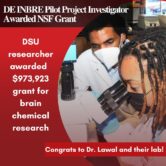
DELAWARE: INBRE investigator lead PI on $973,923 NSF grant for brain chemical research
NSF has awarded a three-year, $973,923 research grant to Delaware State University in support of a neuroscience research project. The grant will support a research project that focuses on the brain chemical acetylcholine. Hakeem Lawal, a Delaware INBRE Pilot Project investigator, is the Principal Investigator of the grant, Jianli Sun, Director of the Cell Electrophysiology Core in the University’s Delaware Institute of Science and Technology, is the Co-PI.
ALASKA: NSF EPSCoR researcher receives $620,000 FIREWALL grant
Alaska NSF EPSCoR Fire & Ice researcher Chris Waigl, has received a $620,000 NSF Navigating the New Arctic Award for her project, “Foundations for Improving Resilience in the Energy Sector against Wildfires on Alaskan Lands (FIREWALL).”
Navigating the New Arctic (NNA) is one of NSF's 10 Big Ideas. NNA projects address convergence scientific challenges in the rapidly changing Arctic. This Arctic research is needed to inform the economy, security and resilience of the Nation, the larger region and the globe. NNA empowers new research partnerships from local to international scales, diversifies the next generation of Arctic researchers, enhances efforts in formal and informal education, and integrates the co-production of knowledge where appropriate. This award fulfills part of that aim by addressing interactions among social systems, natural environment, and built environment in the following NNA focus areas: Arctic Residents, Data and Observation, Forecasting, and Resilient Infrastructure.
SOUTH DAKOTA: SDSU Researchers Working to Fill Educational Gaps for Rural Students with $1.2M USDA NIFA grant
In the US, roughly one-sixth of all K-12 students attend rural school districts. These students face many challenges and are often hampered by both a lack of funding and resources. Two South Dakota State University researchers have begun working to help “fill in the gaps” that rural students might be missing in their education. Amber Letcher and Kristine Ramsay-Seaner were awarded a five-year, $1.2 million USDA NIFA grant from the Children, Youth and Families at Risk program.
SOUTH DAKOTA: $1.5M NSF grant to BHSU helps more low-income STEM students graduate
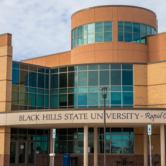
Black Hills State University is planning to use a $1.5 million NSF grant to help low-income science and math students graduate. The grant will give 24 students a $10,000 annual scholarship. In addition to scholarships, the grant will also create research positions for low-income students who normally wouldn’t qualify due to low GPAs. The grant will also pay for extra tutoring services and training for faculty.