Research Highlights
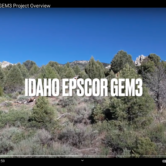
IDAHO: New NSF EPSCoR Project Overview Video
Idaho EPSCoR has created a new video with an overview of GEM3, their NSF EPSCoR research program which seeks to understand how genetic diversity and phenotypic plasticity affect species response (particularly Redband Trout and sagebrush) to environmental change, shaping both population response and adaptive capacity.

HAWAI‘I: Future of water source project
The future of Oʻahu’s primary water source may be in jeopardy if current water withdrawal rules remain unchanged. This work is being studied by a team from the University of Hawaiʻi Economic Research Organization (UHERO) in the College of Social Sciences, the Water Resources Research Center (WRRC), the Hawaiʻi Institute of Geophysics and Planetology, Pacific RISA and the NSF EPSCoR-funded ʻIke Wai project at UH.

GUAM: EPSCoR students and researchers clean beach
Students and researchers from the UOG Marine Laboratory-Guam EPSCoR came out on a recent Saturday morning to clean up a part of Pago Bay. The beach cleanup was organized by Anela Duenas, an NSF INCLUDES: SEAS Islands Alliance research fellow who is being mentored by Dr. Bastian Bentlage.
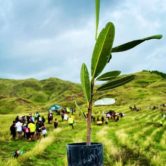
GUAM: Guam NSF EPSCoR plants trees as part of conservation movement
The growing reforestation movement was in full display as more than 2,000 trees were planted in the hills of Malesso’ on July 24 by the Guam Green Growth Conservation Corps, a joint program of the University of Guam Center for Island Sustainability, the Office of the Governor, and Guam NSF EPSCoR’s Education and Workforce Development objective.
SOUTH CAROLINA: Clemson researcher developing new line of wheat to withstand Southeast growing conditions
Year-to-year weather variability is creating challenges for wheat growers, and Clemson University researcher Rick Boyles is working to determine how to develop new wheat lines that can withstand environmental changes and produce under tough conditions.
Part of his plan includes developing a new line of soft winter wheat. But this could take years. To help move things along, Boyles, an assistant professor of plant breeding and genomics and head of the Cereal Grains Breeding and Genetics Program at Clemson’s Pee Dee Research and Education Center (REC), has received a grant from the United States Department of Agriculture National Institute of Food and Agriculture (USDA-NIFA) to study ways to incorporate genomics into wheat development for the southeastern United States.
RHODE ISLAND: Team wins NIH photo and video contest
The winners of the “Show Us Your BRAINs!” Photo and Video contest are chosen each year based on their eye-catching ability to capture the creative spirit of the Brain Research through Advancing Innovative Neurotechnologies® (BRAIN) Initiative.
The video took a true team effort. Nicole Provenza, a graduate student in the lab of David Borton, Brown University, Providence, RI, produced it with the project’s principal investigator Wayne Goodman, lead neurosurgeon Sameer Sheth, and research assistant Raissa Mathura, all at Baylor College of Medicine, Houston. Another vital contributor was Noam Peled, MGH/HST Martinos Center for Biomedical Imaging, Charlestown, MA. More
NEW HAMPSHIRE: Experiment Station Researchers Develop Online Kiwiberry Production Guide for the Northeast
Prospective kiwiberry growers in the Northeast now have a roadmap to help them grow this emerging specialty fruit crop. Researchers with the New Hampshire Agricultural Experiment Station at the University of New Hampshire have produced an online guide that provides in-depth, regionally relevant information.
Comprised of a statewide market assessment, a detailed production manual, and an enterprise analysis, Growing Kiwiberries in New England: A Guide for Regional Producers reflects information gathered over five years since the experiment station initiated its kiwiberry research and breeding program in 2013 at its Woodman Horticultural Research Farm.
Developed by experiment station researcher Iago Hale, associate professor of specialty crop improvement, and graduate student Will Hastings, manager of the kiwiberry vineyard, the guide supports ongoing development of kiwiberries as a high-value fruit crop for the Northeast. Globally, kiwiberry production is on the rise. With the information presented in the guide, experiment station researchers are hopeful producers in the Northeast will be better prepared to decide whether to grow kiwiberries.
LOUISIANA: LSU and LA Tech Partner to Create Center for Structural Integrity
LSU and Louisiana Tech University are proud to announce the establishment of the Center for Innovations in Structural Integrity Assurance, or CISIA, the first Industry/University Cooperative Research Center, or I/UCRC, for either institution.
CISIA will serve as a trusted source for transformative insights, predictive capabilities, and materials innovations across broad industrial sectors, focusing on structural integrity assurance for small and large structures and mechanical components.
In addition to research for establishing linkages between material properties, infrastructure performance, and structural integrity—which is beyond the scope of most industrial research and development organizations today—the academic and industrial members of CISIA will collaborate closely to produce engineers who are trained to utilize modern methods of structural health monitoring and analysis.
Students will be trained in state-of-the-art testing and evaluation facilities to become some of the most highly-qualified and productive workforce, which will contribute to enhancing the global competitiveness of U.S. industries. Through outreach and education activities that reach a diverse audience of college students at four- and two-year colleges, CISIA will raise awareness of not only the infrastructure problems facing the country, but also the career opportunities and positive impacts on the nation’s economy provided by a multidisciplinary STEM education.
KENTUCKY: INBRE researcher receives NSF RUI grant
KY INBRE Steering Committee member Dr. Alexey Arkov from Murray State University received a new award from the National Science Foundation for his project entitled, “RUI: Biochemical and genetic analysis of conserved molecular scaffold Tudor complex required for germ cell specification in Drosophila” (award #2130162).
Abstract (at Time of Award)
Cellular organization is critically dependent on the self-assembly of various membraneless organelles inside the cell. However, the principles and molecular mechanisms that drive and regulate the assembly of these organelles and define their functions are poorly understood. This project integrates cutting-edge genetics and molecular quantitative approaches to provide major insights into the mechanisms responsible for the assembly and function of evolutionarily conserved membraneless organelles assembled in germ cells of model organism Drosophila (germ granules). These cells give rise to egg and sperm cells, and therefore, are responsible for continuity of life. This research will be integrated into several cell and genetics undergraduate courses and will directly engage undergraduate and graduate students in quantitative cell and molecular biology training. Germ granules show the properties of soft condensed matter and they often change their morphology during developmental transitions. Recent research identified an evolutionarily conserved germ granule multisubunit complex assembled on the large scaffold Tudor protein. Tudor scaffold has 11 protein-protein interaction modules (Tudor domains) and Tudor complex components are required for germ cell specification. The goal of this project is to provide molecular understanding of how this multisubunit Tudor scaffold complex is assembled using purified components and quantitative biochemical approaches. In addition, using super-resolution microscopy, it will be determined how different components of the complex are assembled into large germ granules in vivo. Furthermore, to understand the function of Tudor complex, enzymatic activities of its components upon the complex assembly will be characterized and the significance of the complex for germ granule formation, morphology and germ cell specification will be determined by mutational approaches. This award reflects NSF's statutory mission and has been deemed worthy of support through evaluation using the Foundation's intellectual merit and broader impacts review criteria.
SOUTH CAROLINA: The Hidden Beauty of Intestinal Villi
The human small intestine, though modest in diameter and folded compactly to fit into the abdomen, is anything but small. It measures on average about 20 feet from end to end and plays a big role in the gastrointestinal tract, breaking down food and drink from the stomach to absorb the water and nutrients.
Also anything but small is the total surface area of the organ’s inner lining, where millions of U-shaped folds in the mucosal tissue triple the available space to absorb the water and nutrients that keep our bodies nourished. If these folds, packed with finger-like absorptive cells called villi, were flattened out, they would be the size of a tennis court!
That’s what makes this this microscopic image so interesting. It shows in cross section the symmetrical pattern of the villi (its cells outlined by yellow) that pack these folds. Each cell’s nucleus contains DNA (teal), and the villi themselves are fringed by thousands of tiny bristles, called microvilli (magenta), which are too small to see individually here. Collectively, microvilli make up an absorptive surface, called the brush border, where digested nutrients in the fluid passing through the intestine can enter cells via transport channels.
Amy Engevik, a researcher at the Medical University of South Carolina, Charleston, took this snapshot to show what a healthy intestinal cellular landscape looks like in a young mouse. The Engevik lab studies the dynamic movement of ions, water, and proteins in the intestine—a process that goes wrong in humans born with a rare disorder called microvillus inclusion disease (MVID).