VERMONT: New Insights on how Different Extreme Events Interact with Each Other Effects Cyanobacteria Blooms in Vermont’s Missisquoi Bay
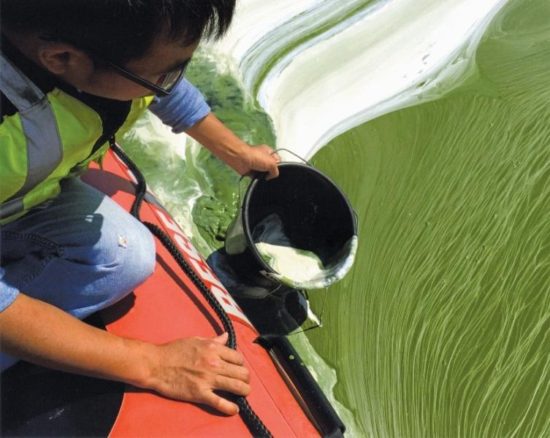
In the heat of summer, signs go up at beaches and access points around Lake Champlain, warning of the presence of cyanobacteria and its potential dangers to people and pets. Scientists and lake experts have predicted that climate change will spur the formation of blue-green algae blooms, which harm water quality and recreational use of the lake by residents and tourists.
Now, a new study led by a team of researchers based at the University of Vermont has applied a unique modeling method to more precisely assess the influences of temperature and precipitation – and the relationship between them – on cyanobacteria growth. They focused on Missisquoi Bay, a shallow swath of northeastern Lake Champlain where cyanobacteria is prevalent.
The study was published in the journal Science of the Total Environment by a multidisciplinary team working with the Vermont Established Program to Stimulate Competitive Research, or VT EPSCoR, funded by the National Science Foundation.
The researchers found that major storms, such as Nor’easters and hurricanes, followed by prolonged periods of heat – even a year or more after those storms – created the ripest atmosphere for the blue-green algae, which is not actually algae but bacteria.
“We wanted to really get a sense of the relationship between floods and droughts and how they might change with climate, and if you put them all together, what the impact will be on blooms in the Missisquoi Bay,” said Jory Hecht, who led the study as a postdoctoral graduate student with VT EPSCoR and is now a hydrologist with the U.S. Geological Survey in Massachusetts.
“We're trying to get a better understanding of how different types of extreme events can interact with each other,” Hecht said. “We saw in the results that the sequences of these extremes really mattered.”