News & Updates

NASA Commits $28M to Underfunded US Jurisdictions
NASA has awarded $28 million to fund the next five years of research infrastructure development across 28 jurisdictions. The Established Program to Stimulate Competitive Research (EPSCoR), a part of NASA’s Office of Stem Engagement and based out of the agency’s Kennedy Space Center in Florida, supports science and technology research and development at colleges and universities while also funding studies in Earth science, aeronautics, and human and robotic deep space exploration – all of which are disciplines critical to the NASA mission.
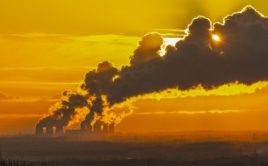
DOE Awards $20M to Help States Deploy Carbon Capture and Storage
The DOE has announced $20 million in funding to four projects working to accelerate the regional deployment of carbon capture, utilization, and storage (CCUS). The projects, representing all four corners of the country, are referred to as DOE’s Regional Initiatives to Accelerate CCUS Deployment—an initiative designed to identify and address regional storage and transportation challenges facing the commercial deployment of CCUS.
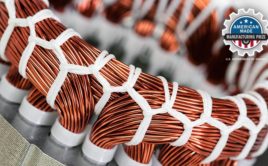
DOE Announces CABLE Conductor Manufacturing Prize Winners
In celebration of National Nanotechnology Day, the US Department of Energy announced Stage 1 winners of the Conductivity-enhanced materials for Affordable, Breakthrough Leapfrog Electric and thermal applications (CABLE) Conductor Manufacturing Prize. Ten teams selected in Stage 1 of this $4.5M, three-stage competition will work to develop affordable, manufacturable materials that conduct electricity more efficiently and upgrade our manufacturing and transportation infrastructures.
DOE Invests $61M for Smart Buildings that Accelerate Renewable Energy Adoption and Grid Resilience
The DOE has announced $61M for 10 pilot projects that will deploy new technology to transform thousands of homes and workplaces into state-of-the-art, energy-efficient buildings. These Connected Communities can interact with the electrical grid to optimize their energy consumption which will substantially decrease their carbon emissions and cut energy costs.
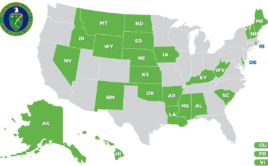
DOE Invests $45M to Decarbonize the Natural Gas Power and Industrial Sectors Using Carbon Capture and Storage
The DOE has announced $45M in funding for 12 projects to advance point-source carbon capture and storage technologies that can capture at least 95% of carbon dioxide (CO2) emissions generated from natural gas power and industrial facilities that produce commodities like cement and steel.
DOE Announces $12M to Boost Geothermal Energy Research
The DOE has announced $12M in funding for seven research projects to advance the commercialization of enhanced geothermal systems (EGS) — man-made reservoirs that produce clean, renewable energy. EGS development could expand US geothermal energy capabilities and extend the use of geothermal energy into new geographic areas across the country.
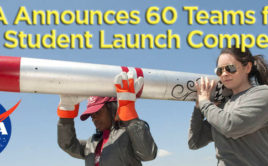
NASA Announces 60 Teams for 2022 Student Launch Competition
NASA has announced the 60 teams from 22 states and Puerto Rico selected to compete in the 2022 Student Launch – one of seven Artemis Student Challenges.

NSF 2021 Nobel Laureates in Science
This past week, the Nobel Assembly and the Royal Swedish Academy of Sciences announced the 2021 Nobel Prize recipients. Among the prize recipients in physiology or medicine, physics, and economic sciences are researchers who have been supported by the NSF.

NIH 2021 Nobel Laureates in Chemistry
Two scientists won the Nobel Prize in chemistry for finding an ingenious and environmentally cleaner way to build molecules — an approach now used to make a variety of compounds, including medicines and pesticides.
Five new NIGMS grants expand COVID-19 testing and research in underserved communities
NIGMS has announced five new grant awards as part of the Rapid Acceleration of Diagnostics for Underserved Populations (RADx-UP) program, an NIH-wide initiative. The program aims to understand the factors associated with disparities in COVID-19 morbidity and mortality and to lay the foundation to reduce disparities in underserved and vulnerable populations who are disproportionately affected by, have the highest infection rates of, and/or are most at risk for complications or poor outcomes from COVID-19.