News & Updates
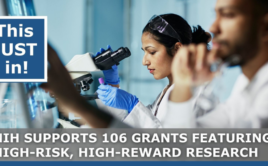
NIH supports 106 grants totaling ~$329M featuring high-risk, high-reward research
NIH awarded 106 grants to support highly innovative and broadly impactful biomedical or behavioral research by exceptionally creative scientists through the Common Fund’s High-Risk, High-Reward Research program. Supported research this year includes understanding how long-term memory might be encoded in the shape of folded DNA in our neurons, mining data from unconventional sources to reveal social determinants of suicide, establishing new paradigms to address the functional consequences of health disparities in drug development, and looking at the impact of high school and collegiate athlete injuries on long-term health. The 106 awards total approximately $329 million over five years, pending availability of funds.
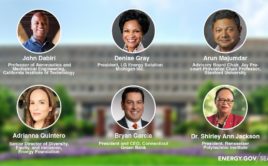
Secretary of Energy Jennifer M. Granholm Announces Newly Appointed Members of the Secretary of Energy Advisory Board
The DOE has announced the new members of the Secretary of Energy Advisory Board (SEAB), an important component of DOE’s strategy to improve its research and development portfolio and program activities. For the first-time ever, the Board is a majority of women.
Learn more
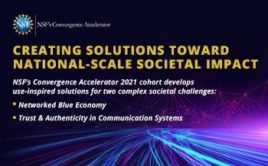
NSF invests $21M to tackle 2 complex societal challenges: the networked blue economy, and trust and authenticity in communication systems
The NSF is building upon basic research and discovery to accelerate solutions in two critical research areas: the Networked Blue Economy and Trust & Authenticity in Communications. With an investment of $21 million, NSF has selected 28 multidisciplinary teams for phase one of the Convergence Accelerator program 2021 cohort.

USDA Announces More Than $146M Investment in Sustainable Agricultural Research
The USDA has announced an investment of more than $146M in sustainable agricultural research projects aimed at improving a robust, resilient, climate-smart food and agricultural system. This investment is made under the National Institute of Food and Agriculture’s (NIFA) Sustainable Agricultural Systems program. This innovative program focuses on a broad base of needed research solutions from addressing labor challenges and promoting land stewardship to correcting climate change impacts in agriculture and critical needs in food and nutrition. Projects and institutions from USDA EPSCoR jurisdictions include:

ARPA-H Listening Sessions Summary Report and Updates
In follow-up to the 15 listening sessions that were hosted on the Advanced Research Projects Agency for Health (ARPA-H) earlier this summer, the White House Office of Science and Technology Policy (OSTP) and the National Institutes of Health (NIH) have posted a summary outlining the key themes heard. These sessions, which included more than 5,100 stakeholders and nearly 250 organizations from across the country, were held to understand the opportunities and barriers to accelerating biomedical and health research breakthroughs from the perspectives of patient advocates, nonprofit and philanthropic organizations, professional societies, the academic research community, industry, and others. A set of FAQs on ARPA-H, informed by the discussions during the listening sessions, were also posted.
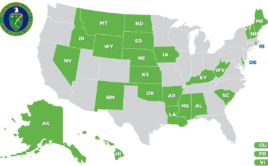
DOE Announces up to $400M for Basic Research to Advance the Frontiers of Science
Annual Open Call Funding Announcement Covers Basic Energy Sciences, Biological and Environmental Research, Nuclear Physics, And More
The DOE has announced up to $400 million in funding for a range of research opportunities to support DOE’s clean energy, economic, and national security goals. The funding will advance the priorities of DOE’s Office of Science and its major programs, including Advanced Scientific Computing Research, Basic Energy Sciences, Biological and Environmental Research, Fusion Energy Sciences, High Energy Physics, Nuclear Physics, Isotope R&D and Production and Accelerator R&D and Production. This funding opportunity will help achieve the Biden Administration’s plan to employ science and innovation to tackle our greatest challenges.

New NASA graphic novels and interactive experiences – First Woman
NASA released its first digital, interactive graphic novel on Saturday, Sept 25 in celebration of National Comic Book Day. “First Woman: NASA’s Promise for Humanity” tells the tale of Callie Rodriguez, the first woman to explore the Moon. While Callie is a fictional character, the first female astronaut and person of color will soon set foot on the Moon – a historic milestone and part of upcoming NASA missions. Through a series of graphic novels and digital platforms, First Woman aims to capture attention and unite the next generation of explorers who will return to the Moon. More

NSF builds scientific capacity at more than 20 minority-serving institutions in 12 states
NSF has invested more than $12 million in its Build and Broaden Program, which focuses on supporting research, offering training opportunities and creating greater research infrastructure at minority-serving institutions such as historically Black colleges and universities, Hispanic-serving institutions, and tribal colleges and universities.

NSF invests in mid-scale research infrastructure
NSF is investing in 10 mid-scale research infrastructure projects totaling $127 million. These infrastructure projects include designing next generation radars, superconducting magnets, ocean bottom seismographs, and internet security. Other projects include developing tools for studying the online behavior of people and the platforms they use, learning about underground ecosystems, and fabricating new types of integrated circuits to enable research to advance semiconductor technology.
Infrastructure projects funded in NSF EPSCoR jurisdictions include:
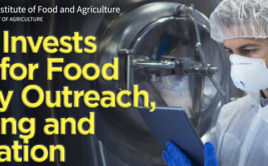
USDA NIFA Invests $10M for Food Safety Outreach, Training and Education
US Department of Agriculture’s (USDA) National Institute of Food and Agriculture (NIFA) has announced an investment of $10 million for 21 grants to develop and implement food safety and Food Safety Modernization Act-related training, education, extension outreach and technical assistance for food processors and farmers with small to mid-size operations.
Awards are made under three categories: Multistate Education and Training Projects, Community Outreach Projects and Collaborative Engagement Supplements. In FY 2021, NIFA made 13 Collaborative Education and Training Project awards, four Community Outreach Project awards and four Regional Center awards.
Projects funded in USDA NIFA (EPSCoR) jurisdictions include: