News & Updates

New NSF data infrastructure initiative will accelerate the advancement and impacts of social and behavioral research
Data-intensive scientific research on human behavior and society can help improve community resilience to natural disasters, avoid supply chain disruptions and accurately predict infectious disease outbreaks. However, researchers in many disciplines have faced obstacles like incompatible data standards, missing or error-filled information, and technical difficulties in managing large data sets.
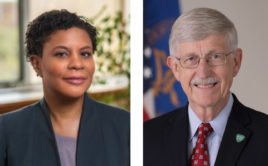
New Leadership for White House Office of Science and Technology Policy (OSTP)
Dr. Alondra Nelson will lead the OSTP and Dr. Francis Collins, former director of The National Institutes of Health, will serve as Science Advisor to the President and Co-Chair of the President’s Council of Advisors on Science and Technology. Collins and Nelson will work together on safeguarding international collaboration in science and restoring trust in science and government during this critical time in history.

Mission in Motion: HBCU Engagement and Collaboration
Government, industry, academia, and non-profits share many goals for research collaboration and diverse talent development. Mission in Motion: HBCU Engagement and Collaboration is a forum that brings together research-minded and partnership leaders from all sectors to strengthen and build intentional, collaborative relationships with HBCUs. Convened by the University Industry Demonstration Partnership (UIDP), Mission in Motion will be held March 28-29 at the Georgia Tech Global Learning Center in Atlanta and is co-hosted by Atlanta University Center Consortium, Clark Atlanta University, Morehouse School of Medicine, and Morehouse College. At this one-of-a kind event, you’ll meet with and learn from your peers in government program leadership, academic and corporate engagement, research administration, and talent development in general sessions and breakouts.
Seeking Representatives for ERVA’s Volunteer Leadership
The Engineering Research Visioning Alliance (ERVA) is seeking outstanding representatives to serve on its Advisory Board and Standing Council. As a member of the ERVA community, you are encouraged to consider the qualifications for service and, as appropriate, nominate yourself or share this call for self-nominations with outstanding colleagues who have the leadership skills needed to advance ERVA’s mission. Service on these bodies is an exceptional opportunity to catalyze the engineering community’s pursuit of innovative, high-impact research that benefits society. Submissions received by Feb 13 will receive full consideration.

New Director for Delaware INBRE
Melinda Duncan, professor of biological sciences at the University of Delaware, has been appointed associate vice president for research at the University of Delaware and director of the Delaware IDeA Network of Biomedical Research Excellence (INBRE).
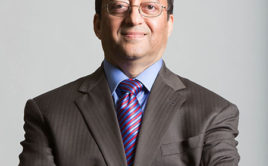
EIF Board Chair published in The Conversation
The COVID-19 omicron variant has many people wondering if it could act as a vaccine of sorts, inoculating enough people to effectively bring about herd immunity. University of South Carolina School of Medicine Columbia professors Prakash Nagarkatti, Chair of the EPSCoR/IDeA Foundation Board, and Mitzi Nagarkatti wrote for The Conversation about immune response to COVID-19.

New Section Head for NSF Established Program to Stimulate Competitive Research
Dr. Sandra Richardson has been appointed Section Head for the Established Program to Stimulate Competitive Research (EPSCoR) section within the Office of Integrative Activities (OIA), effective February 13. Richardson comes to the OIA from the Division of Undergraduate Education (DUE) in the Directorate for Education and Human Resources (EHR), where she currently serves as the Acting Deputy Division Director in DUE and is the former Program Lead for the NSF Robert Noyce Teacher Scholarship Program. In 2020, Richardson also served as Acting Director of the Science & Engineering Indicators Program in the National Center for Science and Engineering Statistics. Richardson has held several other leadership positions during her time at NSF, including serving as Executive Secretary for the EHR Advisory Committee’s Subcommittee on Broadening Participation, a member of the Federal Coordination in STEM Education Interagency Working Group on Strategic Partnerships, and a graduate of the Federal Executive Institute.

Michael Amiridis Named New President of University of South Carolina
The University of South Carolina welcomes President-elect Michael Amiridis, who will serve as the 30th president of UofSC starting this summer.
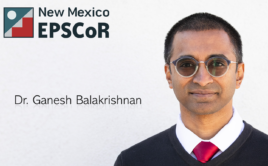
Ganesh Balakrishnan Named New Director at New Mexico EPSCoR
NM EPSCoR has announced the appoint-ment of Ganesh Balakrishnan as new Director, effective March 1. Ganesh Balakrishnan succeeds Dr. Bill Michener, who will retire this year.
Ganesh "Gunny" Balakrishnan brings over ten years of experience to NM EPSCoR, serving as PI on fifteen large grants in addition to numerous Co-PI appointments. He will continue to teach in the Electrical and Computer Engineering Department at UNM and will be actively involved in research at the Center for High Technology Materials, working on semiconductor materials and devices. Prior to the EPSCoR directorship, he was the Program Chair for the Optical Science and Engineering Program and the Associate Department Chair of the Electrical and Computer Engineering Department.

New North Dakota NSF EPSCoR Business Manager
Join ND NSF EPSCoR in welcoming their State Office’s new Business Manager, Eric Exner. Exner comes to the ND EPSCoR State Office from the North Dakota University System where he was a Business Analyst within Core Technology Services. Exner’s responsibilities include the oversight of all financial transactions related to ND EPSCoR and the ND EPSCoR State Office at all participating campuses. Exner officially began his position on Jan 20.