Success Stories
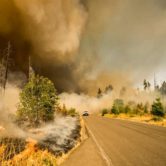
ALASKA: Researcher receives NSF funding for wildfire risk reduction
A team headed by Alaska EPSCoR Fire & Ice researcher Jen Schmidt has been funded by the NSF for a Navigating the New Arctic proposal entitled “Socio-ecological considerations for sustainAble Fuel treatments to Reduce wildfire Risk (SAFRR).” The team will work with agencies, Indigenous organizations and communities to co-produce an integrated framework to evaluate fuel treatments; assess treatments’ short-term and long-term ecological effects and influence on wildfire behavior; examine how likely treatments are to be acceptable to residents; and evaluate the ability of alternative fuel treatment designs.

WEST VIRGINIA: New NASA WV Space Grant Consortium and WV EPSCoR Director
NASA WV Space Grant Consortium and the NASA WV Established Program to Stimulate Competitive Research (EPSCoR) program announced that its board of directors appointed Dr. Melanie Page as the new Director. She assumed responsibilities on August 1, 2021, and succeeded Dr. Majid Jaridi, who has retired from his 30 years of service leading the organization.
As Director, she will work closely with staff and the board to ensure that program goals are met in an inclusive way while engaging students, teachers, faculty, and other key stakeholders in promoting collaborative research that contributes to NASA’s goals and objectives. Meanwhile, she will oversee the continued expansion of the NASA WV Space Grant Consortium, the NASA WV EPSCoR, and other NASA-funded projects.
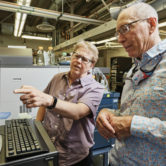
MONTANA: Researchers receive $294,000 NIFA grant to research bile acids
New research at Montana State University will examine if foods that are rich in fiber, such as lentils, can help lower unhealthy bile acid levels in the body, which are associated with a range of obesity-related diseases afflicting approximately one-third of U.S. adults.
The research by Mary Miles in MSU’s Department of Health and Human Development is supported by a $294,000, three-year grant from the U.S. Department of Agriculture’s National Institute of Food and Agriculture, or NIFA. MSU chemistry and biochemistry professor Brian Bothner, who is also scientific director of the Proteomics, Metabolomics and Mass Spectrometry Facility and director of Montana INBRE, is co-principal investigator on the project.
The research, “Therapeutic Impacts of Dietary Pulses on Bile Acids,” is one of 29 projects that collectively received a total of more than $8.5 million in funding from NIFA. The research and Extension grants are part of NIFA’s Agriculture and Food Research Initiative and are intended to advance solutions to critically important problems in U.S. agriculture.

DELAWARE: INBRE receives new confocal microscope
An NIH S10 High-End Instrumentation (HEI) Grant Program was awarded for the Dragonfly spinning disc confocal microscope with 3D localization-based super resolution capabilities.
Delaware INBRE Co-Director of the Centralized Research Instrumentation Core, Dr. Jeff Caplan, was awarded the S10 grant in early 2021.
The new microscope is set to arrive in August of 2021.

ARKANSAS: Jennifer Fowler named Director of Arkansas NSF EPSCoR
The Arkansas Economic Development Commission (AEDC) announced that it has named Jennifer Fowler as the new director of the Arkansas National Science Foundation Established Program to Stimulate Competitive Research (EPSCoR). She will replace Steve Stanley, who recently retired from the position.
Fowler currently serves as the director of Education, Outreach, and Diversity for EPSCoR where she implemented a variety of programs and activities to broaden participation in science, technology, engineering, and math (STEM). In this role, she was elected to a national council for her profession by the national EPSCoR community and served as an at-large member before being elected chair.

ALASKA: EPSCoR-supported company wins EPA Challenge
Aquagga, Inc., an EPSCoR-supported UAF spin-out company recently won first place in the Environmental Protection Agency’s “Innovative Ways to Destroy PFAS Challenge.” The team won $40,000 and the opportunity to further develop a process that combines high temperatures, high pressure and oxygen to dispose of PFAS-contaminated-waste. Aquagga received startup funding from EPSCoR via the Alaska Technology R&D Center.
This challenge is focused on identifying ways to destroy PFAS in concentrated aqueous film forming foam (AFFF) because of its high concentration of PFAS and widespread use to fight fires. The challenge sought detailed plans for non-thermal technologies that showed the potential to destroy at least 99 percent of PFAS in unused AFFF – without creating harmful byproducts and using temperatures significantly lower than temperatures required for incineration.
The first place and two second place challenge winners will now have the opportunity to submit their winning design concepts to DoD’s SERDP/ESTCP programs for further testing.
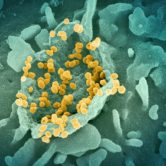
KANSAS: Adjuvant developed with NIH funding enhances efficacy of India’s COVID-19 vaccine
An adjuvant developed with funding from the National Institutes of Health has contributed to the success of the highly efficacious COVAXIN COVID-19 vaccine, which roughly 25 million people have received to date in India and elsewhere. Adjuvants are substances formulated as part of a vaccine to boost immune responses and enhance a vaccine’s effectiveness. COVAXIN was developed and is manufactured in India, which is currently suffering a devastating health crisis due to COVID-19.
The adjuvant used in COVAXIN, Alhydroxiquim-II, was discovered and tested in the laboratory by the biotech company ViroVax LLC of Lawrence, Kansas with support exclusively from the NIAID Adjuvant Development Program. The adjuvant comprises a small molecule attached in a unique way to Alhydrogel, a substance frequently called alum that is the most commonly used adjuvant in vaccines for people. Alhydroxiquim-II travels to lymph nodes, where the small molecule detaches from alum and activates two cellular receptors. These receptors, TLR7 and TLR8, play a vital role in the immune response to viruses. Alhydroxiquim-II is the first adjuvant in an authorized vaccine against an infectious disease to activate TLR7 and TLR8. In addition, the alum in Alhydroxiquim-II stimulates the immune system to search for an invading pathogen.

PUERTO RICO: Director named to NAIPI National Committee Member
Puerto Rico INBRE Principal Investigator Dr. José Rodríguez-Medina has been elected as the new South-Eastern INBRE National Association of IDeA Principal Investigators (NAIPI) National Committee Member.
NAIPI aims to protect and promote the IDeA programs. It fosters interactions, promotes resource sharing, enhances the national visibility of the INBREs, COBREs, and CTRs, develops consensus on priorities, identifies and disseminates best practices, identifies opportunities and develops strategies.
NEBRASKA: NSF awards $20M to Nebraska for “EQUATE” research
Nebraska gains five-year, $20 million funding from NSF
EQUATE project will conduct quantum materials research and outreach
On May 24, a new research collaboration was announced for Nebraska. With National Science Foundation (NSF) funding starting June 1 for five years totaling $20 million, the Emergent Quantum Materials and Technologies (“EQUATE”) group will study quantum properties of materials—potentially advancing technology, medical applications, national security, and more.
The EQUATE project is funded though NSF’s Established Program to Stimulate Competitive Research (EPSCoR) and will involve more than 20 scientists—including physicists, chemists, and engineers—at six Nebraska colleges and universities: University of Nebraska-Lincoln (UNL), University of Nebraska at Omaha, University of Nebraska at Kearney, Creighton University, Nebraska Indian Community College, and Little Priest Tribal College.
Read more about the new EQUATE award

MAINE: Former INBRE student returns as INBRE-funded faculty
Dr. Jennifer Honeycutt has returned to Maine as an assistant professor of psychology and neuroscience at Bowdoin College and is a newly-funded INBRE investigator. As an undergraduate student at Colby College, she began her research career in the neuroscience lab of former INBRE Project Leader Melissa Glenn, PhD.
The first in her family to attend college, Dr. Honeycutt graduated from Colby in 2010 and subsequently earned her PhD in behavioral neuroscience at the University of Connecticut.
Read more about Dr. Honeycutt