LOUISIANA: Researchers awarded $1.5M NASA EPSCoR grant
Rivers and deltas can release significant amounts of carbon dioxide into the atmosphere, which contributes to global warming. But until recently, climate modelers have had limited information on this process. A team of LSU scientists, in collaboration with Southern University, have accepted the challenge of analyzing this complex carbon export in the largest delta in the United States – the Mississippi River Delta.
To explore how carbon is exported from delta-dominated systems to the coastal ocean, LSU and Southern in partnership with the Louisiana Space Grant Consortium were awarded a $1.5M NASA EPSCoR grant and the Louisiana Board of Regents.
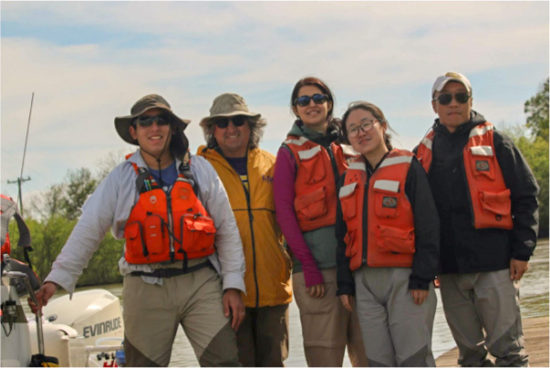
The LSU team is led by Associate Professor Zuo “George” Xue and comprises three additional faculty members from the College of the Coast & Environment: Professor Eurico D’Sa, Associate Professor Kanchan Maiti, and Associate Professor Victor Rivera-Monroy, along with several graduate students. They are tracking the carbon as it moves through the Mississippi River Delta and the Gulf of Mexico coast to see how it affects coastal water quality. In conjunction, the Southern University team — led by Zhu Hua Ning, a professor of forest ecophysiology and tree anatomy — is studying the terrestrial carbon export.
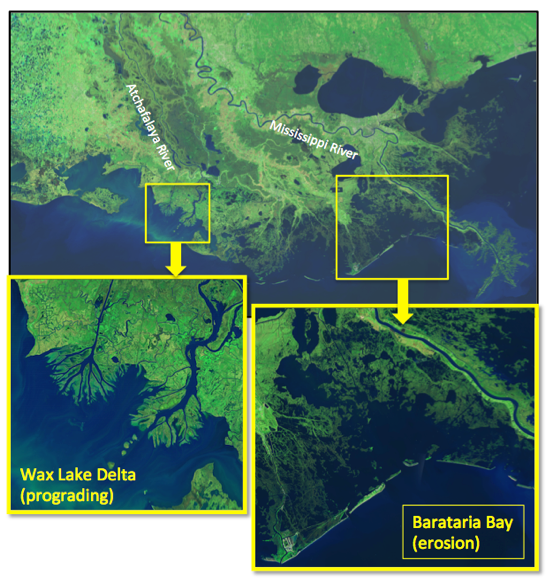
“I am fortunate to be leading and managing this project as it’s been a very good learning curve for me," Xue said. “We have issues that need to be addressed—land loss and possible ocean acidification, but we don’t know about the fate of the carbon. So, that’s something that we need to know for Louisiana.”