Success Stories
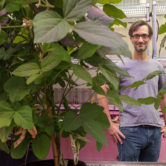
NEBRASKA: Husker scientist leads effort to understand, adapt legume nitrogen conversion
Soybeans and other legumes interact with nitrogen-fixing soil bacteria called rhizobia that are able to convert nitrogen in the air into a form the plant can use to grow and reproduce. Corn and other crops can’t, requiring nitrogen fertilizers to maximize growth and yield — problematic because overapplication or runoff can pollute soil and water.
Marc Libault, a University of Nebraska–Lincoln plant scientist, leads a multi-institution research team seeking to better understand how legumes strike up such a productive partnership with a group of bacteria called rhizobia, which convert atmospheric nitrogen to a chemical form that supports the host plant.
Libault, who is affiliated with Nebraska’s Center for Plant Science Innovation, is working with colleagues from Cornell University, the University of Michigan, Reed College and the National Center for Genome Resources. The work is funded by a $1.5 million grant from the National Science Foundation.

ALASKA: Phase 0 Grant Winners
Announcing the winners of this year’s Alaska TREND (Technology Research and Development Center) Phase 0 grants. The $10,000 NSF EPSCoR-supported awards go to innovators and companies in the early stages of deploying technologies with a strong technical basis and competitive edge. This year’s winners are:
- MustRs LLC (Fairbanks, AK)
Founded in 2021, MustRs LLC is an innovative robotics firm based in Alaska with a mission to empower caregivers and improve the lives of care recipients. The core focus of the company is the development and commercialization of robots for senior and disabled care. MustRs LLC targets the two problems in building and using service robots—safety and cost – through the incorporation of an anchorable robot that can perform multiple functions to support caregivers and recipients. - MacKinnon Marine Technologies (MMT) (Anchorage, AK)
MacKinnon Marine Technologies (MMT) established in 2011 is an Anchorage-based company that builds “AlumaPro” watercraft, consistently considered best-in-class for Search and Rescue, Law Enforcement, and special operations getting them where they need to go and home safely. The AlumaPro operates in diverse environments from Marinas (fire suppression, dewatering, vessel escort), swift and shallow water (rescue, enforcement, commercial), and floodwaters (hidden debris, and strong currents).
Alaska TREND 0 funds will allow MMT to prepare a proposal for the US Navy, in order to make AlumaPro the first unmanned service watercraft of its kind. MMT is integrating emerging technologies into its operating systems with the help of other companies’ systems to offer an unmanned craft with proven AlumaPro capabilities. - PKS Consulting, Inc. (Anchorage, AK)
PKS Consulting Inc. is an Alaskan small business that specializes in the development of new companies that support the growth and diversity of Alaska’s economy. PKS Consulting Inc. recently received a Phase I SBIR from the EPA for the design of a mobile plastic ocean waste recycling solution. The goal of this project is to convert plastic collected from beach cleanups into recycled plastic lumber. The lumber will be produced and sold locally, providing both local jobs and a local product that is in high demand — construction materials. - GRAYSTAR Pacific Seafood, Ltd. (Anchorage, AK)
GRAYSTAR Pacific Seafood Ltd is an Alaska corporation, launched in 1985 by Stephen Grabacki. Steve is a Certified Fisheries Professional, with a Master of Science in Fisheries Biology from the University of Alaska Fairbanks. GRAYSTAR develops Alaska’s ocean resources to improve human health and life.
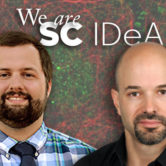
SOUTH CAROLINA: Two SC IDeA Researchers receive NIH NIGMS Collaboration Award
SC INBRE is pleased to announce that a team of South Carolina biomedical researchers has received an NIH NIGMS collaboration award. This goal of this one-year funding opportunity is to encourage collaborations between IDeA programs investigators while providing students a broad continuum of research opportunities. The team of Dr. Austin Shull from Presbyterian College and Dr. Antonis Kourtidis from the Medical University of South Carolina were awarded approx. $120,000 for their project. Dr. Shull is a current recipient of an SC INBRE Developmental Research Project Program (DRP) award; Dr. Kourtidis is a member of CDLD [Center for Biomedical Research Excellence (COBRE) in Digestive and Liver Disease]. This is the third consecutive year NIH NIGMS has offered collaborative awards and the third consecutive team from South Carolina to have received one.

NORTH DAKOTA: NDSU plant scientist receives USDA grant for phenotyping research with UAVs
North Dakota State University (NDSU) Department of Plant Sciences research scientist Filipe Matias is part of a multi-state research group that has been awarded a U.S. Department of Agriculture (USDA) National Institute of Food and Agriculture grant to study the use of unoccupied aerial vehicles (UAVs) for genome to phenome agricultural production research.
The Agricultural Genome to Phenome Initiative (AG2PI) is a three-year grant with the goal of connecting interdisciplinary crop and livestock scientists who are researching the effects of genotype and environmental influences on important agricultural phenotypes. Short-term (six months to a year) seed grants to identify research needs and share opportunities are awarded each year of the grant in three rounds. The research team including Matias received a first-year seed grant titled “Empowering High-Throughput Phenotyping using Unoccupied Aerial Vehicles.”
Learn more about the grant at the AG2PI website
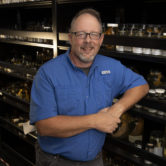
LOUISIANA: INBRE researcher receives Wildlife and Fisheries funding
LBRN PI Dr. Kyle Piller received funding from the Louisiana Department of Wildlife and Fisheries ($177,242) to conduct an environmental DNA survey of an imperiled species in north Louisiana. Title: "Assessing the Conservation Status of the Western Sand Darter, Ammocrypta clara (Percidae) using both field and eDNA approaches".
IOWA: Space Grant Consortium awards graduate student fellowships
The Iowa Space Grant Consortium (ISGC) awards fellowships to support outstanding graduate students pursuing research opportunities in science, technology, engineering, and math (STEM) disciplines that support the mission of NASA. For the 2021-2022 academic year, the ISGC is sponsoring the following awardees:
- Katelyn Brinker, Iowa State, Doctorate in Electrical Engineering
- Samuel Duncanson, Iowa State, Doctorate in Geology
- Cecilia Fasano, Iowa, Doctorate in Physics
- Samuel Murphy, Iowa, Doctorate in Mechanical Engineering
- Efrain Rodriguez-Ocasio, Iowa State, Doctorate in Chemical Engineering
- Zackry Stevenson, Iowa State, Doctorate in Microbiology
- Kody Waldstein, Iowa, Doctorate in Immunology
- Murtaza Zohair, Iowa State, Doctorate in Mechanical Engineering
ALASKA: NSF EPSCoR PI appointed to Advisory Board
Former Alaska NSF EPSCoR PI and current member of the EPSCoR Industry Advisory Board Mark Myers has been named to the US Arctic Research Commission.
Dr. Mark Myers has been engaged in Arctic research, resource management and policy for nearly four decades. He is the principal of Anchorage based Myenergies and is engaged, through Deloitte and the U.S. Department of State, in overseas capacity building in government resource ministries in the Arctic, the Balkans, and Eastern Europe. Previously, he served in senior leadership positions with the State of Alaska, University of Alaska, and the U.S. Department of Interior. These positions included Director of the U.S. Geological Survey, Alaska Commissioner of Natural Resources, Vice Chancellor for Research at the University of Alaska Fairbanks, Alaska State Geologist and State Director of Oil and Gas. Dr. Myers spent 26 years in the Air National Guard and Air Force Reserve serving as a pilot and intelligence officer. He holds BS, MS, and PhD degrees in geology with specialization in clastic sedimentology and the interpretation of paleoenvironments and depositional systems.
Dr. Myers has served on many advisory committees for the Federal and State of Alaska governments including the State of Alaska Committee on Research, the National Petroleum Council, the Methane Hydrate Advisory Committee, the steering committee for the U.S. Global Change Research Program and as a principal member of US Interagency Arctic Research Policy Committee. He has also been involved with the Arctic Council, serving as a member of the U.S. Delegation for the 2015 Arctic Council Senior Arctic Officials Meeting and as member of the U.S. delegation to the Sustainable Development Working Group and the Scientific Cooperation Task Force.

ARKANSAS: Children’s Research Institute Gets $11.5M From NIH To Study Obesity Prevention
Scientists at Arkansas Children’s Research Institute (ACRI) and the University of Arkansas for Medical Sciences will continue studying the impacts of childhood obesity after the NIH awarded $11.5 million in renewed funding to the ACRI Center for Childhood Obesity Prevention. The grant will fund further improvements to the center’s existing research infrastructure and ensure development of more scientists with expertise in childhood obesity. More
SOUTH DAKOTA: EPSCoR researcher receives NSF CAREER Award
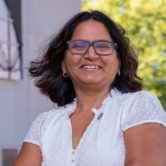
South Dakota State University assistant professor Anamika Prasad is the first Department of Mechanical Engineering faculty member to receive the prestigious NSF CAREER award. Prasad will work with the SD Discovery Center in Pierre to create culturally sensitive lesson plans to increase interest in biomaterials and plant-based research among rural and Native American students. The center will distribute the lessons to libraries and schools in the state both in-person and through virtual tools and the South Dakota Education portal. The education portal was created through NSF EPSCoR support and connects research to classrooms.
ALASKA: Researcher awarded US Patent
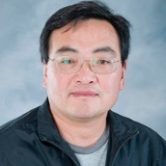
Alaska INBRE researcher Jack Chen was awarded a US Patent, “Methods and Compositions for Enriching Non-Host Sequences in Host Samples.” The patent describes a new technique to greatly amplify pathogenic sequences in human clinical samples so they’re easier to detect. This new procedure provides a fast and sequence-independent means to identify the poison needle in the haystack of gene sequences.