IDAHO: U of I Awarded $18.9M For Deep Soil Research Facility
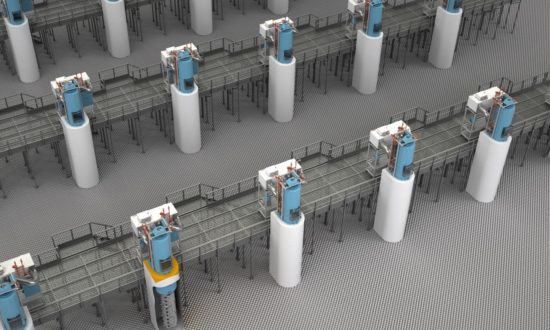
A facility designed to study soil at depths greater than anywhere else in the world will be built by University of Idaho researchers with support from an $18.9M NSF grant.
The Deep Soil Ecotron will enable scientists to conduct experiments on columns of soil up to three meters deep (about 10 feet). Currently, to study soils, scientists often dig pits, which destroys the soil systems as they are uncovered. Also, most research involves just the top 30 centimeters (roughly one foot) of soil. There is a lot to be learned by going deeper, said Michael Strickland, the project’s lead principal investigator.
“Deep soils are probably one of the last research frontiers,” said Strickland, a U of I associate professor of microbial ecology. “Soils are inherently important to life on the planet from supporting plants to driving processes like carbon and nutrient cycling, but a lot of research has been focused on the surface. This facility would enable us to better understand those processes at depth.”
Only 13 facilities of this type exist in the world with most located in Europe. None go to the soil depths planned at U of I, and the new Ecotron will give scientists greater ability to monitor and manipulate the eco-units for controlled experiments.