Success Stories
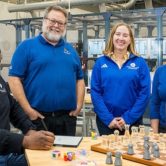
DELAWARE: UD receives $6 million from National Science Foundation as part of inaugural translational research funding program
From touch recognition and sensing that allows us to type messages on smartphones to carbon nanotube-based sensors that can track changes in our movement, the University of Delaware produces world-class ideas as one of the country’s top universities for research activity.
But it takes more than a great idea to make an impact — researchers also need institutional infrastructure, support staff and entrepreneurial skills in order to find the most effective way to bring their great ideas and technologies to life.
Now, UD will be empowered to increase the speed and scale of its translational research as a member of the inaugural cohort of 18 institutions supported by the U.S. National Science Foundation’s (NSF) Accelerating Research Translation (ART) program.
"NSF endeavors to empower academic institutions to build the pathways and structures needed to speed and scale their research into products and services that benefit the nation," said NSF Director Sethuraman Panchanathan. "The Accelerating Research Translation program in NSF’s new Technology, Innovation and Partnerships (TIP) Directorate identifies, and champions institutions positioned to expand their research translation capacity by investing in activities essential to move results to practice."
This effort will be led by PI Jill Higginson, George W. Laird Professor of Mechanical Engineering in UD’s College of Engineering and director of UD’s Institute of Engineering Driven Health (IEDH). Co-PIs include Julius Korley, associate vice president of UD’s Office of Economic Innovation and Partnerships (OEIP) and co-director of the NSF I-Corps Hub: Northeast Region, Tracy Shickel, associate vice president of corporate engagement, and Dan Freeman, associate professor of marketing in the Alfred Lerner College of Business and Economics and director of Horn Entrepreneurship.
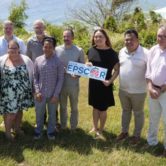
GUAM: UOG launches its 1st international marine biological survey
The University of Guam launched its first Bioblitz, an international collaboration to catalog the diversity of marine organisms found along the coasts of Guam from Feb. 2 to 22, 2024.
In a ceremony held Thursday, Feb. 1, at the UOG cliffside, eight visiting marine scientists were welcomed by UOG staff, faculty and some of the island’s elected officials.
“I look forward to what your research says and your recommendations and outcomes so that we can continue our own food sustainability and preservation for our future,” said Gov. Lou Leon Guerrero.
A Bioblitz, also known as a biological inventory, is an event that focuses on finding and identifying as many species as possible in a specific area within a short time. Due to climate change, many species around the world are at risk of extinction and Bioblitzes provide an opportunity to inform future conservation efforts of at-risk species.
“We have the most diverse coral reefs in the U.S. We have more species of corals and more species of fishes, and we have a lot of stuff that we don’t even know we’ve got yet. That’s up to the people who have come to participate in this Bioblitz to find out what those things are,” said Guam NSF EPSCoR Principal Investigator, Dr. Terry Donaldson.
The Bioblitz is supported by the university’s National Science Foundation EPSCoR grant, which aims to employ cutting-edge methods to determine solutions that address the challenges imposed by climate change on coral reefs and associated ecosystems.
ALASKA: NSF announces a new EPSCoR Track-1 award to combat climate change in Alaska
The U.S. National Science Foundation has awarded Alaska with $20 million through the Established Program to Stimulate Competitive Research (EPSCoR) program, which is designed to build research and development capacity, competitiveness and education in U.S. states and territories that have not received the levels of investment seen in other parts of the country.
The five-year Research Infrastructure Improvement Track-1 award will help Alaska assess the impact of climate change on local communities, develop methods to respond to challenges and create programs to educate future generations of researchers.
"Science, technology, and innovation-based solutions for mitigation, adaptation, and resilience to climate events are increasingly important to our nation's communities," said NSF Director Sethuraman Panchanathan. "This important EPSCoR award will help build resiliency to climate risks unique to Alaska, educate their citizens, protect infrastructure and safeguard the state's economic future."
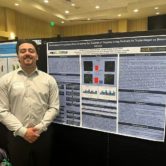
NORTH DAKOTA: “I learned too many new skills to count:” dREU students share what they learned and what’s next
The Distributed Research Experience for Undergraduates (dREU) program lets selected North Dakota undergraduates fast-track their research skills by giving them an opportunity to work under the supervision and guidance of faculty researchers from the New Discoveries in the Advanced Interface of Computation, Engineering, and Science (ND-ACES) Center for Cellular Biointerfaces in Science and Engineering (CCBSE). The program is designed to strengthen North Dakota's STEM ecosystem by catalyzing bioscience research and career development opportunities for undergraduates.
Participating students get a salary for the time they spend doing research, professional development, and associated tasks. In addition, dREU students are required to participate in virtual professional development seminars which enhance their career readiness by teaching them skills like writing a resume, applying to graduate school, and preparing and delivering presentations.
Some dREU students participate at their home institutions, while others spend time at research institutions. For students from primarily undergraduate institutions, “a dREU experience at a research-intensive university such as UND and NDSU is a great opportunity because it broadens their horizons and gives students the opportunity to meet and work alongside graduate students, broaden their scientific network, work with equipment that is not typically available to them, and learn new technologies they can bring back to their home institutions,” says Dr. Hilde van Gijssel, Professor of Science at Valley City State University (VCSU). “An additional benefit is that it strengthens and fosters collaborations between the faculty at the students’ home institutions and the research universities.”
We talked to this year’s group of dREU students to find out why they joined the program, what they learned, and where they will take their new skills next.

KENTUCKY: INBRE research receives funding for eating disorders research
KY INBRE-funded researcher Cheri Levinson, University of Louisville, and research partner Christina Ralph-Nearman, received a $125,000 grant from the National Eating Disorders Association (NEDA) to further develop a virtual reality technology aimed at treating eating disorders. Awaken Emerse, a UofL prototype technology, helps users virtually face and overcome their associated fears, such as the fear of gaining weight.
The NEDA grant comes on the heels of some $11.5 million in funding from the NIH to support Levinson’s work to better understand and address some of the most devastating effects of eating disorders. That research will investigate how eating disorders may develop in childhood and adolescence, their contribution to suicidal behaviors and how innovative personalized treatments, like VR simulation, may offer hope.
NEW MEXICO: EPSCoR researcher receives NSF CAREER Award
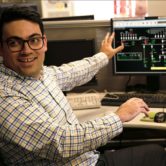
Ali Bidram, an Assistant Professor at the University of New Mexico and a lead for the New Mexico NSF EPSCoR NM SMART Grid Center Architecture and Deployment teams, recently earned a prestigious NSF Faculty Early Career Development (CAREER) award for his project to improve power grids to ensure they are adaptively protected for modern conditions, such as high penetration of renewable energy sources. The five-year, $517,000 project began April 1 and continues through March 21, 2029.

SOUTH CAROLINA: INBRE researcher receives $2M NCI grant
Former SC INBRE DRP recipient Joe Carson, College of Charleston, received a two-year, $2 million NIH Phase II grant award from the National Cancer Institute.
Carson’s 2020-2022 SC INBRE DRP grant was entitled, “Advancing Low Cost, All-Focus, 3D Imaging Technologies, Using Shape-From-Focus Techniques.” This new NIH Phase II grant is entitled, “A Novel, Low-Cost, Handheld, 3D Imaging System for Improved Screening of Cervical Neoplasia in Resource Limited Settings.” The two-year grant will be used to complete research & development and conduct clinical testing of the device in three countries, including the US (at Virginia Tech Carilion School of Medicine), Kenya (at the Aga Khan University), and Malawi (at the University of Science and Technology). Pensievision will also partner with the Virginia Tech Department of Biomedical Engineering and Mechanics (BEAM) for coordinating global health activities and advancing technology components. SC INBRE congratulates Joe on this big achievement and is pleased to have been a part of this success!
GlobalFoundries gets $1.5B for Malta, NY, plant, Vermont to benefit
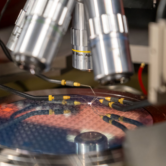
The US Department of Commerce announced $1.5 billion in planned direct funding for GlobalFoundries (GF) as part of the US CHIPS and Science Act. This investment will enable GF to expand and create new manufacturing capacity and capabilities to securely produce more essential chips for automotive, IoT, aerospace, defense, and other vital markets.
“The first and largest 200mm semiconductor manufacturing facility of its kind in the US, GF’s Vermont fab is a cornerstone of the state’s economy and a key partner for the University of Vermont’s (UVM) work as a national research university. CHIPS funding will help ensure the commercial viability of this site for years to come,” said Kirk Dombrowski, Vice President for Research and Economic Development at UVM and Vermont NSF EPSCoR Director.

XLerator Network Selects Innovators Across Southeast for NIH-Funded Entrepreneurship Program (feat. KY, LA, MS, SC, WV)
XLerateHealth, has announced the selection of nine innovators across the Southeast IDeA State region to participate in the NIH-funded IDeA Regional Entrepreneurship Development (I-RED) Program. Participants were selected through a competitive application. The goal of the I-RED program is to help selected participants acquire the fundamental business and entrepreneurial skills needed to successfully commercialize their technologies.
Members of the inaugural cohort are:
- Marc Birtwistle, PhD, Co-founder and CEO of Blotting Innovations (Clemson University, SOUTH CAROLINA)
- David Colby, PharmD, PhD, Founder of Fluoriq (University of MISSISSIPPI)
- Michael Dunham, MD, Co-founder and CEO of Soteria Medical Solutions (LOUISIANA State University Health Sciences)
- Jill Kolesar, PharmD, Founder of VesiCure Technologies (University of KENTUCKY)
- Nina McLain, RN, PhD, Founder and CEO of OSD Technologies (University of Southern MISSISSIPPI) Jeremy Mercuri, PhD, Founder and Chief Scientific Officer of NovaVia Spine & Biologics (Clemson University, SOUTH CAROLINA)
- Jay Potts, PhD, Co-founder and CEO of Carolina Biologics (University of SOUTH CAROLINA)
- Shafic Sraj, MD, MBA (WEST VIRGINIA University)
- Stephen Valentine, PhD, Co-founder and Vice President of Invibragen (WEST VIRGINIA University)

NEW HAMPSHIRE: Two grants from NIH and USDA fund NH BioMADE (EPSCoR Track-1) research
Allergy Amulet, NH BioMade seed grant recipient, has been awarded two grants from NIH and USDA to advance its groundbreaking work in developing consumer-friendly sensors for detecting food sensitivities and pathogens in food. Allergy Amulet credits the support it received from NH BioMade's seed grant to Dartmouth College researchers Nataliia Vereshchuk and Katherine Mirica as instrumental in securing these two SBIR awards. NH BioMade is a New Hampshire NSF EPSCoR Track 1 project.