Success Stories
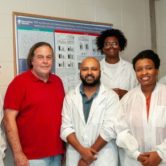
DELAWARE: Former INBRE researcher received $500,000 donation
The Paul H. Boerger Fund of the Delaware Community Foundation awarded a $500,000 donation to the Delaware State University Foundation in support of the Alzheimer’s disease research program led by Dr. Michael Gitcho, Associate Professor of Biological Sciences and former Delaware INBRE Pilot Investigator.
APLU Names Winners of 2023 Innovation & Economic Prosperity University Awards (feat. AL, IA, KS, KY, WV)
The Association of Public and Land-grant Universities (APLU) has named the winners of its 11th annual Innovation & Economic Prosperity (IEP) University Awards and 11 new IEP University designees. The awards recognize innovative projects or programs in economic engagement.
APLU’s IEP Universities designation program helps higher education institutions codify, elevate, and advance their enterprise supporting economic and community development while providing national recognition to institutions committed to university economic development. New designees from the EPSCoR/IDeA jurisdictions include: University of KENTUCKY and WEST VIRGINIA University.
This year’s IEP University Award winners representing the EPSCoR/IDeA jurisdictions are:
- University of ALABAMA at Birmingham, IEP Innovation award
- KANSAS State University, IEP Place award
- IOWA State University, IEP Economic Engagement Connections Award
DOE $44M for Innovations in Enhanced Geothermal Systems (feat. NM, OK)
The DOE has announced that its Frontier Observatory for Research in Geothermal Energy (FORGE) field laboratory in Milford, UT, has selected 13 research projects to foster innovation in enhanced geothermal systems (EGS). Selectees will receive a combined total of up to $44 million for research that will build on FORGE’s existing EGS work and focus on reproducible solutions and dissemination of technical data. More
Representing the EPSCoR jurisdictions are:
- Topic 2: Alternative Stimulation Schemes: University of OKLAHOMA
- Topic 3: Field Scale Experiments to Measure Heat-Sweep Efficiency: Sandia National Laboratories, Albuquerque, NEW MEXICO
- Topic 4: High Temperature Proppants: OKLAHOMA State University and University of OKLAHOMA
DOE Microbattery Design Prize Phase I Selections (feat. RI)
The DOE has announced awards for eight new designs for microbatteries, through phase 1 of the Microbattery Design Prize. This prize aims to accelerate the commercialization of these innovative microbattery designs, along with their integration into the existing technologies needed for clean energy manufacturing.
Representing the EPSCoR jurisdictions is:
- AUDIANCE, Inc., East Greenwich, RHODE ISLAND. Award Amount: $75,000.
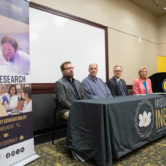
MISSISSIPPI: MS INBRE announces $21M NIH Grant Renewal
Mississippi INBRE has announced that they have received their five-year INBRE renewal from NIGMS totaling more than $21 million. Although the renewal period just launched Sept 1, the network has already established two new research labs at the University of Mississippi and Mississippi State University, as well as a state-of-the-art data science center.

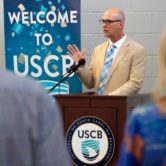
SOUTH CAROLINA: USCB awarded a $1 million grant from NSF to bolster maritime cybersecurity program
The University of South Carolina Beaufort (USCB) was awarded a $1 million grant from NSF. The grant came from the NSF Engines program and USCB joins more than 40 teams from across the US in receiving the NSF Engines Development Awards meant to encourage collaboration to create societal, economic and technological opportunities within the region. “The grant will allow USCB, along with 12 partners, to plan for the South Coast Regional Innovation Engine which will conduct research to find and understand risks and vulnerabilities in the regional maritime ecosystem in hopes of developing technology to enhance the safety and security of our ports.”

IDAHO: Extreme Yellowstone Flooding is Focus of Research by NSF EPSCoR researcher
Idaho NSF EPSCoR Track-1 GEM3 Lead Wins NSF RAPID Award to Study Extreme Yellowstone Flooding. Recently, Colden Baxter, Idaho State University, was awarded $100,000 to study how the 1 in 500-year extreme flooding event in June 2022 impacted streams in the headwaters of the Yellowstone and Lamar Rivers. Funded by the NSF’s Rapid Response Research program, Baxter and his doctoral student, Jeremy Brooks, will be measuring the abundance and diversity of the fish and insects like mayflies and midges that call the streams and the riparian ecosystems along their banks home.

NEW MEXICO: Engineering professor leading one of five NSF BRITE Fellow projects
Meeko Oishi, New Mexico NSF EPSCoR SMART Grid Center team member, will lead a $1 million project as part of the NSF Boosting Research Ideas for Transformative and Equitable Advances in Engineering (BRITE) program.
As a BRITE Fellow, Oishi will be leading a single-principal investigator project titled Autonomous Systems that Accommodate Human Perception and Reasoning about Uncertainty. The project will involve the integration of knowledge of human perception and reasoning about uncertainty into new methods for the design and control of autonomous dynamical systems.

AR, LA, MS: Scientists develop climate resilient rice as part of $10M USDA grant
Scientists at Mississippi State University are part of a multi-institutional, $10 million USDA NIFA effort to improve the sustainability and profitability of rice farming in the face of climate change. Louisiana State University is the lead institution on the grant. Other partners include the University of Arkansas and Texas A&M University.