Success Stories
SOUTH DAKOTA: Mines Environmental Engineering Professor Named Editor-in-Chief of Premier Science Journal
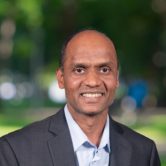
Dr. Venkataramana Gadhamshetty, South Dakota Mines professor of civil and environmental engineering, was recently appointed as editor-in-chief of Environmental Engineering Science, a premier peer-reviewed journal dedicated to the advancements in environmental engineering and science.
RHODE ISLAND: Rhode Island INBRE receives $1.2M federal grant
The Rhode Island IDeA Network of Biomedical Research Excellence (RI-INBRE) program will continue training the next generation of leaders in the region’s biomedical and biotechnology industries for the next three years after receiving a $1.2 million grant from the U.S. Department of Labor.
WEST VIRGINIA: Rankin one of 10 individuals named to the WV Executive 2025 Health Care Hall of Fame
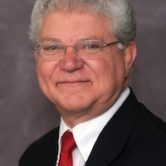
CHARLESTON, W.Va. – Gary O. Rankin, Ph.D., vice dean for basic sciences, professor and chair of biomedical sciences at the Marshall University Joan C. Edwards School of Medicine, was one of 10 individuals named to the WV Executive magazine 2025 Health Care Hall of Fame.
SOUTH DAKOTA: South Dakota Student Research Poster Session Recap 2025
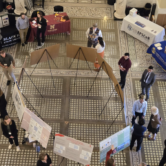
Eleven undergraduate students and student teams statewide traveled to Pierre, S.D., to showcase research projects at the 28th annual South Dakota Student Research Poster Session at the Capitol Rotunda on Friday, February 21, 2025.
KENTUCKY: WKU Physics & Astronomy awarded NASA KY EPSCoR Research Grant
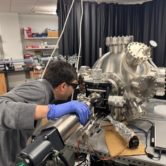
Starting in 2021, a team of three members of Western Kentucky University’s Department of Physics & Astronomy faculty, including Dr. Gordon Emslie, Dr. Ali Er, and Dr. Ivan Novikov, have been working on a NASA KY EPSCoR Research Award of $900,000 entitled “Solar Activity and Space Weather.”
NEW HAMPSHIRE: NH BioMade researcher launches her own company, receives $292,752 in NIH funding
NH BioMade researcher Rebecca Thomson launched her own company, NovaGyn LLC, to focus on creating better biomaterials for pelvic reconstruction surgery and has received $292,752 from NIH in initial funding. NH BioMade faculty members Douglas Van Citters and Katherine Hixon serve on the NovaGyn Scientific Advisory Board.
NORTH DAKOTA: NATURE at 25: Fostering Indigenous STEM education, cultural relevance, and collaboration
“This frosting of the [sunflower] seeds had an effect upon them that we rather esteemed. We made a kind of oily meal from sunflower seed, by pounding them in a corn mortar; but meal made from seed that had been frosted, seemed more oily than that from seed gathered before frost fell. The freezing of the seeds seemed to bring the oil out of the crushed kernels. This was well known to us. Sometimes we took the threshed seed out of doors and let it get frosted, so as to bring out this oiliness.” Maxi'diwiac (Buffalo Bird Woman), Hidatsa farmer
Whether it’s agriculture, astronomy, or medicine, Indigenous peoples are natural scientists and have long practiced science before the term “science” existed. Indigenous cultural traditions and ways of life are at the core of these practices.
As the North Dakota Established Program to Stimulate Competitive Research (ND EPSCoR) program celebrates the 25th anniversary of its NATURE initiative — a program aimed at promoting STEM among tribal youth in North Dakota — it's a moment not only to commemorate past achievements but also to chart the course for the program's future.

What is the NATURE program?
NATURE, which stands for Nurturing American Tribal Undergraduate Research and Education, embodies a vision rooted in Indigenous culture and practices with respect for the natural environment while sparking curiosity and interest in future generations for STEM pathways by blending two worlds.
In one world, Indigenous people live as one with Unci Maka (Grandmother Earth) and thrive on the ancestral knowledge of various sciences passed on throughout centuries through oral and hands-on teachings. The other world advances research and STEM pathways with today’s knowledge, technologies, and needs. Through an Indigenous lens, these worlds are one in the same.
IOWA: UI spearheads $6M multistate NSF grant to help Midwest agricultural communities better manage extreme weather
The University of Iowa has been awarded a $6 million, four-year National Science Foundation (NSF) grant to lead a multistate collaboration with universities, local governments, health care providers, and other experts on a project that will help Midwest agricultural communities grappling with effects of severe weather, such as floods, droughts, and heat waves.
A network of small, low-cost sensors invented by UI researchers will be placed in local fields and neighborhoods across Iowa, Kansas, Nebraska, and Arkansas to gather measurements of soil temperature and moisture, air temperature, relative humidity and surface pressure, and other weather and soil data points. These measurements will be used to produce model forecasts of weather that will be delivered in real time to individuals in ag-communities via phone apps and interactive on-demand virtual systems.
Through local partnerships and data training, the hyper localized forecasts will help individuals and communities in a variety of ways:
- Manage water usage and agricultural field operations.
- Recognize when and where environmental factors such as heat waves or smoke from wildfire are harmful to health.
- Strategically use resources to mitigate heat stress, such as by building greenspaces.
- Grow the local workforce by instilling technical skills and demand for data analytics, operation of unmanned arial vehicles, irrigation systems, and elements of precision agriculture intended to create more economically resilient communities.
“This significant NSF award underscores the University of Iowa’s role in creating engineering solutions to address critical issues facing our rural communities. Through collaborations such as these we can continue to raise the bar in transformative research, benefiting all Iowans,” says Ann McKenna, dean of the UI College of Engineering.
LOUISIANA: LSU-led Team Wins Largest Grant Ever Awarded by National Science Foundation
January 29, 2024
A statewide effort led by LSU has won the largest grant ever awarded by the U.S. National Science Foundation, providing up to $160 million to support Louisiana’s energy industry, create jobs, and develop the energy workforce.
The NSF Engines grant, announced earlier today in Washington, D.C., focuses on energy transition and decarbonization of Louisiana’s industrial corridor.
Louisiana’s team, called Future Use of Energy in Louisiana, or FUEL, includes private energy companies, universities, community and technical colleges, and state agencies that will work together to drive technology and workforce development in support of Louisiana’s energy industry.
“Leading the FUEL team and being selected for this transformational grant affirms what we already knew – that LSU is one of the nation’s premier research universities, poised to change the lives of the people of Louisiana and the world,” LSU President William F. Tate IV said. “By teaming up with our partners across the state in education, industry and government, we are leveraging the intellectual capital of our state’s best and brightest to make a difference for the energy industry and for the people of every parish in Louisiana.”
ARKANSAS: UAMS, UA and Arkansas Children’s Research Institute Collaborate to Support Women’s Health Research in Arkansas
Aug. 5, 2024 | LITTLE ROCK — The University of Arkansas for Medical Sciences (UAMS), the University of Arkansas at Fayetteville and the Arkansas Children’s Research Institute (ACRI) are collaborating on a yearlong project to make decades of maternal health research readily available for future researchers.
The project is funded by a $310,000 grant from the National Institutes of Health (NIH), in the form of a supplemental award to Lawrence E. Cornett, Ph.D., a distinguished professor in the UAMS College of Medicine Department of Physiology and Cell Biology.
Cornett directs the Arkansas IDeA Networks of Biomedical Research Excellence (INBRE) program, which since 2001 has been building a biomedical research infrastructure across the state that includes programs for undergraduate students and faculty.
The $310,000 award is a supplement to the five-year $18.4 million NIH Institutional Development Award (IDeA) grant that continues the Arkansas INBRE program. The grant supplement will allow scientists at UA Fayetteville and ACRI to collaborate on the development of software tools and analytical processes to streamline the production and analysis of a large maternal health dataset that ACRI has been collecting.