Success Stories
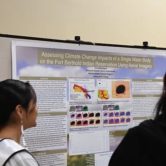
NORTH DAKOTA: NATURE at 25: Fostering Indigenous STEM education, cultural relevance, and collaboration
“This frosting of the [sunflower] seeds had an effect upon them that we rather esteemed. We made a kind of oily meal from sunflower seed, by pounding them in a corn mortar; but meal made from seed that had been frosted, seemed more oily than that from seed gathered before frost fell. The freezing of the seeds seemed to bring the oil out of the crushed kernels. This was well known to us. Sometimes we took the threshed seed out of doors and let it get frosted, so as to bring out this oiliness.” Maxi'diwiac (Buffalo Bird Woman), Hidatsa farmer
Whether it’s agriculture, astronomy, or medicine, Indigenous peoples are natural scientists and have long practiced science before the term “science” existed. Indigenous cultural traditions and ways of life are at the core of these practices.
As the North Dakota Established Program to Stimulate Competitive Research (ND EPSCoR) program celebrates the 25th anniversary of its NATURE initiative — a program aimed at promoting STEM among tribal youth in North Dakota — it's a moment not only to commemorate past achievements but also to chart the course for the program's future.

What is the NATURE program?
NATURE, which stands for Nurturing American Tribal Undergraduate Research and Education, embodies a vision rooted in Indigenous culture and practices with respect for the natural environment while sparking curiosity and interest in future generations for STEM pathways by blending two worlds.
In one world, Indigenous people live as one with Unci Maka (Grandmother Earth) and thrive on the ancestral knowledge of various sciences passed on throughout centuries through oral and hands-on teachings. The other world advances research and STEM pathways with today’s knowledge, technologies, and needs. Through an Indigenous lens, these worlds are one in the same.

IOWA: UI spearheads $6M multistate NSF grant to help Midwest agricultural communities better manage extreme weather
The University of Iowa has been awarded a $6 million, four-year National Science Foundation (NSF) grant to lead a multistate collaboration with universities, local governments, health care providers, and other experts on a project that will help Midwest agricultural communities grappling with effects of severe weather, such as floods, droughts, and heat waves.
A network of small, low-cost sensors invented by UI researchers will be placed in local fields and neighborhoods across Iowa, Kansas, Nebraska, and Arkansas to gather measurements of soil temperature and moisture, air temperature, relative humidity and surface pressure, and other weather and soil data points. These measurements will be used to produce model forecasts of weather that will be delivered in real time to individuals in ag-communities via phone apps and interactive on-demand virtual systems.
Through local partnerships and data training, the hyper localized forecasts will help individuals and communities in a variety of ways:
- Manage water usage and agricultural field operations.
- Recognize when and where environmental factors such as heat waves or smoke from wildfire are harmful to health.
- Strategically use resources to mitigate heat stress, such as by building greenspaces.
- Grow the local workforce by instilling technical skills and demand for data analytics, operation of unmanned arial vehicles, irrigation systems, and elements of precision agriculture intended to create more economically resilient communities.
“This significant NSF award underscores the University of Iowa’s role in creating engineering solutions to address critical issues facing our rural communities. Through collaborations such as these we can continue to raise the bar in transformative research, benefiting all Iowans,” says Ann McKenna, dean of the UI College of Engineering.
LOUISIANA: LSU-led Team Wins Largest Grant Ever Awarded by National Science Foundation
January 29, 2024
A statewide effort led by LSU has won the largest grant ever awarded by the U.S. National Science Foundation, providing up to $160 million to support Louisiana’s energy industry, create jobs, and develop the energy workforce.
The NSF Engines grant, announced earlier today in Washington, D.C., focuses on energy transition and decarbonization of Louisiana’s industrial corridor.
Louisiana’s team, called Future Use of Energy in Louisiana, or FUEL, includes private energy companies, universities, community and technical colleges, and state agencies that will work together to drive technology and workforce development in support of Louisiana’s energy industry.
“Leading the FUEL team and being selected for this transformational grant affirms what we already knew – that LSU is one of the nation’s premier research universities, poised to change the lives of the people of Louisiana and the world,” LSU President William F. Tate IV said. “By teaming up with our partners across the state in education, industry and government, we are leveraging the intellectual capital of our state’s best and brightest to make a difference for the energy industry and for the people of every parish in Louisiana.”
ARKANSAS: UAMS, UA and Arkansas Children’s Research Institute Collaborate to Support Women’s Health Research in Arkansas
Aug. 5, 2024 | LITTLE ROCK — The University of Arkansas for Medical Sciences (UAMS), the University of Arkansas at Fayetteville and the Arkansas Children’s Research Institute (ACRI) are collaborating on a yearlong project to make decades of maternal health research readily available for future researchers.
The project is funded by a $310,000 grant from the National Institutes of Health (NIH), in the form of a supplemental award to Lawrence E. Cornett, Ph.D., a distinguished professor in the UAMS College of Medicine Department of Physiology and Cell Biology.
Cornett directs the Arkansas IDeA Networks of Biomedical Research Excellence (INBRE) program, which since 2001 has been building a biomedical research infrastructure across the state that includes programs for undergraduate students and faculty.
The $310,000 award is a supplement to the five-year $18.4 million NIH Institutional Development Award (IDeA) grant that continues the Arkansas INBRE program. The grant supplement will allow scientists at UA Fayetteville and ACRI to collaborate on the development of software tools and analytical processes to streamline the production and analysis of a large maternal health dataset that ACRI has been collecting.
KENTUCKY: NSF announces a new EPSCoR Track-1 award to combat climate change in Kentucky
The Commonwealth of Kentucky will receive $20 million from the U.S. National Science Foundation through the Established Program to Stimulate Competitive Research (EPSCoR). This program aims to support U.S. states and territories, also known as EPSCoR jurisdictions, that have historically received less funding for research and development.
Through the EPSCoR Research Infrastructure Improvement Program Track-1, Kentucky has been awarded five years of funding to study how climate change affects local communities. The project will allow researchers to find new ways to deal with these challenges, educate the community and create programs to teach future researchers.
Kentucky faces mounting threats from environmental change, including extreme weather events, floods, droughts and landslides. The Climate Resilience through Multidisciplinary Big Data Learning, Prediction & Building Response Systems (CLIMBS) project will advance the fields of climate science, geohazards engineering and disaster management to improve sustainability and resilience to climate change. Research and educational programs will benefit underserved communities in eastern Kentucky.
"We are proud to invest in Kentucky's future through the CLIMBS project, which aims to enhance climate resilience and sustainability across industries," said NSF Director Sethuraman Panchanathan. "By focusing on science-driven solutions, Kentucky can address climate challenges, protect communities and bolster economic growth for communities across the commonwealth and throughout the region."
Led by the University of Kentucky, scientists from eight universities will use Big Data, artificial intelligence and machine learning to model the impact of different climate scenarios. CLIMBS will help build climate resilience and sustainability in Kentucky's key industries of manufacturing, data analytics, energy transition and engineering and help train a science and engineering workforce that will enable the growth of smaller industries, such as food and beverage and agriculture.
CLIMBS is responsive to Kentucky's Vision 2030: Science & Technology Plan, which includes a major focus on climate and resiliency and is motivated by the flood and weather events in 2021 and 2022 that impacted the area, including impoverished mountain and rural communities. Along with improving education and outreach in Appalachia, CLIMBS will promote the development of university-industry partnerships and enhanced abilities to compete for center-level funding and commercialization.
KANSAS: University of Kansas awarded $26 million for new Engineering Research Center from National Science Foundation
LAWRENCE — The National Science Foundation (NSF) has awarded the University of Kansas $26 million to establish a new Gen-4 Engineering Research Center (ERC) — Environmentally Applied Refrigerant Technology Hub (EARTH) — that will create a sustainable and circular refrigerant economy.
NSF’s Engineering Research Centers bring universities and businesses together to strengthen the competitive position of American industry in the global marketplace.
“NSF's Engineering Research Centers ask big questions in order to catalyze solutions with far-reaching impacts,” NSF Director Sethuraman Panchanathan said. “NSF Engineering Research Centers are powerhouses of discovery and innovation, bringing America's great engineering minds to bear on our toughest challenges. By collaborating with industry and training the workforce of the future, ERCs create an innovation ecosystem that can accelerate engineering innovations, producing tremendous economic and societal benefits for the nation.”
KU’s ERC EARTH was selected from among hundreds of proposed centers.
“Working closely with industry partners, EARTH will have the resources and expertise to solve the technical, environmental and economic challenges required to create a sustainable refrigerant lifecycle that will benefit Kansans, the nation and the world. In doing this work, the center is a prime example of how the University of Kansas is driving economic development in Kansas," said Douglas A. Girod, University of Kansas chancellor.
KU is well positioned to lead this effort.

IDAHO: COBRE — Nutrition and Women's Health
In March 2024, the University of Idaho received (award number P20GM152304) a $11 million, five-year grant to establish a Center of Biomedical Research Excellence (COBRE) program focused on nutrition and women’s health. This grant is funded by the National Institute of General Medical Sciences, a component of the U.S. National Institutes of Health (NIH). The NIH’s Office of Women’s Health and Office of Nutrition Research are also partners.
The NIH’s overarching goal with this and all COBRE grants is to “support the establishment and development of innovative, state-of-the-art biomedical and behavioral research centers at institutions in Institutional Development Award (IDeA)-eligible states through awards for three sequential five-year phases.” IDeA-eligible states are those with the least NIH funding, and Idaho ranks nearly at the bottom of all states in this regard.
The first five years (phase 1) of this award will focus on building capacity in the area of nutrition and women’s health at the University of Idaho, including (1) attracting, mentoring and supporting a critical mass of both emerging and established world-class investigators who are able to compete effectively for independent, federal research funding and (2) improving infrastructure in the area of nutrition and women’s health at the University of Idaho.
Research will be broad, interdisciplinary, collaborative and innovative in the areas of nutrition and women’s health. It will span the entire lifespan and be inclusive of all nutrients and food bioactives important for health. Both undernutrition and obesity will be considered, as will a broad range of health outcomes, such as fertility, eating disorders, nutrient deficiencies, chronic disease and mental health.
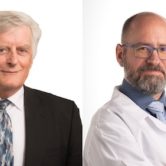
Leading the COBRE are Shelley McGuire (COBRE principal investigator/project director, professor of nutrition and director of the Margaret Ritchie School of Family and Consumer Sciences), Mark McGuire (COBRE associate director, university distinguished professor) and Janet Williams (COBRE director of the Nutrition Analytics Core Laboratory, senior research scientist).

ALABAMA: UAB receives $21.4 million from NIH to expand Alzheimer’s Disease Research Center
The National Institute on Aging (NIA), part of the National Institutes of Health, has awarded an estimated $21.4 million five-year grant to the University of Alabama at Birmingham for an Alzheimer’s Disease Research Center.
People born in the Deep South have a 20 percent to 30 percent higher risk of developing Alzheimer’s disease or dementia. In 2020, UAB became an exploratory ADRC to advance research in dementia disparities in the region. The new grant allows the team to extend its research efforts.
“We hope to use the data collected through the ADRC to translate research findings into advances in the care, treatment and prevention of Alzheimer’s disease and dementia,” said Erik Roberson, M.D., Ph.D., Rebecca Gale-Heersink endowed chair in the UAB Department of Neurology and the center director.
HAWAI'I: $11.7M grant renewal advances diabetes research in Hawaiʻi
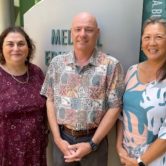
Diabetes affects 10% of Hawaiʻi‘s population, with another 37% living with pre-diabetes, according to the American Diabetes Association. To address this significant health issue, the University of Hawaiʻi at Mānoa’s John A. Burns School of Medicine (JABSOM) secured a $11.7 million National Institutes of Health (NIH) five-year grant renewal for its Diabetes Research Center, originally funded with $11.3 million in 2017.
“Living in Hawaiʻi, many of us have diabetes or know someone who has it, so it is our obligation as researchers in Hawaiʻi to investigate problems that affect the people of this state,” said Mariana Gerschenson, JABSOM associate dean for research and director of the Diabetes Research Center. “The renewal of this grant allows us to continue to do this critical research, and we are excited about starting Phase 2 of this research, which will explore the impact diabetes has on other parts of the body.”
Originally, the NIH-funded Centers of Biomedical Research Excellence (COBRE) grant enabled JABSOM to study the mechanisms behind diabetes and pre-diabetes using cell and animal models. This initiative also facilitated the training of five young investigators across UH Mānoa to continue to contribute to local research and education.
“This is a very exciting time for us to have the opportunity to give young people in Hawaiʻi an opportunity to study this abundant disease and its complications here at home,” said Majorie Mau, the center’s deputy director and professor in the Department of Native Hawaiian Health.
NORTH DAKOTA: Equipment at Minot State University supports workforce development for North Dakota
An ideal thickness for studying certain rocks and minerals underneath a microscope is 0.03 mm, or roughly one one-thousandth of an inch (also known as one thou). Put another way, it takes 1,000 thous to make one inch.
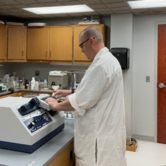
Dr. John Webster, a Geosciences researcher and professor at Minot State University, received almost $33,000 from ND EPSCoR's STEM Research and Education program in 2022 to purchase a new precision thin-section machine that cuts stones thin enough for him and his students to discern mineral and chemical composition. ND EPSCoR's STEM Research and Education program is funded through appropriated funds from the ND state legislature to support STEM across North Dakota.
The Buehler PetroThin, as it’s called, is a thin section machine with a PetroBond thin section fixture that ensures parallelism of cutting and grinding procedures. The technology that creates thin sections isn’t new, but it’s essential to the work Webster performs as both a researcher and a lecturer. Thin-section study using a petrographic microscope is the standard technique for detailed study of rocks and minerals. It helps researchers describe rocks in great detail, including their mineral composition to better understand how they formed.
“It allows us to characterize rocks in new ways and interpret how rocks were formed,” Webster said. “It really is a fundamental, really important approach to studying geological materials. Even if we have good hand lenses (magnifiers), it’s difficult to identify minerals and see the textures. With thin slices like this, it really is how we characterize rocks and understand what they're made of in terms of minerals.”