Research Highlights
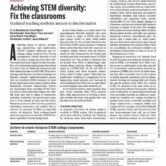
SOUTH CAROLINA: INBRE researcher publishes STEM diversity Policy Forum article in Science
SC INBRE researcher Vida Mingo, from Columbia College, was a co-author on a Policy Forum paper published in Science entitled “Achieving STEM diversity: Fix the classrooms.” From the Abstract: Achieving equity in STEM requires attracting and retaining college students from diverse backgrounds. Despite decades of calls for action, change has been slow. Recommendations have largely focused on members of underrepresented groups themselves rather than on fixing the classrooms that drive many students out of STEM.
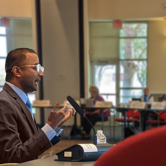
NEW MEXICO: NM NSF EPSCoR Director presents to State Legislature
Earlier in July, New Mexico EPSCoR Director Gunny Balakrishnan presented to the New Mexico State Legislature Science, Technology & Telecommunications Committee at an interim committee meeting held July 7-8. Committee members were visibly impressed as Director Balakrishnan rattled off the laundry list of positive impacts NM EPSCoR has had on building New Mexico’s research capacity since 2000 when the program was established. After the presentation, Committee Vice Chair Debra M. Sariñana, told Director Balakrishnan, "Senator Soules told us about how wonderful this organization is...so to hear exactly what you are doing is great!"
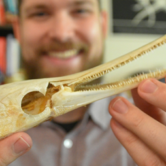
NEW MEXICO: NSF-supported research published in Journal of Archaeological Science
There is a common misconception that Ancestral Pueblo people rarely ate fish. The remains of fish that were eaten by these people are indeed rare at early archaeological sites in the Middle Rio Grande basin of central New Mexico. Now, however, findings by researchers at the University of New Mexico show that not only did fish become a common part of Ancestral Pueblo people's diet, but the bigger the fish, the better. The NSF-supported research, published in the Journal of Archaeological Science, used 3D scans of modern fish to estimate the body size of ancient fish.
NEBRASKA: New NSF EPSCoR-funded Center for Root and Rhizobiome Innovation publication
Nebraska NSF EPSCoR Center for Root and Rhizobiome Innovation team members collaborated for a newly accepted paper, “Association analyses of host genetics, root-colonizing microbes, and plant phenotypes under different nitrogen conditions in maize,” published in eLife. Writes one of the co-authors, Jinliang Yang of University of Nebraska-Lincoln, “In this study, we used population genetics methods to 1) identify beneficial microbes under selection by the plant host; 2) detect plant loci associated with the abundance of microbes; 3) find the correlation of these microbes with plant phenotypes.”
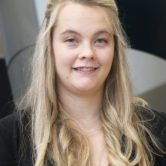
IOWA: NASA Iowa Space Grant Consortium welcomes Hailey Waller, EPSCoR Program Assistant
Iowa Space Grant Consortium and the Iowa NASA EPSCoR announce that Hailey Waller has joined their team as the EPSCoR Program Assistant. Hailey will be working primarily with the NASA EPSCoR program and will also assist on with the space grant side.
Hailey is a 2019 Iowa State University graduate, with a B.S. in Environmental Science and Anthropology. She worked in assisting graduate students in Entomology research within the NREM department and served as a WiSE Peer Mentor as well in the LAS Saving the Planet Learning Community.
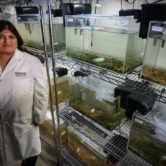
IDAHO: EPSCoR GME3 researchers earns NSF CAREER grant
Idaho EPSCoR GEM3 seed funding recipient, Devaleena Pradhan, Idaho State University, has received an NSF CAREER Award. Pradhan will receive $867,632 over five years to further her research on the Bluebanded goby, a fish that lives in the eastern Pacific Ocean. The small fish can rapidly switch sexes in response to changes in their environment.
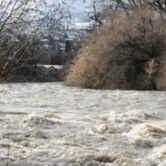
NEVADA: DRI scientists discover uncertainties in flood risk estimates
Flood frequency analysis is a technique used to estimate flood risk, providing statistics that are critical to infrastructure design, dam safety analysis and flood mapping in flood-prone areas. But the method used to calculate these flood frequencies is due for an update, according to a new study by scientists at the Desert Research Institute (DRI), University of Wisconsin-Madison and Colorado State University. In NSF-supported research published in Geophysical Research Letters, a team led by Guo Yu of DRI examined the most common drivers of historic floods in the Western US and investigated the impact of different flood types on the resulting flood frequencies.
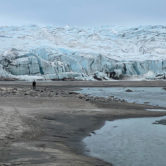
NEVADA: DRI team studies human history in Greenland
In May 2022, a team led by scientists from Desert Research Institute in Reno, Nevada, departed for Greenland, where they were joined by ice drilling, Arctic logistics, and mountaineering experts. Together, the team planned to collect a 440-meter-long ice core that will represent 4,000 years of Earth and human history. For much of their time on the Greenland ice sheet, the team did not have access to the internet or phone service — but they were able to send short text messages back to DRI from a Garmin inReach two-way satellite communicator.

ALABAMA: Changed gene expression after heart surgery extends cardiomyocyte regeneration
NIH-funded research led by the University of Alabama at Birmingham has used nuclear RNA sequencing of cells in pig hearts to understand why surgery to remove the left ventricle apex of the heart from newborn pigs was able to help them more easily recover from heart attacks weeks later. Pigs, like other mammals, do not naturally regrow heart muscle tissue after a heart attack, which makes cell sequencing an important step toward understanding how to help human hearts recover from heart attacks and lower the risk of future ones.
This study, led by Jianyi “Jay” Zhang, M.D., Ph.D., chair of the UAB Department of Biomedical Engineering, is published as a Circulation research letter. Support for this research came from National Institutes of Health grants.
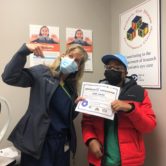
ALABAMA: Eight-year-old uses myopia diagnosis to help others like him
Fifth-grader Emory Carter and University of Alabama at Birmingham optometrist Katherine Weise are helping end the systemic exclusion of racial and ethnic minorities from clinical studies. Emory, the son of UAB medical school professor Hernando Carter, enthusiastically signed up to join Weise's clinical trial for a myopia treatment, with the elder Carter turning Emory’s nightly eye drops into a chance to tell him about “the impact he was making" by taking part in the research, which will "help others who look like us.”
UAB Eye Care is one of the 14 sites in the US funded by the NIH devoted to studying myopia and has the only federal funding to conduct pediatric research to study the effects of low-dose atropine to treat nearsightedness. The study is still ongoing and will wrap up in the fall of 2022.