NEW MEXICO: NSF-supported research published in Journal of Archaeological Science
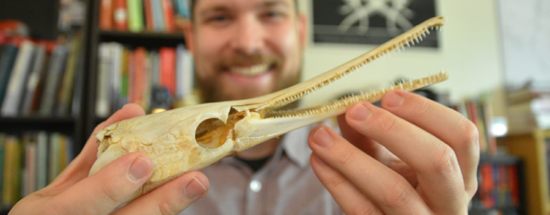
There is a common misconception that Ancestral Pueblo people rarely ate fish. The remains of fish that were eaten by these people are indeed rare at early archaeological sites in the Middle Rio Grande basin of central New Mexico. Now, however, findings by researchers at the University of New Mexico show that not only did fish become a common part of Ancestral Pueblo people's diet, but the bigger the fish, the better. The NSF-supported research, published in the Journal of Archaeological Science, used 3D scans of modern fish to estimate the body size of ancient fish.
"We can use 3D scanning technology to estimate the body size of past animals from their fragmented bones," said anthropologist Jonathan Dombrosky, the lead author of the study. After establishing a reference dataset of 3D measurements of fish bones from modern specimens, the researchers could accurately estimate the size of past fish based on individual bones and bone fragments.
"We can use this new method to reconstruct the body size of fishes recovered from Ancestral Pueblo sites in the Albuquerque area, allowing us to better understand why people made the decisions they did to eat the foods they did," said Dombrosky.