NEVADA: DRI team studies human history in Greenland
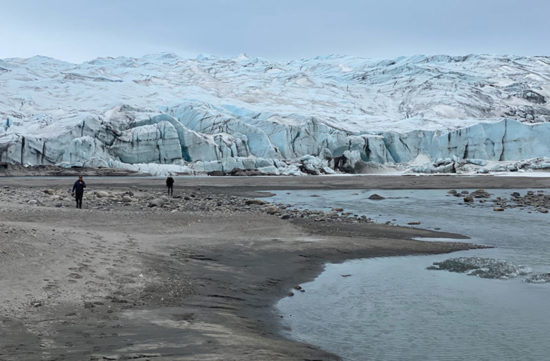
In May 2022, a team led by scientists from Desert Research Institute in Reno, Nevada, departed for Greenland, where they were joined by ice drilling, Arctic logistics, and mountaineering experts. Together, the team planned to collect a 440-meter-long ice core that will represent 4,000 years of Earth and human history. For much of their time on the Greenland ice sheet, the team did not have access to the internet or phone service — but they were able to send short text messages back to DRI from a Garmin inReach two-way satellite communicator.
See their journey on their Story Map, “The Return to Tunu.”
Glaciers and ice sheets form season by season, year by year, as layers of snow accumulate and compress into ice. Particles including desert dust, ash from explosive volcanic eruptions, soot from wildfires, and during recent centuries and millennia, industrial pollution also become trapped in the ice, capturing detailed records of past climate and environmental history.
By drilling into polar ice and removing long cylinders of ice called ice cores, scientists can access these ancient records. The ice core samples are then analyzed and used to answer questions about Earth and its past, including human history, which is the primary focus of this project.