ALABAMA: Changed gene expression after heart surgery extends cardiomyocyte regeneration
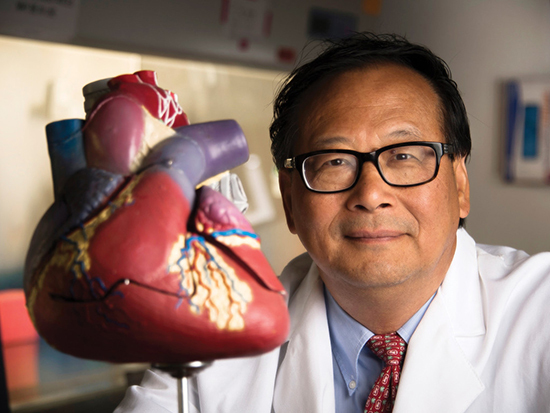
NIH-funded research led by the University of Alabama at Birmingham has used nuclear RNA sequencing of cells in pig hearts to understand why surgery to remove the left ventricle apex of the heart from newborn pigs was able to help them more easily recover from heart attacks weeks later. Pigs, like other mammals, do not naturally regrow heart muscle tissue after a heart attack, which makes cell sequencing an important step toward understanding how to help human hearts recover from heart attacks and lower the risk of future ones.
This study, led by Jianyi “Jay” Zhang, M.D., Ph.D., chair of the UAB Department of Biomedical Engineering, is published as a Circulation research letter. Support for this research came from National Institutes of Health grants.
“It will be interesting to examine these two distinct cell populations from the ARP1MIP28 injury in future studies,” Zhang said. “The findings are highly impactful because they show, for the first time, that the left ventricle can remuscularize the myocardial infarct beyond postnatal day seven, or P7, in large mammals. These observations provide a foundation for future investigations of the molecular mechanisms and signaling molecules that regulate the injury-induced preservation of cardiomyocyte cell cycle activity in newborn large mammals, and ultimately to remuscularize the heart muscle in patients suffering from heart attacks, thus preventing heart failure.”