DELAWARE: UD receives $6 million from National Science Foundation as part of inaugural translational research funding program
From touch recognition and sensing that allows us to type messages on smartphones to carbon nanotube-based sensors that can track changes in our movement, the University of Delaware produces world-class ideas as one of the country’s top universities for research activity.
But it takes more than a great idea to make an impact — researchers also need institutional infrastructure, support staff and entrepreneurial skills in order to find the most effective way to bring their great ideas and technologies to life.
Now, UD will be empowered to increase the speed and scale of its translational research as a member of the inaugural cohort of 18 institutions supported by the U.S. National Science Foundation’s (NSF) Accelerating Research Translation (ART) program.
"NSF endeavors to empower academic institutions to build the pathways and structures needed to speed and scale their research into products and services that benefit the nation," said NSF Director Sethuraman Panchanathan. "The Accelerating Research Translation program in NSF’s new Technology, Innovation and Partnerships (TIP) Directorate identifies, and champions institutions positioned to expand their research translation capacity by investing in activities essential to move results to practice."
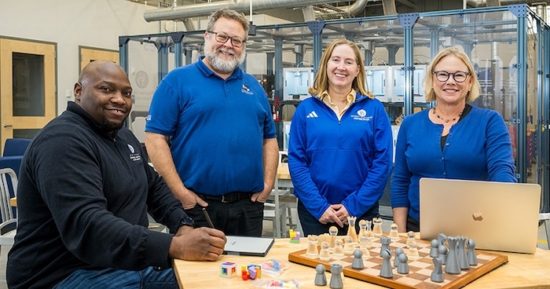
This effort will be led by PI Jill Higginson, George W. Laird Professor of Mechanical Engineering in UD’s College of Engineering and director of UD’s Institute of Engineering Driven Health (IEDH). Co-PIs include Julius Korley, associate vice president of UD’s Office of Economic Innovation and Partnerships (OEIP) and co-director of the NSF I-Corps Hub: Northeast Region, Tracy Shickel, associate vice president of corporate engagement, and Dan Freeman, associate professor of marketing in the Alfred Lerner College of Business and Economics and director of Horn Entrepreneurship.