NEBRASKA: Researchers receive $1.125M NASA EPSCoR grant
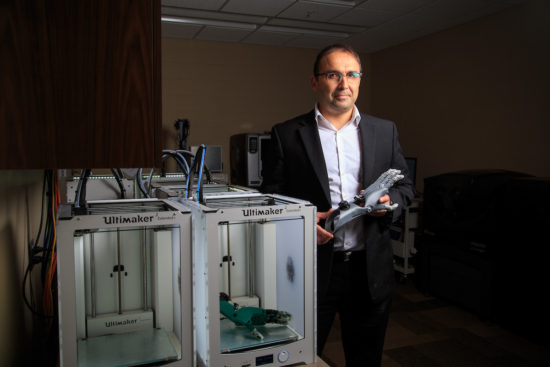
Thanks to a new $1.125M NASA EPSCoR grant, researchers from University of Nebraska-Omaha will soon aid in the development and testing of antimicrobial and recyclable materials for in-space manufacturing.
Through this grant funding, two new antimicrobial materials will be developed by Copper3D, then manufactured and tested for safety on Earth in a replica of the International Space Station's (ISS) Additive Manufacturing Facility. Once the safety of the material has been validated, the team will prepare the launch, operation, and return-to-Earth activities.
"In space, astronauts on long-term missions suffer from immune system dysregulation due to confinement, exposure to high radiation, and disturbed sleep cycles. Bacteria and viruses become more resistant in microgravity, which adds to the previous factor, making space missions of more than six months very risky," explained Zuniga.
"It is extremely important to have new materials, tools, medical devices, and everyday objects with antimicrobial properties in space to prevent infection and to help keep astronauts healthy."