KENTUCKY: UK research made possible by $14M NSF infrastructure grant
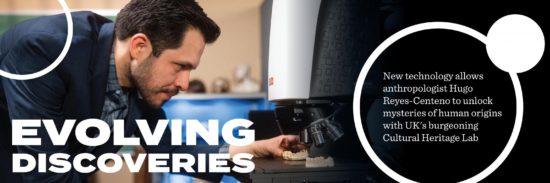
Hugo Reyes-Centeno has sunk his teeth into a fascinating, multidisciplinary approach to the study of human evolution at the University of Kentucky. That approach involves (yes) teeth — and crania.
As a biological anthropologist, Reyes-Centeno is probing some of the basic questions about why humans have evolved a myriad of differences over the course of about 1 million years.
Reyes-Centeno is among the UK faculty who will be using instrumentation bought and upgraded with a recent $14 million infrastructure NSF grant for noninvasive research on human artifacts and remains in a blossoming heritage science lab, called EduceLab.
Reyes-Centeno and students are looking at [inner ear cavity] structures to determine how different they are among fossilized remains of different human species, such as Neanderthals, so that in the future they can be used to identify the origins of the subject.
“One of the things that we’re looking at is to see whether we can use this method to understand differences in sex and ontogeny, different age groups, and differences between geographical populations,” he said.
Teeth also can be studied in this method and with other resources.