Research Highlights

DELAWARE: Pilot Project Investigator
Delaware INBRE has been featuring different Pilot Project Investigators. Meet Dr. Fabrizio Sergi, University of Delaware. Through DE-INBRE, Dr. Sergi has been able to have access to facilities and equipment that kickstarted his stroke research project
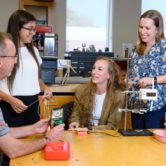
SOUTH CAROLINA: Bioengineers win two national titles at Collegiate Inventors Competition
South Carolina COBRE SC TRIMH located at Clemson University supports the Capstone Design program in Clemson Bioengineering through institutional funds. Through BIOE Capstone Design, an all-women team of Clemson bioengineering students took first place in the undergrad category at the Collegiate Inventors Competition.
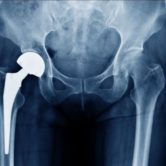
NEW HAMPSHIRE: Nanoparticles in Joint Arthroplasties
A new publication by Dartmouth College researchers on the New Hampshire NSF EPSCoR Track 1 project, NH BioMade, reviews the addition of nanoparticles in various stages of joint arthroplasty surgery. Since these surgeries, specifically total knee arthroplasty (TKA) and total hip arthroplasty (THA) are increasingly common in younger patients, making these joint implants more durable is critical to improving patient outcomes.

NEBRASKA: Study confirms nitrate can draw uranium into groundwater
Eight years ago, the data was sound but only suggestive, the evidence strong but circumstantial. Now, Nebraska NSF EPSCoR’s Karrie Weber, University of Nebraska-Lincoln, and colleagues have experimentally confirmed that nitrate, a compound common in fertilizers and animal waste, can help transport naturally occurring uranium from the underground to groundwater.
NEW MEXICO: NSF EPSCoR New Publication Available
The 2022 New Mexico Journal of Science, published by the New Mexico Academy of Science in collaboration with New Mexico NSF EPSCoR, is available for public viewing online. Abstracts from the 2022 New Mexico Research Symposium are inside, including many from NM SMART Grid Center students.
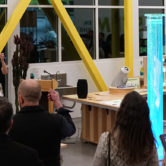
NEW MEXICO: EPSCoR supports new XStudio Teen Center
On February 11th, Explora Science Center and Children's Museum opened X Studio, a teen center in Albuquerque that is sure to be a hit with youth. The new 8,000-square-foot facility features an exhibit co-developed with the New Mexico NSF EPSCoR SMART Grid Center that focuses on energy generation and distribution while showcasing grid resilience careers for teens to consider as they continue on to college or trades school. As with the other exhibits featured in the STEM in the Burque exhibition space, one goal of the NM SMART Grid exhibit is to inspire teens to pursue careers in STEM fields.
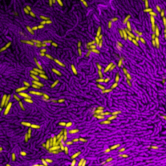
NEW HAMPSHIRE: Darmouth NSF-funded researchers find armful bacteria can elude predators when in mixed colonies
Efforts to fight disease-causing bacteria by harnessing their natural predators could be undermined when multiple species occupy the same space, according to a study by Dartmouth College researchers.
When growing in mixed colonies, some harmful bacteria may be able to withstand attacks from the bacteria and viruses that target them by finding protection inside groups of rival species, according to a report published in Proceedings of the National Academy of Sciences.
The U.S. National Science Foundation-supported study shows that interactions among multiple bacterial species can be difficult to predict from studying species in isolation.
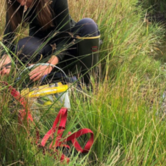
NEVADA: Global study of hypoxia in rivers by UNR NSF-funded researcher shows it is more prevalent than previously thought
New research by Joanna Blaszczak of the University of Nevada, Reno and her colleagues shows that hypoxia in rivers and streams is more prevalent across the globe than previously thought. Hypoxia occurs when oxygen levels in surface waters become depleted, which can be harmful to aquatic species and can increase production of greenhouse gases from rivers.
The U.S. National Science Foundation-supported study, published in the journal Limnology and Oceanography Letters, compiles more than 118 million readings of dissolved oxygen and temperature taken from more than 125,000 locations in rivers across six continents and 93 countries. The study spans more than 100 years, from 1900 to 2018.
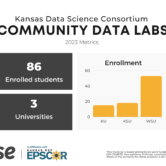
KANSAS: NSF EPSCoR’s New Course Builds Data Science Capacity in Kansas
This spring Kansas State University (KSU), University of Kansas (KU), and Wichita State University (WSU) are piloting a new data science course. But it’s not just for students — 17 community partners also benefit by gaining free data science solutions. The Kansas Data Science Consortium (KDSC) is a key educational pillar of the ARISE project, Kansas NSF EPSCoR’s Track-1 project.
The public is invited to learn more about the KDSC at its first annual conference on April 29, in Lawrence, KS. The event is free, but registration is required.

NORTH DAKOTA: EPSCoR researcher named to National Academy of Inventors
North Dakota EPSCoR researcher Raj Bridgelall, North Dakota State University, has been named a fellow by the National Academy of Inventors.
Bridgelall holds more than 140 US patents (issued or pending) in the areas of advanced sensing, wireless communications, mobile computing, decision support platforms and their applications in transportation and logistics.