Research Highlights
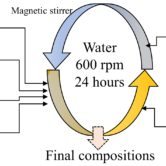
NEW HAMPSHIRE: New NSF EPSCoR funded research paper
New Hampshire EPSCoR BioMade researcher Ahasan Habib and students, Keene State College, have a new paper, “Tuning Shear Thinning Factors of 3D Bio-Printable Hydrogels Using Short Fiber,” published in Materials.
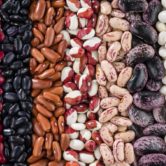
MULTI-JURISDICTIONS featured by USDA NIFA on National Bean Day
For #NationalBeanDay (Jan 6), USDA NIFA posted a webpage, “Breeding Better Beans” with impact statements and featuring many EPSCoR jurisdictions.
Wrote the USDA, “Beans have been a food staple for millennia. Research is making sure we can sustainably grow and enjoy beans for years to come.”
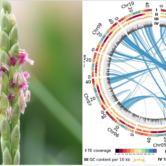
NEBRASKA: EPSCoR researchers publish new corn research
The Bin Yu, Chi Zhang, Sigmon, Obata, and Schnable labs from Nebraska NSF EPSCoR collaborated to sequence the paspalum genome, a relative of corn that uses nitrogen more efficiently. Read the paper, “Genome of Paspalum vaginatum and the role of trehalose mediated autophagy in increasing maize biomass,” published in Nature Communications.
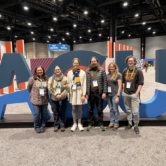
ALASKA: EPSCoR researchers attend national meeting
Several Alaska NSF EPSCoR Boreal Fires researchers recently attended the American Geophysical Union (AGU) annual meeting in Chicago, IL. AGU supports advocates and professionals in Earth and space sciences. Pictured: Uma Bhatt, Christine Waigl, Elizabeth Fischer, Rick Lader, Cece Borries-Strigle, and Joshua Hostler.
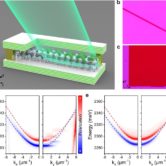
NEBRASKA: EPSCoR researcher publishes in Nature Communications
Nebraska EPSCoR RII Track-1 Emergent Quantum Materials and Technologies (EQUATE) researcher Wei Bao and team recently published, “Room-temperature polariton quantum fluids in halide perovskites,” in Nature Communications.
Research was funded in part by an NSF CAREER Award and Nebraska EPSCoR Track-1 funds to Wei Bao. Additional funding support came from the Department of Energy and Office of Naval Research.
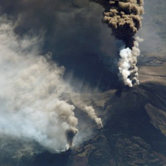
IDAHO: Volcano’s special ‘voice’ is key to understanding the linguistics of volcanoes
Mount Etna, Italy: one of the most active volcanoes in the world. For Boise State University geoscientist Jeffrey Johnson, this volcano's special "voice" is proving key to understanding the linguistics of volcanoes.
Johnson and collaborators studied inaudible infrasound at Mount Etna and identified an infrasonic signal from the volcano, the tune of which changed in the hours leading up to a kilometer-high lava fountain, lasting hours. The NSF-supported researchers published their results in Scientific Reports.
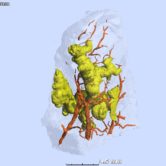
ALABAMA: Tuberculosis and COVID-19 lung lesions revealed by high-resolution three-dimensional imaging
Researchers with the University of Alabama at Birmingham are using micro computer tomography, or microCT, to create a high resolution 3D atlas of lungs damaged by tuberculosis or COVID-19. “This atlas could be used to identify novel imaging biomarkers,” said senior author Adrie Steyn. Partial support for this research came from the NIH.
The research, published in the journal EMBO Molecular Medicine — with one of the 3D images featured on the journal cover, was led by Adrie Steyn, Ph.D., a professor in the Department of Microbiology at the University of Alabama at Birmingham and member of the Africa Health Research Institute, or AHRI, University of KwaZulu-Natal, in Durban, South Africa, along with UAB and AHRI researchers and colleagues at various South African institutions.

ALABAMA: New NIH-funded publication from UAB researchers using AI tool
Researchers from the Hugh Kaul Precision Medicine Institute at the University of Alabama at Birmingham used an AI tool known as mediKanren that flagged useful clinical evidence, helping them identify low-dose ketamine as a potential therapeutic target for activity-dependent neuroprotective protein (ADNP) syndrome. Findings from the NIH-funded trial were published in Human Genetics and Genomic Advances.
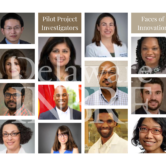
DELAWARE: INBRE announces New Pilot Project Investigators
A total of 13 DE-INBRE Pilot Project Investigators (PPI) have begun their work in 2022.
- Mitra Assadi-Khansari, MD, Christiana Care
- Carissa Baker-Smith, MD, MPH, Nemours
- Roghayeh Barmaki, PhD, University of Delaware
- Aditya Dutta, PhD, University of Delaware
- Amanda Hernan, PhD, Nemours
- Hakeem Lawal, PhD, Delaware State University
- Fabrizio Sergi, PhD, University of Delaware
- Lisha Shao, PhD, University of Delaware
- Kevin Solomon, PhD, University of Delaware
- Shubhika Srivastava, MD, Nemours
- Murali Temburni, PhD, Delaware State University
- Elizabeth Wright-Jin, MD, Nemours
- Xuyi Yue, PhD, Nemours
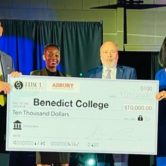
SOUTH CAROLINA: INBRE network HBCU recognized by HBCU Change Foundation
The National Black College Alumni Hall of Fame Foundation, Inc. hosted its Annual Induction Ceremony on Sept 23, at the Hyatt Regency Atlanta.
In addition to celebrating two inductees, SC INBRE member institution Benedict College received a check for $10,000 from the HBCU Change Foundation.