Research Highlights

VERMONT: Help for Babies Born Dependent on Opioids (feat. UofVT)
It’s been estimated that every 18 minutes in the United States, a newborn baby starts life with painful withdrawals from exposure to opioids in the womb. It’s called neonatal opioid withdrawal syndrome (NOWS), and it makes for a challenging start in life. These infants may show an array of withdrawal symptoms, including tremors, extreme irritability, and problems eating and sleeping.
Many of these infants experience long, difficult hospital stays to help them manage their withdrawal symptoms. But because hospital staff have no established evidence-based treatment standards to rely on, there is substantial variation in NOWS treatment around the country. There also are many open questions about the safest and most-effective way to support these babies and their families.
But answers are coming. The New England Journal of Medicine just published clinical trial results that evaluated care for infants with NOWS and which offer some much needed—and rather encouraging—data for families and practitioners [1]. The data are from the Eating, Sleeping, Consoling for Neonatal Opioid Withdrawal (ESC-NOW) trial, led by Leslie W. Young, The University of Vermont’s Larner College of Medicine, Burlington, and her colleagues Lori Devlin and Stephanie Merhar.
The ESC-NOW study is supported through the Advancing Clinical Trials in Neonatal Opioid Withdrawal (ACT NOW) Collaborative. ACT NOW is an essential part of the NIH Helping to End Addiction Long-term (HEAL) Initiative, an aggressive effort to speed scientific solutions to stem the national opioid public health crisis and improve lives.
NEVADA: NSF-funded study sheds light on ancient microbial dark matter (feat. UNLV)
Bacteria are literally everywhere — in oceans, in soils, in extreme environments like hot springs and even alongside and inside other organisms, including humans. They're nearly invisible, yet they play a big role in almost every facet of life.
Despite their abundance, surprisingly little is known about many microorganisms that have existed for billions of years.
This includes an entire lineage of nano-sized bacteria dubbed Omnitrophota. These bacteria, first discovered based on short fragments of DNA just 25 years ago, are common in many environments around the world but have been poorly understood. Until now.
An NSF-supported research team has produced the first large-scale analysis of more than 400 newly sequenced and existing Omnitrophota genomes, uncovering new details about their biology and behavior. The team's findings are reported in the journal Nature Microbiology.
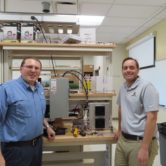
KENTUCKY: Professors receive NSF funding for the establishment of a Fuel Cell Lab
Murray State University (MSU) professors Dr. Aleck Leedy and Dr. Kevin Miller recently received funding from Kentucky NSF EPSCoR for the establishment of a Fuel Cell Laboratory on the MSU campus. The laboratory will support research and training of undergraduate engineering physics and chemistry students. Research studies will focus on the performance and durability of PEM (proton-exchange membrane) fuel cells which will employ novel, ion-containing polymeric membranes synthesized at Murray State.
NORTH DAKOTA: EPSCoR 2023 STATE CONFERENCE
Nearly 240 academic and aspiring scientists from across the North Dakota University System assembled in Fargo for the 2023 ND EPSCoR Annual State Conference on March 29. The conference revealed the great strides is making towards fulfilling its mission to broaden and diversify the state’s STEM workforce pathways, support and grow statewide research efforts, and inform ND stakeholders.
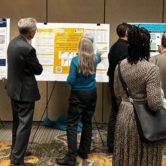
DELAWARE: Spring 2023 External Advisory Committee Meeting
Delaware INBRE recently hosted their Spring 2023 External Advisory Committee Meeting. They heard updates and news from their partner and affiliate institutions. Their EAC members toured the University of Delaware cores and facilities. They also heard project updates from all of their Pilot Project Investigators and students during a poster reception.
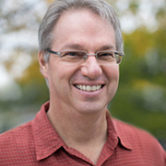
KANSAS: SCIENTIST NAMED A FELLOW OF ECOLOGICAL SOCIETY OF AMERICA
One of Kansas NSF EPSCoR’s microbiome project leaders, Jim Bever, is one of seven scientists across the US who has been named a fellow of the Ecological Society of America. Fellows are members who have made outstanding contributions to a wide range of fields served by ESA
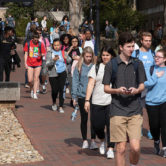
KANSAS: New study reveals steady rise in multiple funding methods needed to pay for college
A new NSF-funded explores the association between the use of multiple funding sources and how that affects future educational pursuits. “Pursuing multiple funding sources used to imply ambition,” said ChangHwan Kim, professor of sociology at the University of Kansas. “Now it implies desperation.”
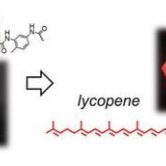
NEW HAMPSHIRE: Hierarchically Templated Synthesis of 3D-Printed Crosslinked Cyclodextrins for Lycopene Harvesting
New New Hampshire NSF EPSCoR Track-1 NH BioMade publication. Said author Chenfeng Ke, “We report a hierarchically templated synthesis of 3D‐Printed crosslinked cyclodextrin nanotubes in Small Advanced Science News to extract lycopene in raw tomato juice.”
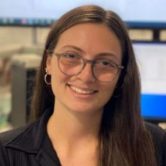
NEW HAMPSHIRE: Five Students Selected for Marine Energy Graduate Student Research Program
Nicole Marone, doctoral ocean engineering student at the University of New Hampshire, is one of five students chosen for this year’s cohort for the DOE Marine Energy Graduate Student Research Program. Nicole will work with Ocean Renewable Power Company and Sandia National Laboratories.
VERMONT: New Studies by Patrick Bitterman and Christopher Koliba Explore Water Governance
Two new studies released by Vermont NSF EPSCoR BREE researchers Patrick Bitterman and Christopher Koliba debut this month. “A Network Perspective on Multi-Scale Water Governance in the Lake Champlain Basin, Vermont,” published in Ecology and Society, and “Engagement in Water Governance Action Situations in the Lake Champlain Basin,” published in PLOS ONE take two similar but different looks at the Lake Champlain Basin (LCB) and examine how government action can improve the health of the watershed.