Research Highlights
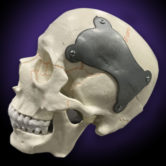
NEW HAMPSHIRE: NH NSF EPSCoR skull featured in NSF Multimedia Gallery
The NSF Multimedia Gallery recently featured “Skully,” a model of a human skull created by New Hampshire NSF EPSCoR NH BioMade researchers at the University of New Hampshire. Scientists there are researching metallic biomaterials and new techniques that can be used for trauma fixation applications, such as cranial implants for automobile accident victims or soldiers.
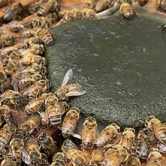
LOUISIANA: USDA Researchers Use an Edible Blue-Green Algae to Protect Honey Bees Against Viruses
Scientists at the USDA’s Agricultural Research Service (ARS) developed an edible antiviral treatment that can be used to protect honey bees against Deformed Wing Virus (DWV) and other viruses, according to a recent study published in Sustainable Agriculture.
“We found that engineered algae diets suppressed DWV infection and improved survival in honey bees,” said Vincent Ricigliano, research scientist at the ARS Honey Bee Laboratory in Baton Rouge, LA. “When mixed into bee food, the engineered algae boost the bee’s immune system to fight off the targeted virus.”
KANSAS: USDA study aims to find solutions for livestock well-being (feat. Kansas State University)
A collaborative effort between scientists from the USDA’s Agricultural Research Service, Texas Tech University, Kansas State University, and West Texas A&M University work on reliable and repeatable liver abscess models to learn the triggers for this costly condition in cattle that not only negatively impacts animal well-being but also causes liver condemnations and may lead to increased carcass trimming and an overall decrease in profitability.
The first successful model study, recently published in the Journal of Animal Science, is part of a series of studies conducted at the USDA-ARS Livestock Issues Research Unit in Lubbock, Texas, that aim to find solutions to a problem of concern for animal well-being that is costing the industry millions of dollars.
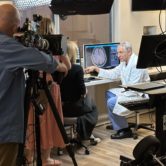
WEST VIRGINIA: West Virginia University advances in neuroscience featured on 60 Minutes
As a modern land-grant R1 university, one way that West Virginia University, an EPSCoR/IDeA institution, fulfills its purpose is through meaningful research that offers better health and greater prosperity for their state and beyond. They are transforming health care through innovation — and the nation is taking notice.
The WVU Rockefeller Neuroscience Institute (RNI) is advancing neuroscience and improving the lives of people with neurological and mental health conditions to address the most pressing challenges. The New England Journal of Medicine recently featured initial results utilizing focused ultrasound and antibody infusion resulting in the reduction of brain amyloid plaques for Alzheimer’s patients.
On Sunday, Jan 14, 60 Minutes aired a two-segment special featuring the work discussed in the NEJM and the never-before-released results of the RNI’s addiction efforts utilizing focused ultrasound.
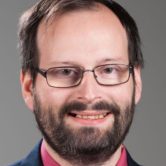
IDAHO: Researcher receives Idaho NSF EPSCoR Research Award
A University of Idaho fire scientist is the recipient of the 2023 Jean’ne M. Shreeve Idaho NSF EPSCoR Research Excellence Award. Alistair Smith, professor and chair of the Department of Earth and Spatial Sciences, received the award during the Idaho EPSCoR Committee Annual Business Meeting held at Idaho State University in Pocatello.
Smith, an internationally recognized leader in wildland fire science, is an expert in pyroecophysiology, a new sub-field of fire ecology that he termed in 2017 that focuses on understanding how fires affect trees, why some die and, when they survive, what happens to them. His team’s research has had a major impact on changing the understanding of fire ecology, especially in the face of more intense and frequent fires under climate change.
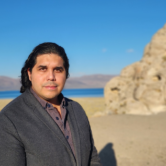
NEVADA: INBRE Tribal Academy of Health and Science Coordinator featured in Nevada Today
In 2021, Nevada INBRE’s Andrew Tobey created the Nevada INBRE Tribal Academy of Health and Science to support Native American high school or college students through their education and career development in biomedical and health science fields. Through this program, students receive access to internship opportunities, academic help from science professionals, financial education, emotional development, learning about work/life balance, discussions about imposter syndrome and much more. Students and mentors meet weekly, providing a more personal connection through the program.
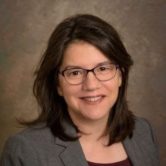
DELAWARE: INBRE researcher receives $300K award for eye research
Esther Biswas-Fiss, professor and chair of the Department of Medical and Molecular Sciences (MMSC), has received an Individual Investigator Research Award in the amount of $300,000 from the Foundation Fighting Blindness, a global leader in retinal degenerative disease research. Sam Biswas, professor of medical and molecular sciences, Barry Bodt, senior biostatistician in the College of Health Sciences, and Shawn Polson, associate professor of computer and information sciences and director of UD’s Bioinformatics Core Facility, are co-investigators on the project. The grant will support Biswas-Fiss’ research on the ABCA4 gene, which has over 3,000 genetic variants. The gene is the leading cause of Stargardt disease, an inherited retinal disease affecting one in 8,000 people worldwide, often resulting in blindness.
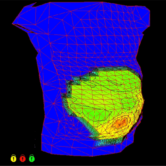
ARKANSAS: Clinical study suggests measuring uterine muscle activity could inform strategies for safer and faster childbirth (feat. UAMS)
Artificially causing – or inducing – labor is becoming increasingly common, yet this practice comes with risks and its level of success is difficult to foresee. But now, new research may offer a way to help predict outcomes and improve the process.
Researchers at the University of Arkansas for Medical Sciences (UAMS) have devised a non-invasive method of accurately measuring the electrical activity of uterine muscles. The results of a recent clinical study, published in the journal Current Research in Physiology, show that signals measured in pregnant patients prior to induction are strongly tied to whether their labor lasted less or more than 24 hours. The authors indicate that physicians could use the method to learn how patients might respond to induction and use the information to develop more effective strategies for labor and delivery.

ALASKA: New NSF-supported research explains "Atlantification" of the Arctic Ocean
New research by an international team of scientists describes the causes for the stalled trend in Arctic Ocean sea-ice loss since 2007. Environmental responses to the Arctic dipole are described in a paper published in the journal Science. The analysis helps explain how North Atlantic water influences the Arctic Ocean climate. Scientists refer to this phenomenon as Atlantification.
The NSF-supported research is led by Igor Polyakov of the University of Alaska Fairbanks.
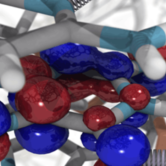
ALABAMA: NSF-supported researchers delve into the fusion of computational modeling and experimental biophysics (feat. Auburn University)
In a paper in Biophysical Journal, biophysicist Rafael Bernardi of Auburn University and his colleagues shed light on the capabilities of the next generation of supercomputers in reshaping the landscape of biophysics.
The NSF-supported researchers delve into the fusion of computational modeling and experimental biophysics, providing a perspective for a future in which discoveries are made with new precision.