NEW HAMPSHIRE: Darmouth NSF-funded researchers find armful bacteria can elude predators when in mixed colonies
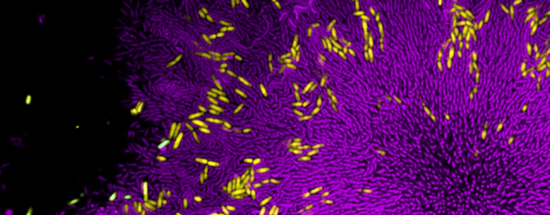
Efforts to fight disease-causing bacteria by harnessing their natural predators could be undermined when multiple species occupy the same space, according to a study by Dartmouth College researchers.
When growing in mixed colonies, some harmful bacteria may be able to withstand attacks from the bacteria and viruses that target them by finding protection inside groups of rival species, according to a report published in Proceedings of the National Academy of Sciences.
The U.S. National Science Foundation-supported study shows that interactions among multiple bacterial species can be difficult to predict from studying species in isolation.
"Our research shows that the way prey populations can resist or not resist predators can be very different in multispecies conditions. The efficacy of bacteriophages and predatory bacteria in killing harmful bacteria might depend on the other species their prey live with and on the biofilm structures they produce alone versus together."
Joanna Shisler, a program director in NSF's Division of Integrative Organismal Systems, added, "Interactions between E. coli and V. cholerae form a barrier to protect pathogenic E. coli from other predatory bacteria. That's important when designing new antibacterial therapeutics — therapeutics that are important because antibiotic resistance is increasing."