NEBRASKA: EPSCoR researchers publish new corn research
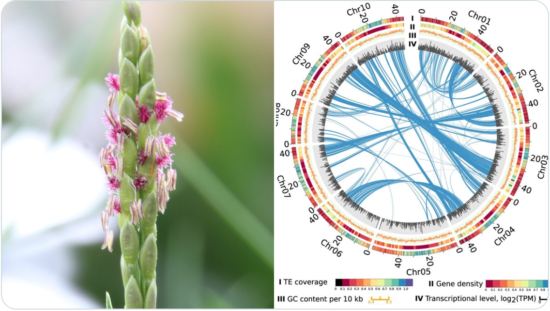
The Bin Yu, Chi Zhang, Sigmon, Obata, and Schnable labs from Nebraska NSF EPSCoR collaborated to sequence the paspalum genome, a relative of corn that uses nitrogen more efficiently. Read the paper, “Genome of Paspalum vaginatum and the role of trehalose mediated autophagy in increasing maize biomass,” published in Nature Communications.
FROM THE ABSTRACT:
A number of crop wild relatives can tolerate extreme stress to a degree outside the range observed in their domesticated relatives. However, it is unclear whether or how the molecular mechanisms employed by these species can be translated to domesticated crops. Paspalum (Paspalum vaginatum) is a self-incompatible and multiply stress-tolerant wild relative of maize and sorghum. Inducing trehalose accumulation in maize, imitating the metabolic phenotype of paspalum, results in autophagy dependent increases in biomass accumulation.