News & Updates
ERVA Open Call and Upcoming Visioning Events
Funded by the NSF Directorate for Engineering, the Engineering Research Visioning Alliance’s (ERVA) call to action for you is to share Big Ideas — research problems for ERVA visioning. They greatly appreciate your insight on ideas that can shape exciting future engineering research with impacts that affect our entire ecosystem. Please help ERVA identify bold new engineering research challenges. Ideas received by May 31 will receive priority consideration. More/submit
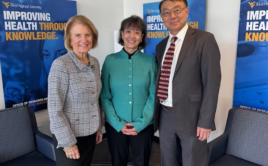
Senator Capito hosts NIH Director in West Virginia
US Senator Shelley Moore Capito (R-WV), Ranking Member of the Senate Appropriations Subcommittee on Labor, Health and Human Services, Education, and Related Agencies (Labor-HHS), hosted Dr. Monica Bertagnolli, Director of the National Institutes of Health (NIH), in Morgantown, WV, for a series of visits at West Virginia University (WVU) to highlight the work being done at the university through NIH funding.
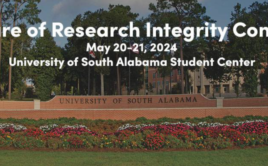
The Future of Research Integrity Conference, May 20-21
Conference will take place at the University of South Alabama in Mobile, AL. The primary goal is for research communities and stakeholders to be better informed about the effects of technological change and perceived barriers within the research ecosystem and to be prepared to cultivate a climate that advances responsible and ethical research.
NSF EPSCoR Exploring EPSCoR Ecosystems Workshop
With the implementation of the EPSCoR Collaborations for Optimizing Research Ecosystems Research Infrastructure Improvement (E-CORE RII) (NSF 23-587) and EPSCoR Research Incubators for STEM Excellence Research Infrastructure Improvement (E-RISE RII) (NSF 23-588) programs, EPSCoR jurisdictions have an opportunity to greatly expand their research ecosystems in order to further develop their jurisdictional research capacity and broaden the participation of all individuals within the research ecosystems. Shifting to a research ecosystem approach is not trivial, and NSF EPSCoR understands that it will require a revision for each EPSCoR jurisdiction based on its own unique strengths, challenges, and opportunities. It is not within NSF EPSCoR’s purview to dictate how this should be achieved for each jurisdiction, given the complex nature of the research ecosystem that is unique to each jurisdiction.
DEPSCoR Day, April 25, 2024
The University of Oklahoma is set to host DEPSCoR DAY, a full-day workshop, on April 25. During the event, program officers from the Department of Defense (DoD) will provide insights into funding opportunities offered through the DoD Established Program to Stimulate Competitive Research (DEPSCoR) and other relevant DoD research programs.

Science and Engineering Indicators 2024: The State of U.S. Science and Engineering
Wednesday, March 13, 10:30 to 11:30 am ET Livestream of the White House release event
2024 Annual Meeting One-Pagers
The 2024 Annual Meeting Programs One-Pagers are available in one comprehensive PDF — online in a flipbook and also as a downloadable PDF.

NSF EPSCoR EPSCoR Live! Event, Feb 20
NSF EPSCoR has announced their second EPSCoR Live! event (formerly known as EPSCoR Office Hours) of 2024, Feb 20, 4 to 5 pm EST. In this session, Dr. Pinhas Ben-Tzvi will discuss EPSCoR Workshop Opportunities, which supports workshops in eligible jurisdictions that focus on topics of regional or national importance, and which are relevant to building EPSCoR jurisdictions’ R&D capacity. EPSCoR Program Officers will also facilitate a Q&A session related to this funding opportunity. Advance registration is required. Please use an institutional email address for registration.

2024 Summer Research Opportunities
American Heart Association-sponsored summer internships. Open to any student from any location.

NSF EPSCoR RII Track-2 Reviewers Needed
Please consider joining the reviewer pool for the upcoming EPSCoR Research Infrastructure Improvement Program: Track-2 Focused EPSCoR Collaborations panels in March and April 2024.