News & Updates
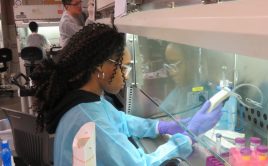
NSF and NIH partner on internship opportunity in biomedical engineering
NSF and the NIH’s National Institute of Biomedical Imaging and Bioengineering (NIBIB) have initiated a joint research training opportunity through the NSF Non-Academic Research Internships for Graduate Students (NSF INTERN) program.
DOE’s FACES Program Announces First-Ever Cohort
The DOE has announced the selection of the first faculty cohort for the groundbreaking Faculty-Applied Clean Energy Sciences (FACES) Program. This program aims to bridge the gap between DOE laboratories and the academic community, enhance STEM education, and promote clean energy responsibility in social and environmental sciences. The FACES program, with a focus on providing real-world clean energy research opportunities, has made its final selections from minority-serving institutions (MSI) across the country, including Tribal colleges and universities (TCUs), Hispanic-serving institutions (HSIs), historically Black colleges and universities (HBCUs), Alaska Native and Native Hawaiian-serving institutions (ANNHSIs), and Asian American and Native American Pacific Islander-serving institution (AANAPISIs). The MSIs representing the EPSCoR and IDeA jurisdictions in this FACES Program cohort include:
• ALABAMA State University (HBCU)
• HAWAI‘I Pacific University (ANNHSI and AANAPISI)
• University of HAWAI‘I at Hilo (ANNHSI and AANAPISI)
• University of HAWAI‘I at Mānoa (ANNHSI and AANAPISI)
• University of PUERTO RICO, Río Piedras Campus (HSI)
• University of NEW MEXICO (HSI)
Spring 2024 NSF Grants Conference
Spring 2024 NSF Grants Conference – Registration now open. The U.S. National Science Foundation (NSF) Grants Conference is making an eagerly anticipated transition to a hybrid event. Join NSF for the Spring 2024 Grants Conference from June 3 to 5, in historic Philadelphia, PA.
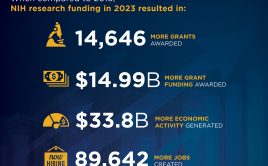
United for Medical Research FY23 Report on NIH’s Role in Sustaining the US Economy
Commissioned by UMR, “NIH’s Role in Sustaining the U.S. Economy” is an annual analysis of jobs and economic activity supported by National Institutes of Health (NIH) research funding distributed to all 50 states and the District of Columbia.
ERVA Open Call and Upcoming Visioning Events
Funded by the NSF Directorate for Engineering, the Engineering Research Visioning Alliance’s (ERVA) call to action for you is to share Big Ideas — research problems for ERVA visioning. They greatly appreciate your insight on ideas that can shape exciting future engineering research with impacts that affect our entire ecosystem. Please help ERVA identify bold new engineering research challenges. Ideas received by May 31 will receive priority consideration. More/submit
Senator Capito hosts NIH Director in West Virginia
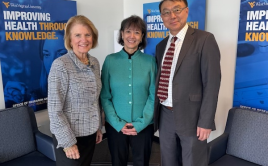
US Senator Shelley Moore Capito (R-WV), Ranking Member of the Senate Appropriations Subcommittee on Labor, Health and Human Services, Education, and Related Agencies (Labor-HHS), hosted Dr. Monica Bertagnolli, Director of the National Institutes of Health (NIH), in Morgantown, WV, for a series of visits at West Virginia University (WVU) to highlight the work being done at the university through NIH funding.
The Future of Research Integrity Conference, May 20-21
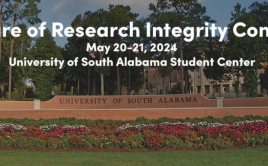
Conference will take place at the University of South Alabama in Mobile, AL. The primary goal is for research communities and stakeholders to be better informed about the effects of technological change and perceived barriers within the research ecosystem and to be prepared to cultivate a climate that advances responsible and ethical research.
NSF EPSCoR Exploring EPSCoR Ecosystems Workshop
With the implementation of the EPSCoR Collaborations for Optimizing Research Ecosystems Research Infrastructure Improvement (E-CORE RII) (NSF 23-587) and EPSCoR Research Incubators for STEM Excellence Research Infrastructure Improvement (E-RISE RII) (NSF 23-588) programs, EPSCoR jurisdictions have an opportunity to greatly expand their research ecosystems in order to further develop their jurisdictional research capacity and broaden the participation of all individuals within the research ecosystems. Shifting to a research ecosystem approach is not trivial, and NSF EPSCoR understands that it will require a revision for each EPSCoR jurisdiction based on its own unique strengths, challenges, and opportunities. It is not within NSF EPSCoR’s purview to dictate how this should be achieved for each jurisdiction, given the complex nature of the research ecosystem that is unique to each jurisdiction.
DEPSCoR Day, April 25, 2024
The University of Oklahoma is set to host DEPSCoR DAY, a full-day workshop, on April 25. During the event, program officers from the Department of Defense (DoD) will provide insights into funding opportunities offered through the DoD Established Program to Stimulate Competitive Research (DEPSCoR) and other relevant DoD research programs.

Science and Engineering Indicators 2024: The State of U.S. Science and Engineering
Wednesday, March 13, 10:30 to 11:30 am ET Livestream of the White House release event