Research Highlights

VIRGIN ISLANDS: U.S.V.I. Teachers Take a Deep Dive on Ocean Exploration
On Saturday, January 25, 2025, U.S. Virgin Islands teachers were invited to join a full-day, in-person professional development workshop titled: Exploring the Deep Ocean With NOAA.
Hosted by VI-EPSCoR and Virgin Islands Marine Advisory Service (VIMAS), Ms. Suraida Nanez-James, an educator contracted by the National Oceanic and Atmospheric Administration (NOAA), presented the training to twenty-seven K-12 teachers from across the territory. The workshop explored how and why we explore the ocean and the tools and technologies that drive how we conduct expeditions into some of the most remote places on the planet. Teachers of biology, social studies, marine biology, arts and math, among other subjects, received lesson plans and fact sheets and, engaged in hands-on activities all designed to be shared in the classroom and adapted to different age groups and subjects.
NEVADA: The view from above – Using drones to map sagebrush ecosystems
Nevada is known colloquially as the “Sagebrush State”—a nod to the dominant habitat that covers tens of millions of acres in the state and nearly one-third of the continental United States. And while it can be tempting to view this expanse as a monotonous sweep of land dominated by a single species, sagebrush ecosystems are in fact quite diverse, supporting hundreds of species uniquely adapted to a hot and arid climate.
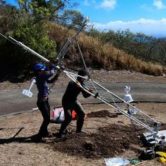
HAWAI'I: UH weather monitoring system to improve flood, fire warning, forecasting
To strengthen Hawaiʻi’s flood and wildfire early warning systems and improve the state’s response to natural disasters and climate change impacts, a team of researchers at the University of Hawaiʻi at Mānoa, in partnership with the Hawaiʻi Department of Land and Natural Resources (DLNR), is installing an advanced network of 100 weather monitoring stations across the state to enhance weather and climate monitoring and forecasting. The data collected can also be used for water resource management, agriculture, ranching, ecosystem and cultural resource protection and more.
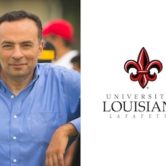
LOUISIANA: $5.8M NSF-funded project tackles impacts of Gulf climate extremes
The University of Louisiana at Lafayette’s Dr. Emad Habib is leading a new $5.8 million research project to address increasing flood risks and disproportionate impacts of climate extremes along the U.S. Gulf region. The research is funded by the National Science Foundation’s Established Program to Stimulate Competitive Research, or EPSCoR.
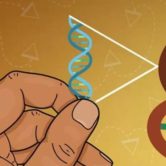
SOUTH CAROLINA: Jumping on the jumping gene bandwagon to speed up plant breeding
Getting a new variety of corn, tomato, soybean or other crop to market can be a long and costly effort, with breeders working to ensure the eventual product has the right mix of genetics that will let it withstand change, produce large amounts of fruit or seed and taste good. A new technology, developed with funding from the U.S. National Science Foundation, seeks to shorten that process and make it cheaper by taking advantage of naturally occurring transposable elements, or "jumping genes," within the plant's genome.

NORTH DAKOTA: NATURE at 25: Fostering Indigenous STEM education, cultural relevance, and collaboration
Whether it’s agriculture, astronomy, or medicine, Indigenous peoples are natural scientists and have long practiced science before the term “science” existed. Indigenous cultural traditions and ways of life are at the core of these practices.
As the North Dakota Established Program to Stimulate Competitive Research (ND EPSCoR) program celebrates the 25th anniversary of its NATURE initiative — a program aimed at promoting STEM among tribal youth in North Dakota — it's a moment not only to commemorate past achievements but also to chart the course for the program's future.
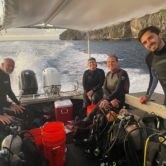
GUAM: UOG scientists find new marine biological records and species
Following a three-week series of biological surveys, scientists from the University of Guam Marine Laboratory along with an international team of researchers estimate that they have collected hundreds of new marine biological records and species combined from around the coasts of Guam.
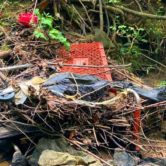
VERMONT: Research featured by NSF for Earth Day
For Earth Day 2024, NSF highlighted five NSF-driven projects that look at the versatile material in both expected and unusual places and examine its impacts on the planet and the creatures who call it home. Of the five, one was an EPSCoR/IDeA jurisdiction. Anne Jefferson, a professor at the University of Vermont, and her team are using time-lapse photography and repeat field surveys to understand how discarded plastic moves through and sometimes stays in streams. Jefferson's findings will improve litter tracking models that follow plastic from streams to oceans.

SOUTH CAROLINA: Clemson faculty member receives NSF CAREER Award
Former SC INBRE Developmental Research Project (DRP) Program grant recipient, Jordon Gilmore, Clemson University, has received an NSF CAREER Award. Gilmore's Award, titled “A Multi-phase Biosensing Approach towards Point-of-Care Evaluation of Pseudomonas aeruginosa Virulence in Infected Chronic Wounds” is follow-on research to his SC INBRE DRP award titled, “Point-of-Care Colorimetric Biosensor for Detection of Pseudomonas aeruginosa Signaling Molecule 3OC12HSL in Wound Exudate from Negative Pressure Wound Therapy.”

OKLAHOMA: NIH-funded study highlights importance of cholesterol screenings and education (featuring University of Oklahoma)
More than 70% of American Indian young adults aged 20-39 and 50% of American Indian teens have cholesterol levels(link is external) or elevated fat in the blood that put them at risk for cardiovascular disease, suggests a study supported by the NIH. The findings, published in the Journal of the American Heart Association, came from a 19-year-review of the Strong Heart Family Study, part of the Strong Heart Study — the largest study of cardiovascular health outcomes and risk factors among American Indian adults.
“We were surprised about the numbers, especially in adolescents,” said Jessica A. Reese, PhD, an epidemiologist in the Center for American Indian Health Research at the University of Oklahoma Health Sciences Center, Oklahoma City. “These findings show the importance of early screenings and interventions, especially for teens and young adults who may be more likely to have underlying cardiovascular risks, diabetes, or chronic liver disease.”