Research Highlights

OKLAHOMA: EPSCoR's Xiao Leads International Team Studying Brazilian Amazon Carbon Loss
The Amazon rainforest covers approximately 50% of the world’s rainforests and nearly two-thirds of the Amazon is in Brazil. The Brazilian Amazon is important for global biodiversity, hydrology, climate, and carbon cycle. Accurate and timely data on spatial-temporal dynamics of the vegetation aboveground biomass (AGB) and forest area in the region are needed to understand the carbon balance, which is affected by land-use, logging and degradation, secondary forest regrowth, and climate.
Dr. Xiangming Xiao, from the University of Oklahoma’s Department of Microbiology and Plant Biology, has led an international team of graduate students, post-doctoral researchers and research scientists (Yuanwei Qin, Jean-Pierre Wigneron, Philippe Ciais, Martin Brandt, Lei Fan, Xiaojun Li, Sean Crowell, Xiaocui Wu, Russell Doughty, Yao Zhang, Fang Liu, Stephen Sitch, and Berrien Moore III) to investigate the interannual changes in AGB and forest area by analyzing satellite-based annual AGB and forest area datasets. Specifically, the research team investigated the role of climate anomalies in the changes in forest area and AGB; whether recent changes in policies and human activities in 2019 have a detectable effect on forest area and AGB; and the relative contributions of deforestation and forest degradation (forest fragmentation, edge effects, logging, forest fire and drought) to interannual variation in AGB loss in the study period.
NEBRASKA: 2021 INBRE Scholars' summer research experience
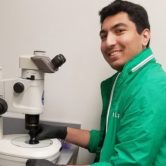
On June 1, the Nebraska Institutional Development Award (IDeA) Networks of Biomedical Research Excellence (INBRE) program welcomed 27 undergraduate students from across Nebraska as they embark on their summer research experience at Creighton University, the University of Nebraska-Lincoln and the University of Nebraska Medical Center.
The INBRE Scholars program is a major success of the NE-INBRE, which provides meaningful research experiences for scholars and a pipeline of talented undergraduate students to participate in laboratory research projects on participating campuses.
Meet the students who make up this year’s class of INBRE Scholars
MISSISSIPPI: Researchers Use Dye to Spark Revolution in Medical Imaging
The most common size of a brain aneurysm is believed to be about 2 millimeters in diameter.
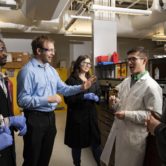
But, current medical imaging techniques are limited to finding larger aneurysms between 5-10 millimeters, leaving most cases undiagnosed. Advances in imaging technology have the potential to save hundreds of people every year. Mississippi EPSCoR research is ready to make this possible with a dye that will allow medical professionals to find aneurysms down to 1 millimeter in size.
As a result of Mississippi EPSCoR research, a new medical imaging solution may soon be available, which will be more affordable with significantly improved image quality and reduced imaging time. It is almost comparable to having a camera inside a living human, without the invasiveness of endoscopy or surgery.

MAINE: STEM course for high school students
The University of Maine will acquaint high school students with potential careers in science, technology, engineering, and mathematics (STEM) throughout the five-week course, Introduction to Integrated Science and Career Exploration. The course will include fieldwork, classroom study and lab work as the students tackle a research project along with career planning.
On July 30, the course will culminate in a research symposium.
ALASKA: EPSCoR researchers and affiliates give Artic Research Flash Talks
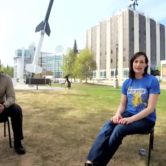
Alaska EPSCoR researchers and affiliates including Chris Waigl, Mark Johnson, Lindsey Stadler, Jonathan Chriest, Katrin Iken, Shelby Bacus, Brenda Konar, Megan Perra, and Jessie Young-Robertson all gave 3-minute flash talks on their research as part of the UAF Arctic Research Open House on May 20, 2021.
The open house kicked off with Arctic Research Flash Talks, a live Zoom and Facebook event featuring short, informal presentations from UAF researchers. Flash talks covered topics such as environmental, coastal and climate science, natural resource studies, remotely piloted aircraft, sustainable engineering and fisheries.
SOUTH CAROLINA: Researcher studies impact of heat stress
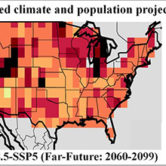
Periods of extremely high heat are projected to double across the lower 48 states by 2100 if the world continues to emit high levels of greenhouse gases, according to a new study in Earth's Future, an American Geophysical Union journal.
The heat stress will be felt most strongly in areas with growing populations. The Pacific Northwest, central California and the Great Lakes region could experience as much as a threefold increase compared to the past 40 years. Heat stress occurs when both the temperature and relative humidity get high enough that the human body can't rid itself of the excess heat, leading to strokes, heat cramps and other health problems.
"Without doing any mitigation strategies, the impact of heat stress is likely to increase," said Ashok Mishra, a civil engineer at Clemson University and an author of the U.S. National Science Foundation-funded study.
Read the full article
MAINE: Colorful character becomes mascot for impact of climate change
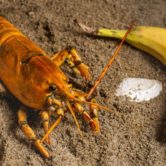
A colorful character has become the mascot for a research program studying the impact of climate change on the economically important lobster fisheries of Maine. "Banana," a bright yellow lobster, was caught off the coast of Maine and has found a home at the University of New England in Biddeford.
How did Banana get to be so bright? According to Markus Frederich, a marine scientist at the university, "The coloration of lobsters is caused by several pigment proteins, the main colors being yellow, blue and red. The mixture of these pigments, plus pigments that the lobsters take up through their food, gives the lobster the typical "lobster color." Most likely due to genetic mutations, some of the pigment proteins can be missing leading to a different coloration. In Banana’s case, the yellow color is dominant, overshadowing the blue and red.”
Roughly 1 in 30 million lobsters has the genetic mutation that causes the yellow shell color, and there are many different color varieties, including bright blue, calico (black and orange) and the rarest of all -- white lobsters. The people of Maine have seen them all, as the lobster population and the state are closely intertwined. This is why researchers are studying the impact of warming waters on the lobsters.
Read the full article
IOWA: Four glaciologists create new glacier “slip law”
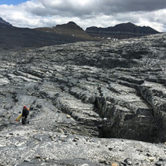
Photos show the hard, rough country some glaciers slide over: rocky domes and bumps in granite, rocky steps and depressions in limestone. The glaciers' beds often dwarf the researchers and their instruments.
During research in places exposed by retreating glaciers in the Swiss Alps (Rhone, Schwarzburg and Tsanfleuron glaciers) and the Canadian Rockies (Castleguard Glacier), four glaciologists used laser and drone technology to precisely measure the glaciers' rocky beds and record their contours.
The scientists then turned their measurements into high-resolution digital models of the glacier beds. They worked with subunits of the models to study how glaciers slide along bedrock bases.
The resulting new glacier "slip law" describes the "relationship between forces exerted by ice and water on the bed, and glacier speed," Iverson said. The slip law could be used by other researchers to better estimate how quickly ice sheets flow into oceans and raise sea levels.
Read the full article
IOWA: Researcher receives 2020 NIH Director’s New Innovator Award
One of life’s greatest mysteries is the brain’s ability to encode something as complex as human behavior. In an effort to begin to unravel this mystery, neuroscientists often zoom in to record the activities of individual neurons. Sometimes they expand their view to look at a specific region of the brain. But if they zoom out farther, neuroscientists can observe many thousands of neurons across the entire brain firing at once to produce electrical oscillations that somehow translate into behaviors as distinct as a smile and a frown. The complexity is truly daunting.
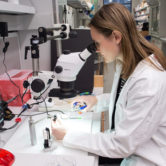
Rainbo Hultman, University of Iowa Carver College of Medicine, Iowa City, realized years ago that by zooming out and finding a way to map all those emergent signals, she could help to change the study of brain function fundamentally. She also realized doing so offered her an opportunity to chip away at cracking the complicated code of the electrical oscillations that translate into such complex behaviors. To pursue her work in this emerging area of “electrical connectomics,” Hultman recently received a 2020 NIH Director’s New Innovator Award to study the most common human neurological disorder: migraine headaches.
Read the full article
IDAHO: Researcher recently interviewed for Science Friday
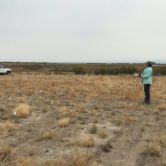
The big sagebrush is far from your typical tumbleweed. In the dry landscape of the American West, the sun catches the plant’s fine silver hair like light reflecting off a stormy ocean. Growing as tall as your thigh, their lanky limbs seem frozen in a permanently petrified stance.
“They kind of look like tortured little bonsai trees,” says Kathryn Turner, an evolutionary ecologist and assistant professor at Idaho State University. But this delicate bush is an essential native plant for desert wildlife—and it’s under threat.
Eighteen sagebrush species grow throughout North America’s Great Basin, a massive network of watersheds and prairies that spans the arid lands of Nevada, Utah, Idaho, Oregon, and California. Sagebrush growing here creates the largest interconnected habitat in North America, spanning across 175 million acres. This keystone plant supports over 350 species, including the adorable pygmy rabbit and charismatic greater sage-grouse.
Read the full article