Research Highlights

DELAWARE: Scientists propose repurposing tabletop sensors to search for dark matter
Scientists are certain that dark matter exists. Yet, after more than 50 years of searching, they still have no direct evidence of this mysterious substance.
The University of Delaware's Swati Singh is among a small group of researchers across the dark matter community that have begun to wonder if they are looking for the right type of dark matter. "What if dark matter is much lighter than what traditional particle physics experiments are looking for?" asked Singh.
Now, Singh, Jack Manley and collaborators at the University of Arizona and Haverford College have proposed a new way to look for the particles that might make up dark matter by repurposing existing tabletop sensor technology. The U.S. National Science Foundation-funded team recently reported their approach in a paper published in Physical Review Letters.
The researchers have proposed an experiment using a membrane made of silicon nitride and a fixed beryllium mirror to bounce light between the two surfaces. If the distance between the two materials changes, the researchers would know from the reflected light that dark photons are present because the silicon nitride and beryllium have different material properties.

DELAWARE: Two Delaware IDeA Programs receive PCORI grant
The Patient-Centered Outcomes Research Institute (PCORI) awarded a one-year, $100,000 grant to two Delaware IDeA Programs (INBRE and IDeA-CTR), and others for their project entitled, “DRIVE: Developing a Roadmap of IDeAs for Veteran Engagement.
Medical and clinical research is an important aspect of the Department of Veterans Affairs (VA) programs. Yet, ClincalTrials.gov data show a disparity in veteran patient research engagement between Institutional Development Award (IDeA) states and territories and non-IDeA states and territories. IDeA is a congressionally mandated program that builds research capacity in states that historically have had low levels of National Institutes of Health (NIH) funding. VA medical centers (VAMCs) in IDeA states and territories receive substantially less of the annual VA research funding than VAMCs in non-IDeA states and territories. Together, these facts suggest that if provided ample and proper research resources, VAMC research programs in IDeA states and territories may grow their research capacity and expand the opportunities for veteran patients, caregivers, and clinicians in IDeA states and territories to engage in research as equitable research partners.
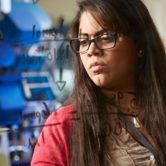
DELAWARE: INBRE researchers give opinion to CNN on women in science
(CNN) A decade ago, as undergraduate women pursuing degrees and futures in science, we were given regular signals that we were outsiders. From applying for research positions only to see that many of the most competitive labs were staffed largely by males to professors simply not engaging with us as they did our male peers, we learned quickly that science is too often unwelcoming to women. Perhaps this is why only three in 10 scientists worldwide are women, according to the UNESCO Institute for Statistics.
This is not only detrimental to women, but also to scientific progress, as it can prevent women with contributions to offer from entering the field. That is why we are calling on scientists, educators and student advisers to start breaking down the barriers facing women in science.
Read full article on CNN
ARKANSAS: EPSCoR planning summer program
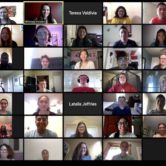
Arkansas EPSCoR is now planning their second-ever virtual Arkansas Summer Research Institute (ASRI) for the summer of 2021, and is working with new technology partners to provide an even better experience for this year’s attendees.
Details about the 2021 ASRI will be announced in early Spring 2021. Funding has been secured through the National Science Foundation for the program to continue another five years.

ALASKA: Alaska EPSCoR partnered with the Alaska Travel Industry Association to present a Natural History workshop
Alaska NSF EPSCoR had a very successful Natural History workshop on Friday, May 14, 2021, in conjunction with the Alaska Tourism Industry Association. The 90-minute workshop was aimed at tour guides. Speakers included Rick Thoman on climate, Marian Snively on bears, Eric Klein on glaciers, Brandon Browne on volcanes and Omega Smith on the aurora.
View on YouTube.
ALASKA: New PI and Project Director of Alaska NSF EPSCoR Fire & Ice
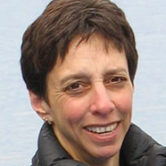
Dr. Brenda Konar is the new Principal Investigator and Project Director of Alaska NSF EPSCoR Fire & Ice.
Konar has been involved with the Fire & Ice project since the beginning, as a co-PI and as co-lead of the Coastal Margins component. Within the component, her principal role has been coordinating and leading our intertidal research in Kachemak Bay.
Said Konar, “I’m stepping into the position at an important time, right at the midway point of our five-year project. A lot of the work we’ve done in the last couple of years is starting to pay off in the form of individual discoveries, datasets, and publications. The challenge now is to expand on our progress to reach larger conclusions about changes to Alaska’s boreal fires and coastal margins, ones that utilize and synthesize the many different kinds of data we’re generating. I’m also excited to work on our sustainability plan, so the progress we make in Fire & Ice will continue to benefit Alaska into the future.”
Konar attributes the success of Alaska NSF EPSCoR to former Director Pips Veazey’s strong leadership. “Pips had a long and successful run at Alaska EPSCoR, and we’re all deeply indebted to her for the current solid state of the program. But she didn’t do it alone: part of the secret to her success was building talented and capable Management and Leadership teams. With these folks to help shoulder the load, I have no worries about us continuing our success.”
Read the complete Letter from the Principal Investigator
ARKANSAS: Summer Research Institute overcomes pandemic challenges by going virtual
Arkansas NSF EPSCoR funds collaborative research and education at colleges all over the State. Due to the nature of our work, the pandemic has presented a number of challenges for our program, but also some unique opportunities. Participants were unable to carry out normal research activities on campus, classes were cancelled or moved to virtual instruction, conferences were postponed, and administrative offices transitioned to telework. The lessons we have learned and new tools we have used are helping to inform a blended, safe, and rich educational experience for college students in this difficult time.
Last summer, we introduced our biggest Arkansas Summer Research Institute (ASRI), a professional development experience for STEM undergrads, ever- all online. We extended the event from one week to two weeks, and developed a schedule that was part synchronous and part asynchronous. Each day the students would log in for the day’s Zoom sessions, taught as interactively as possible, by a group of faculty researchers from around the state. We held Zoom office hours during the 2-hour lunch break to provide opportunities for 1-on-1 interaction in breakout rooms with students. We tried to make the most of the time we had everyone together, and used tools like Zoom polls, Pear Deck, and Labster to keep the students engaged. After the Zoom sessions, the students would work solo on assignments that were due the next day
We are now planning our second-ever virtual ASRI for the summer of 2021, and are working with new technology partners to provide an even better experience for this year’s attendees. We are grateful to have our health, and to be looking at the horizon of the end of this horrible pandemic that has affected so many families.
MISSISSIPPI: Army Wants New Medical Gel that Seals Off Hemorrhaging Wounds on the Battlefield
Army researchers are eyeing a promising new wound-care technology that could allow soldiers to seal hemorrhaging trauma wounds on parts of the body where pressure bandages can't stop bleeding.
The Army Research Laboratory, or ARL, is providing technical oversight on a new hemostatic gel, known as StatBond, that stops uncontrolled bleeding in noncompressible areas of the body such as the groin, armpit, neck and internal organs.
A research and development firm known as Hybrid Plastics, along with the University of Mississippi Medical Center, Vanderbilt University and Ichor Sciences, developed StatBond through an effort funded by the Defense Health Agency Small Business Innovation Research program.
Hybrid has been actively involved with the Mississippi NSF EPSCOR grants.
Read more about this research
IDAHO: Researchers advance DNA as a memory material
The color of a person’s eyes, the thickness of a potato’s skin, and the shape of a flower: what do these seemingly disparate elements have in common? They are all shaped by DNA. Deoxyribonucleic acid (DNA) encodes and carries the genetic instructions that shape life. But what if it could encode more than genetic information, such as digital archival data?
It might sound like something out of a science fiction movie, but in a novel study published in Nature Communications, members of Boise State’s Nucleic Acid Memory Institute revealed that the future of digital memory storage may be found in utilizing the programmable qualities of chemically synthesized DNA.
Led by Micron School of Materials Science and Engineering professor Hughes, and research scientist George Dickinson, the team was able to encode digital information into DNA, read it back using an optical microscope, and perform error correction on the data to ensure the integrity of the information. Additionally, this technique did not require sequencing technology, which historically has been necessary to read DNA information. The team’s research was published on April 22 in Nature Communications and can be viewed at: https://www.nature.com/articles/s41467-021-22277-y
SOUTH CAROLINA: Clemson joins national alliance to guide engineering research
Clemson University, located in Clemson, South Carolina, has joined a new alliance led by the National Science Foundation (NSF) to help guide the future of engineering research and innovation.
The National Science Foundation (NSF) Directorate for Engineering has launched the Engineering Research Visioning Alliance (ERVA), the first engineering research-visioning organization of its kind. Clemson joined the alliance as a member of the EPSCoR IDEA Foundation, one of ERVA’s founding organizations.
“The mission of the Alliance aligns well with our strengths and goals as a Carnegie R1 research institution: pursue transformative research that will have the greatest impact on society and quality of life,” said Tanju Karanfil, Clemson vice president of research. “I enthusiastically support this effort to bring together all interested parties in shaping the future of engineering research.”
Clemson’s Daniel Noneaker, associate dean for research in the College of Engineering, Computing and Applied Sciences, will serve as an ERVA liaison to interact with and recruit people and organizations interested in participating in the ERVA collaborative.
“The culture of excellence we strive for in the College’s research and academic enterprise is the result of productive partnerships with academic collaborators, government entities and industrial alliances,” said Anand Gramopadhye, dean of the College of Engineering, Computing and Applied Sciences. “It is exciting to contemplate how ERVA will allow us to expand these partnerships.”